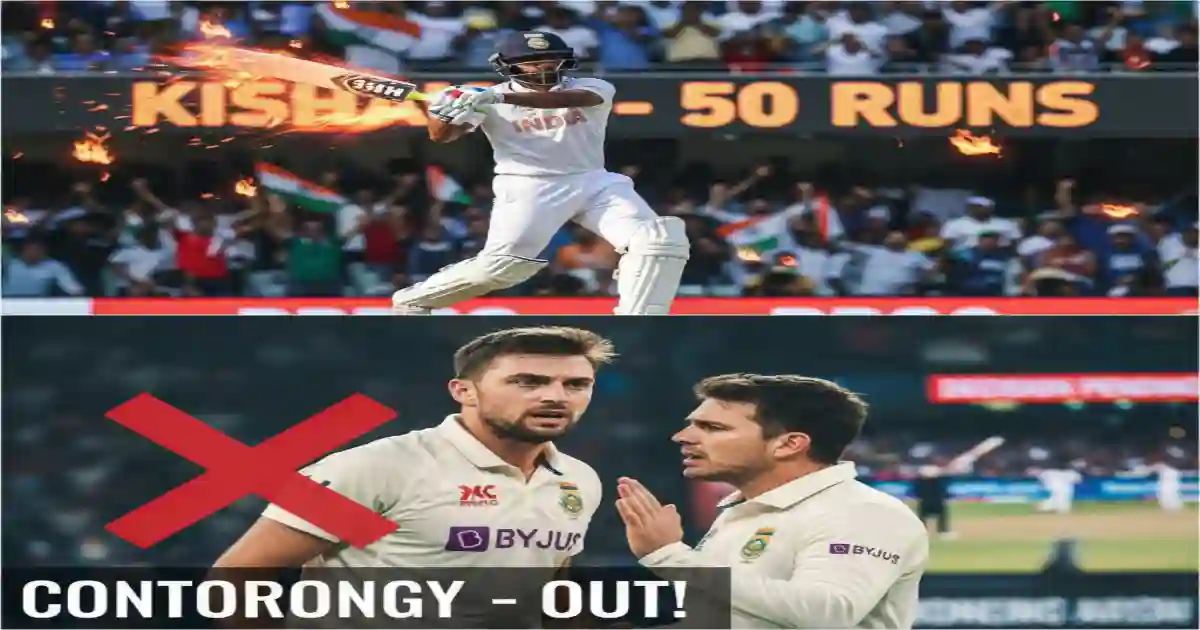
Kishan’s Blazing Fifty, Klaasen’s Controversy Rock IPL!
Kishan’s Blazing Fifty, Klaasen’s Controversy: A Night of Drama
The M. Chinnaswamy Stadium in Bengaluru has witnessed countless IPL classics, but the 2026 season opener between Royal Challengers Bengaluru (RCB) and Sunrisers Hyderabad (SRH) added a new chapter to its storied history. On a night when Ishan Kishan announced his captaincy debut with a blazing half-century, the contest was overshadowed by a controversial dismissal that left fans, players, and pundits divided.
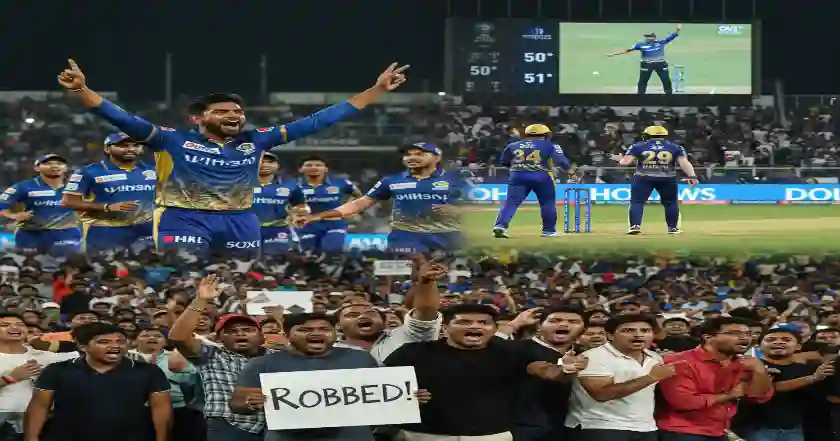
Heinrich Klaasen, the explosive South African batter who had just begun to tear into the RCB bowling attack, was sent back to the pavilion in circumstances that will be debated for days. The third umpire’s decision — ruling Klaasen out despite his vehement protests — became the flashpoint of a match that had everything: early wickets, a captain’s knock, late fireworks, and a finish that went down to the wire.
For SRH, it was a night of mixed emotions. Ishan Kishan, leading the franchise in the absence of regular skipper Pat Cummins, played an innings of authority and elegance, scoring a 27-ball fifty that reminded everyone of his world-class talent. But the controversial dismissal of Klaasen — who had looked set to single-handedly change the game — left a bitter taste.
For RCB, the victory was a testament to their resilience. Their bowlers, led by the pace of Jacob Duffy and the cunning of their spinners, held their nerve in a high-pressure chase to seal a thrilling win. This is the story of a match that had everything — and a decision that will be replayed, analyzed, and debated long after the final ball.
Kishan’s Captaincy Debut: A Statement of Intent
When Pat Cummins was ruled out of the early stages of IPL 2026 due to international commitments, the Sunrisers Hyderabad management faced a critical decision: who would lead the franchise in his absence? The answer came in the form of Ishan Kishan — a player known for his aggressive batting and growing leadership credentials.
Kishan had just enjoyed a dream run in domestic cricket, leading Jharkhand to the Syed Mushtaq Ali Trophy title and playing a central role in India’s triumphant T20 World Cup campaign. His captaincy debut in the IPL was always going to be closely watched, but few expected him to make such an immediate impact.
Walking out to bat after SRH lost both Travis Head and Abhishek Sharma inside the powerplay, Kishan faced a testing situation. The pitch at Chinnaswamy was sticky, with the ball stopping on the surface and seaming around under lights. Jacob Duffy, RCB’s New Zealand pace import, was ripping through the top order, and SRH’s innings was in danger of unraveling. But Kishan responded with the composure of a veteran and the flair of a match-winner.
The Kishan Show: A Fifty to Remember
The first sign of Kishan’s intent came in the third over. Facing the experienced Bhuvneshwar Kumar, Kishan leaned into a classical cover drive that raced to the boundary. It was a shot that announced his presence — and his determination to lead from the front. When Abhinandan Singh, the young RCB left-arm spinner, was introduced into the attack, Kishan lined him up. A lofted drive over extra cover for six was followed by a sweep that bisected the fielders at deep square leg. The runs began to flow, and the pressure that Duffy had created started to dissipate.
Kishan reached his half-century off just 27 balls — the fastest fifty by an SRH captain in IPL history. The Chinnaswamy crowd, known for its unwavering support for RCB, rose to applaud a special innings. It was a knock that combined power, placement, and poise — a reminder that Kishan is not just a big hitter, but a complete batter. His fifty was also a statement — to his team, to his opponents, and to those who doubted whether he could handle the responsibility of captaincy. Leading from the front, Kishan had stabilized the SRH innings and set the stage for a late assault.
Klaasen Arrives: The Calm Before the Storm
If Kishan provided the foundation, Heinrich Klaasen was meant to provide the fireworks. The South African wicketkeeper-batter, renowned for his ability to dismantle bowling attacks in the death overs, walked in with SRH looking to accelerate. Klaasen took his time to settle, playing the supporting role to Kishan. But when he decided to unleash, the Chinnaswamy Stadium witnessed a masterclass in power-hitting.
The 13th over, bowled by Romario Shepherd, became the turning point. Klaasen picked the length early, cleared his front leg, and deposited the ball high and far over midwicket. It was a mighty blow — the kind that usually signals the beginning of the end for the bowling side. But what happened next would become the defining moment of the match.
The Catch That Divided a Nation
As the ball sailed towards the midwicket boundary, Phil Salt, RCB’s English wicketkeeper, gave chase. He tracked the trajectory, positioned himself near the ropes, and leaped to complete the catch.
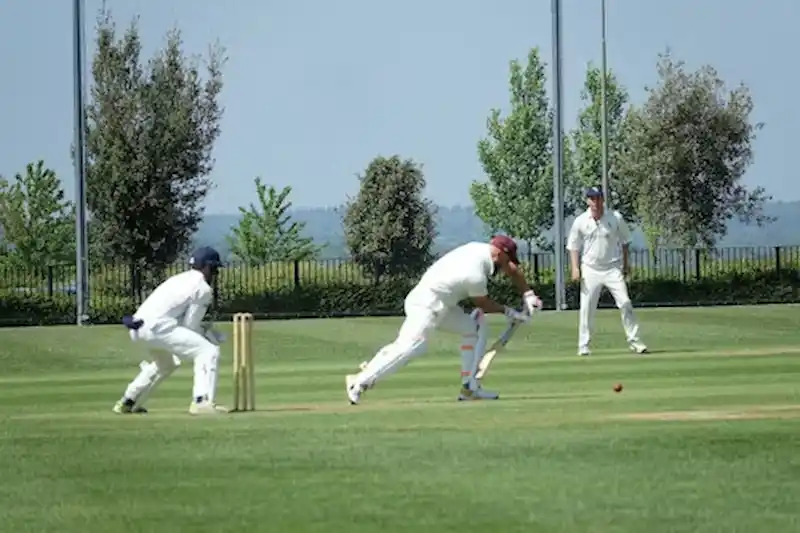
What followed was heart-stopping drama
Salt caught the ball with both hands but, in the process, tumbled and fell on his back side. As he fell, his body twisted into an awkward side-on position, with his feet and legs perilously close to the boundary cushions. The on-field umpires immediately referred the decision to third umpire Rohan Pandit. The big screen displayed multiple angles, and the entire stadium held its breath.
The key question: Was any part of Salt’s body in contact with the boundary cushion while he was in possession of the ball? The replays showed Salt’s feet in the air as he completed the catch. His back made contact with the ground, but the cushions remained untouched — at least according to the third umpire’s interpretation.
After what felt like an eternity, Pandit delivered his verdict: “I don’t see any movement of the cushions. Not out.” Wait — correction. The decision was OUT. Klaasen was given his marching orders. The stadium erupted — half in celebration, half in disbelief. Klaasen, standing at the crease, shook his head and gestured towards the screen, convinced that Salt had made contact with the cushion.
The TV umpire’s ruling stood. Klaasen had to depart for 31 off 22 balls — a knock that had promised so much but was cut short by a tight, controversial call.
The Aftermath: Klaasen’s Displeasure and Social Media Storm
As Klaasen walked back to the pavilion, his displeasure was visible. He exchanged words with the umpires, pointing towards the boundary cushions and mimicking Salt’s fall. The SRH dugout, led by Kishan, watched in stunned silence. The decision immediately became the talking point of the match. Social media erupted within minutes:
-
@CricketFanatic: “That is OUT! Salt’s body clearly touched the cushion. Klaasen robbed. Absolute robbery.”
-
@RCBArmy: “Clean catch. No cushion movement. Third umpire got it right. Stop crying.”
-
@IPLAnalysis: “Tightest of tight calls. You can argue both ways. But in real-time, Salt’s body was in the air. Cushions didn’t move. OUT is the right call.”
-
@KlaasenFan: *”Heinrich was looking dangerous. This changes the game. SRH robbed of 20-30 extra runs.”*
Former cricketers joined the debate. Kevin Pietersen tweeted:
“That is OUT for me. Salt’s body is not grounded on the cushion. The ball is in his hands, he’s in control. Great catch. Harsh on Klaasen but correct decision.”
Dale Steyn, however, had a different view:
“Tough one. If you look at the angle from behind, Salt’s back is millimetres from the cushion. But the rule is clear — if any part of the body is touching the boundary when the catch is completed, it’s six. I think it was touch and go. Klaasen unlucky.”
The debate raged on, overshadowing what had been a remarkable contest between two high-quality sides.
Duffy’s Early Strikes: RCB Fight Back
While Kishan and Klaasen dominated the headlines, RCB’s Jacob Duffy produced a spell of high-quality pace bowling that kept SRH in check. The New Zealand quick, playing his first IPL season, made an immediate impact. He removed Travis Head with a searing delivery that clipped the top of off stump, then returned to dismiss Abhishek Sharma with a perfectly executed short ball that looped to midwicket.
Duffy’s figures — 2 for 28 in his four overs — were a testament to his control and skill. On a pitch that offered variable bounce, he exploited the conditions brilliantly, ensuring that SRH never truly ran away with the game.
Kishan’s Supporting Cast: The Middle Order Holds Firm
With Klaasen back in the pavilion, the responsibility fell on Kishan to shepherd the innings to a competitive total. He found able support from Abdul Samad and Washington Sundar, who contributed valuable cameos.
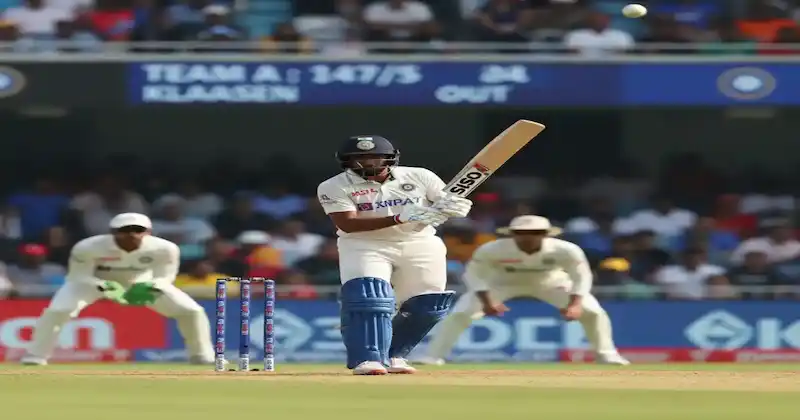
Kishan’s captaincy was on display not just with the bat, but in how he managed the run chase. He rotated the strike, targeted the weaker bowlers, and ensured that SRH didn’t lose momentum after the Klaasen dismissal. His final contribution — 64 off 38 balls — was the backbone of SRH’s total of 186 for 6. It was an innings that combined grace with aggression, and one that announced his arrival as a captain to be reckoned with.
The Chase: RCB’s Response
In response, RCB’s chase was built around steady contributions rather than individual fireworks. Openers Virat Kohli and Faf du Plessis provided a solid foundation, adding 65 runs for the first wicket.
Kohli, in particular, looked in sublime touch, punishing anything short or wide. His 47 off 32 balls kept RCB ahead of the required rate, even as SRH’s bowlers struck at regular intervals. The death overs saw cameos from Glenn Maxwell and Dinesh Karthik, who ensured that RCB crossed the line with three balls to spare.
The Final Verdict: A Match to Remember
In the end, RCB emerged victorious by 4 wickets, but the match will be remembered for so much more than the result. It was a night when Ishan Kishan announced himself as an IPL captain with a blazing fifty. It was a night when Jacob Duffy proved that RCB’s bowling attack has new weapons. It was a night when Heinrich Klaasen’s controversial dismissal sparked a debate that will linger.
And above all, it was a night that reminded us why the IPL is the greatest cricket league in the world — because on any given night, a single moment can change a game, spark a controversy, and create a memory that lasts a lifetime.
What’s Next for SRH and RCB?
For SRH, the focus will quickly shift to the return of Pat Cummins. The regular skipper is expected to join the squad in the coming days, and his leadership and bowling will be vital as the franchise looks to bounce back. For RCB, the victory is a massive confidence booster. Their bowling attack, often criticized in previous seasons, held its nerve in a high-pressure chase. If they can replicate this performance consistently, they will be firm contenders for the playoffs.
The IPL’s Unpredictable Magic
The IPL has always thrived on drama, controversy, and moments of brilliance. The RCB vs SRH clash on March 28, 2026, delivered all three in abundance. Ishan Kishan’s captaincy debut will be remembered for his blazing fifty. Heinrich Klaasen’s dismissal will be debated for weeks. And the match itself will go down as one of the most thrilling of the season.
As the IPL caravan moves forward, one thing is certain: the 2026 season has begun with a bang — and there is much more to come. IPL 2026 — where heroes are made, controversies are born, and every match writes its own story.
About the Author
dishamunch.com covers cricket with a focus on analysis, strategy, and the human stories behind the game. Follow more IPL 2026 coverage at [Your Website].