
Beyond the Horizon: The 2026 Vanguard of Space Exploration and Scientific Discovery

2026 as the Zenith of Modern Space Exploration
The year 2026 has unequivocally cemented itself as a watershed moment in the annals of human space exploration and scientific discovery. As we navigate through March 2026, the global space ecosystem is crackling with unprecedented momentum, propelled by international collaboration, fierce commercial competition, and revolutionary technological breakthroughs. Gone are the days when space exploration was solely about planting flags; today, it is about establishing sustainable extraterrestrial infrastructure, deploying advanced artificial intelligence, and unlocking the most closely guarded secrets of the cosmos.
From the highly anticipated launch of crewed deep-space missions to mind-bending observations from next-generation observatories, the narrative of space and science has evolved into a tangible, multi-planetary reality. Humanity is no longer just looking at the stars; we are actively engineering our permanent presence among them. This era is characterized by a paradigm shift towards continuous, sustainable exploration, where the boundaries of astrophysics, planetary geology, and aerospace engineering are being pushed simultaneously.
The current landscape of space science is a complex tapestry woven from decades of meticulous planning and recent exponential leaps in technology. In early 2026, we are witnessing the convergence of several mega-projects that have been in the pipeline for years. The James Webb Space Telescope continues to rewrite cosmology textbooks on a monthly basis, while geopolitical superpowers and private conglomerates race to establish footholds in cislunar space.
This comprehensive analysis will explore the most critical developments shaping the space and science sectors in 2026, delving deep into the mechanics of upcoming missions, the profound implications of recent astrophysical discoveries, and the disruptive technologies that are making the impossible routine. The investments made over the past decade are finally yielding dividends, transforming science fiction concepts into operational realities.
The Artemis II Mission: Humanity’s Triumphant Return to Deep Space
At the forefront of 2026’s space milestones is NASA’s Artemis II mission, a monumental endeavor that marks the return of human beings to the lunar vicinity for the first time since the Apollo 17 mission in December 1972. Scheduled for launch around April 2026, Artemis II represents a critical pivot point in human history [2]. The ten-day mission will carry a diverse crew—NASA astronauts Reid Wiseman, Victor Glover, and Christina Koch, alongside Canadian Space Agency astronaut Jeremy Hansen—on a highly complex free-return trajectory around the Moon.
This mission is not merely a repetition of Apollo; it is a rigorous, high-stakes test flight of the Space Launch System (SLS) and the Orion spacecraft’s life support, navigation, and deep-space communication systems under crewed conditions. The astronauts will venture deeper into space than any human has gone in over half a century, providing critical data that will lay the groundwork for Artemis III and future lunar surface habitations.
The technological architecture supporting Artemis II is a marvel of modern engineering. The Space Launch System stands as the most powerful rocket ever successfully launched, capable of delivering immense payload mass directly to cislunar space. Following successful stacking operations and rollout to Launch Complex 39B at the Kennedy Space Center, the tension and excitement within the global aerospace community are palpable.
During the mission’s translunar injection, the Orion capsule will demonstrate its autonomous rendezvous and proximity operations, a crucial capability for future docking maneuvers with the planned Lunar Gateway space station. Furthermore, the crew will test optical communication systems, utilizing lasers to transmit high-definition video and immense data packets back to Earth, vastly outperforming traditional radio frequency transmissions.
Beyond the sheer engineering triumph, Artemis II serves as a geopolitical and cultural unifier. By including an international partner in the crew, NASA has solidified the Artemis Accords as the diplomatic foundation for the future of space exploration. The mission will also provide unparalleled scientific opportunities.
While swinging around the far side of the Moon, the crew will observe the lunar surface from a unique vantage point, documenting geological formations that have never been witnessed by human eyes in such high fidelity. The radiation data collected by the sensors inside the Orion capsule will be invaluable for understanding the biological impacts of deep-space travel, directly informing the design of shielding for future Mars missions.
Forging a Lunar Economy: Commercial Lunar Payload Services (CLPS)
While Artemis II captures the public’s imagination with its crewed objectives, a quiet revolution is taking place on the lunar surface driven by robotic pioneers. The year 2026 is a boom year for NASA’s Commercial Lunar Payload Services (CLPS) program, which leverages private sector innovation to deliver scientific instruments and technology demonstrations to the Moon. In mid-2026, Astrobotic Technology’s Griffin Mission One is set to land in the lunar south polar region.
This mission gained substantial attention after NASA’s VIPER rover was canceled and subsequently replaced by Astrolab’s FLEX Lunar Innovation Platform (FLIP) rover. The FLIP rover will test next-generation mobility and robotic manipulation, proving that commercial entities can provide highly capable modular platforms for lunar exploration at a fraction of traditional aerospace costs. Joining the lunar surface operations in late 2026 is Firefly Aerospace’s Blue Ghost Mission 2.
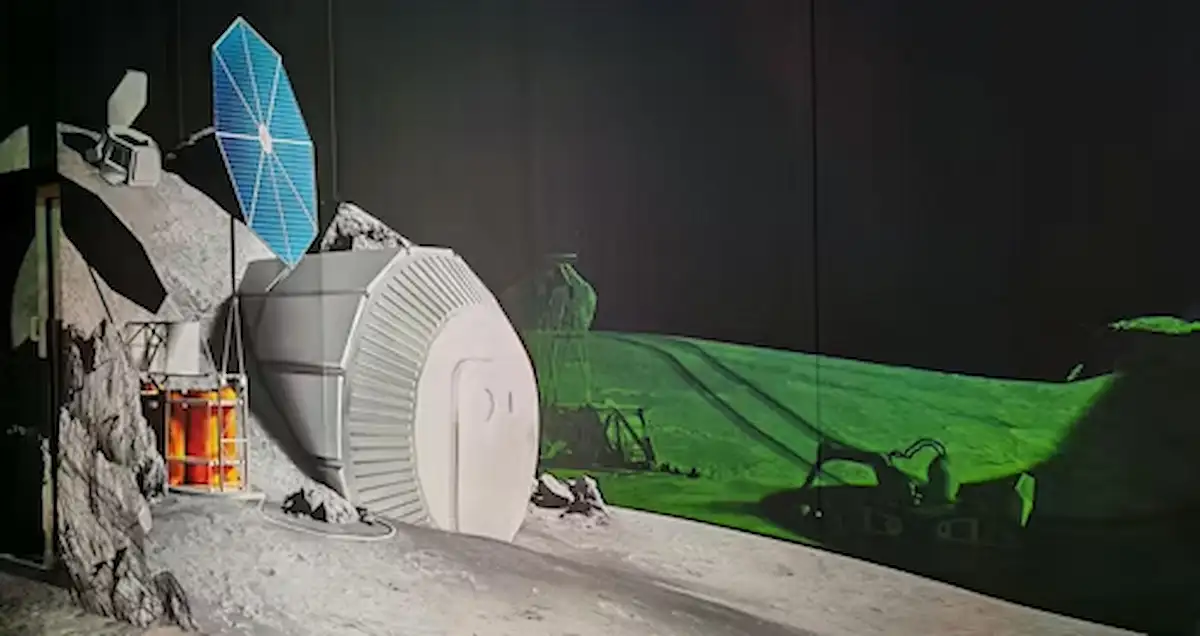
This mission is particularly groundbreaking as it targets the Moon’s far side, an ambitious objective that requires a dedicated communications relay satellite in lunar orbit to transmit data back to Earth. Landing on the far side offers unprecedented opportunities for radio astronomy, shielded from the relentless radio frequency noise emanating from our home planet.
The Blue Ghost lander will deliver specialized payloads designed to investigate the lunar regolith’s thermal properties and measure the ambient magnetic fields, providing crucial data for understanding the Moon’s complex geological history. The proliferation of these commercial missions signals the birth of a genuine cislunar economy. Companies are no longer just building components for government agencies; they are offering end-to-end delivery services, creating a competitive marketplace that is driving down the cost of access to space.
This economic shift is essential for sustainable exploration. By fostering a robust commercial ecosystem, space agencies can pivot their focus and budgets toward deep-space challenges, such as Mars exploration, while relying on private companies to maintain a steady cadence of lunar logistics, resource extraction experiments, and infrastructure development.

The James Webb Space Telescope: Rewriting Cosmology in 2026
Launched more than four years ago, the James Webb Space Telescope (JWST) has matured into its operational prime, and its discoveries in early 2026 are nothing short of revolutionary. Webb’s unparalleled infrared sensitivity continues to pierce through the cosmic dust that obscured the vision of its predecessors.
In February 2026, astronomers announced a paradigm-shifting discovery: the identification of MoM-z14, the most distant and earliest galaxy ever detected [3]. Observed a mere 280 million years after the Big Bang, MoM-z14 has completely upended existing astrophysical models regarding the timeline of cosmic evolution. Theoretical frameworks previously suggested that galaxies in this epoch should be dim, fragmented, and relatively small.
However, MoM-z14 is stunningly luminous, incredibly compact, and bizarrely enriched with heavy elements, particularly nitrogen. This chemical signature indicates that massive, primordial stars—often referred to as Population III stars—must have formed, lived fast, and died in spectacular supernovae much earlier and more rapidly than scientists thought possible.
The presence of such advanced chemical enrichment so soon after cosmic dawn suggests that the early universe was a chaotic, violently active environment, challenging the dark ages narrative and forcing cosmologists to reevaluate the mechanisms that trigger star formation in pristine hydrogen and helium clouds.
JWST’s impact extends far beyond the early universe; it is also fundamentally altering our understanding of planetary science. By turning its mirrors toward the stellar systems closest to Earth, Webb has achieved unprecedented direct imaging and spectrographic analysis of exoplanetary atmospheres.
In recent months, Webb confirmed the source of a super-bright gamma-ray burst from an exploding star 730 million years post-Big Bang, and it provided the first direct physical measurements of a carbon-rich moon-forming disc surrounding the exoplanet CT Cha b. These varied observations showcase JWST’s versatility, acting as a cosmic magnifying glass that connects the micro-physics of planetary formation with the macro-physics of galactic evolution.
Bizarre Exoplanets: L 98-59 d and the Wet Lava Ball TOI-561 b
The search for habitable worlds has always been a cornerstone of space science, but the discoveries made in March 2026 highlight just how alien and extreme the universe can be. Astronomers utilizing JWST data unveiled a new class of exoplanet that defies traditional planetary classification. The planet, known as L 98-59 d, is situated approximately 35 light-years from Earth.
Initially assumed to be either a rocky super-Earth or a water-rich ocean world, advanced spectrographic analysis revealed an atmosphere incredibly rich in hydrogen sulfide and a surprisingly low overall planetary density. Researchers concluded that L 98-59 d harbors a vast, global ocean of molten rock beneath its thin crust, trapping unimaginable quantities of sulfur.
This discovery introduces the sulfur-magma world into the astronomical lexicon. The implications of L 98-59 d are profound because they suggest that the pathways of planetary formation and evolution are vastly more diverse than our own Solar System indicates. The sulfur compounds interacting with the molten silicate mantle create complex chemical feedback loops that could drive violent, planet-wide volcanism, releasing gases that fundamentally alter the planet’s atmospheric composition over billions of years.
This forces astrobiologists to expand the parameters of what constitutes a stable, albeit extreme, planetary environment. Just days after the L 98-59 d announcement, another bombshell dropped in the realm of exoplanetology: the analysis of TOI-561 b. Orbiting its host star in a blistering 10.56 hours, this tidally locked super-Earth was presumed to be a barren, scorched rock, stripped of any atmosphere by intense stellar radiation.
However, JWST’s thermal emission phase curves indicated that heat was being distributed around the planet far too efficiently for a bare rock. The evidence points to a thick, churning atmosphere surrounding a wet lava ball. Scientists hypothesize that TOI-561 b maintains this impossible atmosphere through a continuous, violent recycling process. The permanent dayside features a roiling magma ocean that vaporizes volatile elements, which then circulate to the cooler nightside, precipitate, and are subducted back into the mantle.
This dynamic, extreme weather system demonstrates that atmospheres can survive in the most hostile environments imaginable, provided there is a planetary mechanism to replenish the lost gases. These findings not only redefine our understanding of atmospheric retention but also provide crucial data points for modeling the extreme end of the planetary spectrum.
The Dark Star Hypothesis: Illuminating Cosmic Dawn
Perhaps the most mind-bending theoretical breakthrough supported by new 2026 JWST data is the potential identification of Dark Stars. For decades, scientists have grappled with the mystery of supermassive black holes—how did they grow so large, so quickly, in the early universe? Traditional models of stellar collapse and accretion simply do not allow enough time for black holes to reach billions of solar masses within the first few hundred million years.
Enter the Dark Star hypothesis, which posits that the very first stars were not powered by nuclear fusion, but by the annihilation of dark matter particles. In recent deep-field observations, Webb detected several exceedingly bright, extremely cold objects that perfectly match the theoretical profile of Dark Stars. Unlike normal stars, Dark Stars would be diffuse, puffy clouds of hydrogen and helium, held together by gravity but kept from collapsing entirely by the immense heat generated when dark matter particles collide and annihilate at their cores. Because they are not constrained by the Eddington limit of fusion-powered stars,
Dark Stars could grow to monstrous sizes, accumulating millions of solar masses while glowing with the intensity of an entire galaxy, despite lacking a traditional fusion core. If confirmed, the existence of Dark Stars would solve multiple cosmic anomalies at once. When the dark matter fuel is eventually exhausted, these colossal objects would undergo a direct gravitational collapse, instantaneously forming intermediate or supermassive black hole seeds.
This provides the missing evolutionary link for the giant black holes we observe today. Furthermore, it would serve as the first indirect observation of dark matter interaction outside of pure gravitational effects, offering a revolutionary bridge between astrophysics and particle physics. This tantalizing possibility currently has the theoretical physics community in a state of high alert.
The Xuntian Telescope and the Era of Massive Surveys
As NASA and ESA celebrate the triumphs of Webb, the global astronomical community is preparing for the next major leap in space-based observatories. In late 2026, the China National Space Administration (CNSA) is slated to launch its flagship astrophysics mission: the Xuntian Space Telescope. Often referred to as the Chinese Space Station Telescope, Xuntian represents a monumental advancement in wide-field survey capabilities.
While possessing a primary mirror roughly the same size as the Hubble Space Telescope, providing comparable optical resolution, Xuntian’s focal plane array allows for a field of view more than 300 times larger than Hubble’s. This massive field of view means that Xuntian can survey enormous swaths of the cosmos in a fraction of the time it would take other observatories.
Over its planned ten-year mission, Xuntian aims to map up to 40% of the sky, cataloging billions of galaxies to construct a precise three-dimensional map of the universe’s large-scale structure. This dataset will be instrumental in studying the effects of dark energy on the expansion of the universe, testing the tenets of General Relativity on cosmological scales, and identifying rare transient events like supernovae and tidal disruption events.
The deployment of Xuntian is also a strategic masterpiece in space infrastructure. It is designed to co-orbit with China’s Tiangong space station. Rather than requiring complex and risky robotic servicing missions, or completely replacing the observatory when instruments degrade, Xuntian can actively maneuver to dock with Tiangong.
This allows taikonauts to perform maintenance, upgrade sensors, and refuel the telescope directly in orbit, ensuring its longevity and technological relevance for decades. This symbiotic relationship between a crewed outpost and a flagship observatory may set a new standard for future space architectures.
Japan’s MMX Mission: Solving the Martian Moons Mystery
Turning our gaze from the distant universe back to our neighboring planets, late 2026 marks the highly anticipated launch of the Japan Aerospace Exploration Agency’s (JAXA) Martian Moons eXploration (MMX) mission. Mars is accompanied by two small, potato-shaped moons, Phobos and Deimos. For decades, planetary scientists have hotly debated the origin of these peculiar satellites. One camp argues that they are captured D-type asteroids drawn in by Mars’ gravity from the main asteroid belt.
The opposing camp theorizes that they are the coalesced debris from a colossal impact event early in Mars’ history, similar to the formation of Earth’s Moon. The MMX mission is designed to settle this debate definitively. Upon arriving in the Martian system, the spacecraft will spend three years conducting comprehensive remote sensing of both moons, mapping their surface topography, mineralogy, and internal structure.
The crescendo of the mission will be a daring touchdown on Phobos, where MMX will deploy a pneumatic sampling mechanism to collect at least 10 grams of pristine regolith from the moon’s surface. A return module will then blast off from Phobos, embarking on a journey back to Earth with the precious cargo, expected to arrive by 2031.
The implications of the MMX sample return go far beyond resolving a planetary origin story. If Phobos is an impact product, the samples will contain a mixture of ancient Martian crust and the impactor, essentially providing scientists with free samples of early Mars without the immense technical difficulty of a surface-to-orbit ascent from the red planet itself. This material could contain biomarkers or chemical evidence shedding light on whether ancient Mars harbored a habitable environment.
Conversely, if Phobos is a captured asteroid, analyzing its composition will provide critical insights into the transport of water and organic compounds from the outer solar system into the inner terrestrial planets.

As the International Space Station (ISS) approaches its inevitable decommissioning at the end of the decade, 2026 is witnessing the aggressive acceleration of private sector initiatives to fill the impending void in Low Earth Orbit (LEO). In May 2026, the aerospace startup Vast is targeting the launch of Haven-1, which will hold the prestigious title of the world’s first commercial, privately-operated space station.
Initially launching as a single module aboard a SpaceX Falcon 9, Haven-1 will provide a modern, microgravity environment for visiting commercial astronauts and space tourists, serving as a critical proof-of-concept for larger, scalable orbital habitats. Furthermore, the development of Starlab, a joint venture primarily led by Airbus and Voyager Space, is hitting critical milestones in 2026. Starlab is being explicitly designed as a state-of-the-art orbital manufacturing plant and research laboratory.
The microgravity environment offers unique physical conditions that cannot be replicated on Earth, allowing for the creation of flawless fiber optics, high-purity protein crystals for pharmaceuticals, and advanced semiconductor alloys. As these commercial stations come online, space will transition from an exclusive domain of government research into a bustling economic zone, characterized by orbital industrial parks and commercial research facilities.
This privatization of LEO fundamentally alters the economics of space access. By allowing private entities to handle the infrastructure of near-Earth space, national space agencies can reallocate their multi-billion dollar budgets toward deep space exploration, lunar base construction, and crewed Mars missions. The 2026 advancements in commercial orbital infrastructure are ensuring that humanity maintains a continuous, uninterrupted presence in space, safeguarding the invaluable continuity of microgravity research that has profound implications for medical and technological advancements on Earth.
Breakthrough Space Technologies: AI, ISRU, and Orbital Refueling
The spectacular missions launching in 2026 are underpinned by quiet, steady revolutions in enabling space technologies. Chief among these is the integration of Artificial Intelligence (AI) for autonomous navigation. As we send probes further into the deep solar system, the light-time communication delay makes real-time human control impossible.
In 2026, researchers demonstrated highly advanced AI-based guidance systems capable of identifying landing hazards, autonomously altering flight paths, and optimizing spacecraft energy consumption in real-time. This level of autonomy is crucial for upcoming missions to treacherous environments like the icy terrain of Europa or the chaotic surface of Enceladus. Another game-changing technology seeing rapid advancement in 2026 is In Situ Resource Utilization (ISRU).
To establish a sustainable presence on the Moon or Mars, we cannot rely on a continuous supply chain from Earth; it is simply too expensive. Laboratory simulations and early payload tests in 2026 have successfully demonstrated molten regolith electrolysis—a process that extracts breathable oxygen and structural metals directly from lunar soil simulants. Perfecting ISRU means that future astronauts will be able to manufacture their own rocket propellant, breathable air, and building materials directly from the extraterrestrial dirt beneath their boots.
Parallel to ISRU, 2026 has brought orbital refueling systems out of the conceptual phase and into rigorous large-scale testing. Cryogenic propellant transfer in microgravity has long been a notoriously difficult engineering challenge, as super-chilled liquids tend to boil off or behave unpredictably without gravity to settle them. The successful demonstration of these technologies, particularly by SpaceX with the Starship Version 3 architecture, unlocks the potential for deep space logistics.
A spacecraft can now launch empty, minimizing weight, and rendezvous with a propellant depot in orbit before embarking on a high-energy transfer to Mars or the outer planets. Lastly, the harsh reality of galactic cosmic rays and solar radiation poses the greatest biological threat to long-duration human spaceflight. In 2026, materials science has made significant strides in radiation shielding.
Testing of new hydrogen-rich polymers and complex layered composite materials aboard orbiting platforms has shown remarkable real-time radiation attenuation performance. These advanced materials are lighter, more flexible, and significantly more protective than traditional aluminum shielding, ensuring that the crews of Artemis and future Mars expeditions will survive the invisible bombardment of deep space.
The Cosmic Perspective: What 2026 Means for Earth
When we analyze the sheer volume of breakthroughs occurring in 2026, it is easy to become lost in the technical jargon and astronomical numbers. However, the true value of these endeavors lies in their direct impact on our home planet. The technologies developed to survive the unforgiving vacuum of space—closed-loop water recycling systems, ultra-efficient solar panels, and high-density energy storage—are directly applicable to mitigating climate change, managing resource scarcity, and developing sustainable cities on Earth.
Furthermore, the discoveries made by observatories like JWST and Xuntian satisfy an innate, uniquely human curiosity. By understanding the violent formation of distant galaxies and the bizarre chemistry of magma-covered exoplanets, we gain a profound appreciation for the fragility and rarity of our own pale blue dot. The year 2026 proves that space exploration is not an escapist fantasy from terrestrial problems, but rather a necessary evolutionary step. Through international cooperation and unyielding innovation, the science of space is forging a unified path forward, ensuring that humanity’s future is as boundless as the universe itself.
As we look toward the culmination of this decade, the milestones achieved in 2026 will be remembered as the foundation of our multi-planetary era. The Artemis astronauts orbiting the Moon, the robotic landers sifting through lunar dust, and the silent telescopes unraveling the cosmic dawn all share a singular purpose: the expansion of human knowledge. The golden age of space and science is no longer a future aspiration; it is our present reality, and the horizon has never been brighter.