Gen Z Justice: Ex-PM Oli Arrested for Protest Killings
Gen Z Justice: Ex-PM Oli Arrested, A Landmark Moment in Nepal’s Democratic Journey
In a historic and unprecedented move, Nepali authorities have arrested former Prime Minister KP Sharma Oli and former Home Minister Ramesh Lekhak on charges of negligent killings linked to the deadly Gen Z protests that shook the Himalayan nation last September. The arrests, confirmed by police officials on March 28, 2026, mark the first time in Nepal’s modern political history that a former head of government has been taken into custody over state violence during public demonstrations.

The development comes exactly six months after the Gen Z uprising — a youth-led movement that paralyzed the country and resulted in the deaths of 76 people, including 19 killed in a single day of police firing on September 8. The arrests were made to implement the recommendations of a probe commission that investigated the brutal crackdown on protesters demanding political reform and economic justice.
The timing is significant. Just a day before the arrests, a new government led by Balendra Shah of the Rastriya Swatantra Party (RSP) was sworn in, signaling a new era of accountability in Nepali politics. The swift action against two of the country’s most powerful political figures has sent shockwaves through the political establishment and sparked celebrations among the families of victims and youth activists who had been demanding justice for six long months.
The Gen Z Uprising: A Movement That Shook Nepal
To understand the magnitude of these arrests, one must revisit the events of September 2025 — a period that fundamentally altered Nepal’s political landscape.
What began as student-led demonstrations against corruption, unemployment, and governance failures quickly snowballed into a nationwide uprising. The protesters, predominantly from Generation Z — young Nepalis in their teens and twenties — took to the streets in Kathmandu, Pokhara, Biratnagar, and other cities, demanding systemic change.
The movement gained unprecedented momentum when the government, then led by KP Sharma Oli of the Communist Party of Nepal (Unified Marxist-Leninist) , responded with force. The September 8 crackdown became the turning point. On that single day, 19 protesters were killed in police firing across multiple locations, with the highest casualties reported in the capital’s Tinkune area.
The images of bloodied students, tear gas billowing through Kathmandu’s streets, and parents mourning their children circulated globally, drawing condemnation from international human rights organizations and concern from neighboring countries.
In the aftermath, the government was forced to constitute a probe commission to investigate the killings. The commission’s report, submitted earlier this year, held senior officials accountable, recommending legal action against those responsible for negligent killings and excessive use of force.
Who Are KP Sharma Oli and Ramesh Lekhak?
KP Sharma Oli, one of Nepal’s most dominant political figures, has served as Prime Minister multiple times. Known for his strongman image and close ties with both India and China during his tenures, Oli has been a polarizing figure in Nepali politics. His decision to deploy security forces against the Gen Z protesters was widely seen as a miscalculation that backfired spectacularly.
Ramesh Lekhak, who served as Home Minister under Oli, was the direct overseer of the security apparatus during the protests. As the chief custodian of internal security, Lekhak faced intense scrutiny over the police firing that claimed the lives of 19 protesters on September 8.
Both leaders denied allegations of wrongdoing during the probe commission’s hearings, arguing that the security forces acted in self-defense against violent protesters. However, the commission’s findings contradicted their claims, concluding that the use of lethal force was disproportionate and unjustified.
The Probe Commission’s Findings: A Path to Accountability
The probe commission, led by retired Supreme Court Justice and comprising human rights experts and former bureaucrats, spent four months examining evidence, interviewing witnesses, and reviewing security force protocols.
Its report, submitted to the government in February 2026, was a damning indictment of the Oli administration’s handling of the protests. Key findings included:
| Finding | Detail |
|---|---|
| Excessive Use of Force | Security forces used live ammunition against unarmed protesters without adequate warning |
| Negligent Leadership | Senior officials, including the Prime Minister and Home Minister, failed to prevent or halt the violence |
| Failure of Command | Orders to escalate force were issued without proper assessment of the situation |
| Victims’ Families Denied Justice | No compensation or accountability was provided for months |
The commission recommended that KP Sharma Oli and Ramesh Lekhak be charged with negligent killing under Nepal’s criminal code — a rare and unprecedented recommendation against a former head of government.
The Arrest: A Swift and Coordinated Operation
Following the swearing-in of Balendra Shah’s government on March 27, 2026, action was swift.
Early on March 28, plainclothes police officers arrived at KP Sharma Oli’s residence in Balkot, Bhaktapur, and at Ramesh Lekhak’s home in Kathmandu. Both were taken into custody without incident, though Oli was reported to have protested his arrest, calling it a politically motivated witch hunt.
A police spokesperson confirmed the arrests, stating:
“The arrests have been made in accordance with the recommendations of the probe commission and under the direction of the new government. Both individuals have been charged with negligent killings related to the September 2025 protests. They will be produced before the court today.”
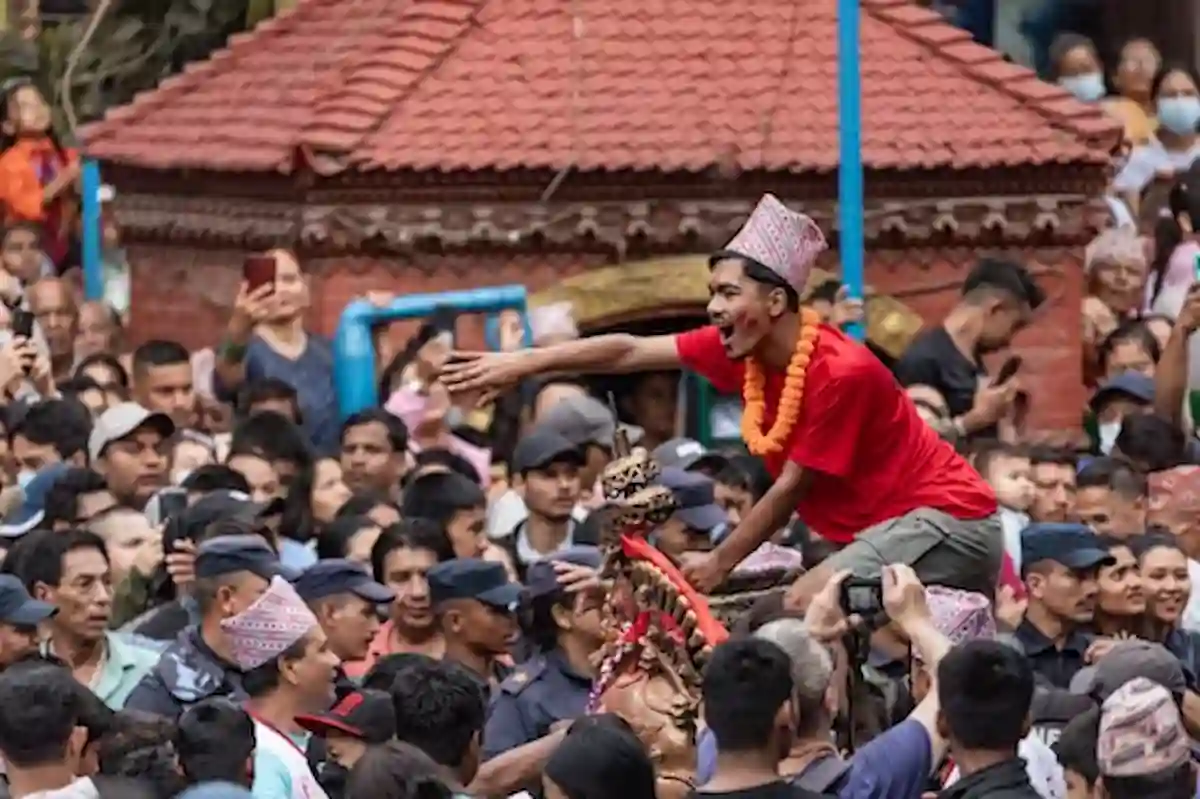
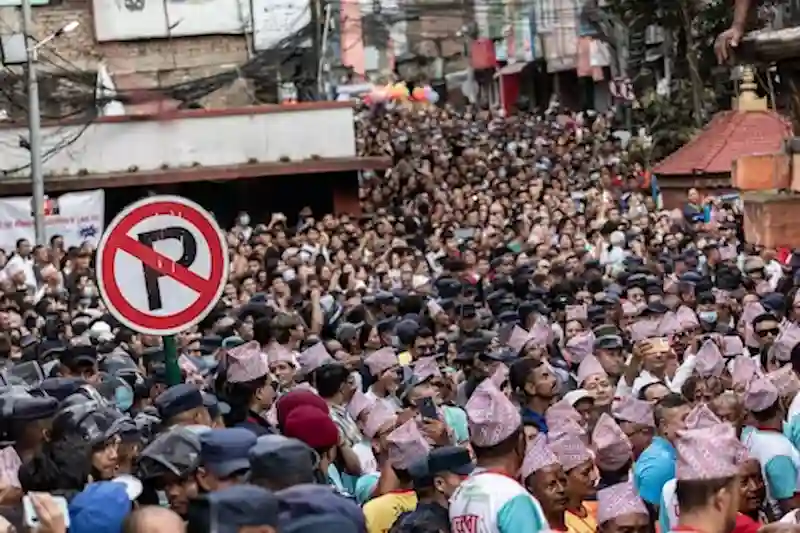
The news spread like wildfire. Within hours, crowds gathered outside the Kathmandu District Court, chanting slogans in support of the arrests and holding placards with the faces of the 76 victims.
Reactions: Celebration, Condemnation, and Calls for Unity
The arrests have polarized Nepal’s political landscape.
Families of victims expressed relief and vindication. Gita Sharma, whose 19-year-old son was killed in the September 8 police firing, told reporters:
“After six months, we finally see hope. My son is gone, but this arrest shows that his life mattered. No one is above the law.”
Youth activists, who played a central role in sustaining the protest movement, celebrated the development as a victory for democracy.
Bipin Maharjan, a coordinator of the Gen Z Movement, said:
“This is what we fought for. Not revenge, but accountability. Today, Nepal has shown that even the most powerful can be held responsible.”
However, supporters of Oli and Lekhak denounced the arrests as political vendetta. CPN-UML leaders accused the new government of targeting political rivals and undermining democratic norms.
Bishnu Paudel, a senior UML leader, stated:
“This is a dangerous precedent. Former Prime Ministers cannot be arrested on flimsy charges. This is an abuse of power by the new administration.”
The Rastriya Swatantra Party, led by Balendra Shah, defended the action, with party spokesperson Sumana Shrestha saying:
“The new government is committed to implementing the commission’s recommendations. No one is above the law. Those responsible for the deaths of innocent protesters must face justice.”
International Reaction: A Test for Nepali Democracy
The arrests have drawn international attention, with human rights organizations welcoming the move while calling for due process. Amnesty International issued a statement saying:
“The arrest of former Prime Minister Oli and former Home Minister Lekhak is a significant step towards accountability for the September 2025 killings. Nepal must ensure that the legal process is fair, transparent, and free from political interference.”
India, Nepal’s close neighbor and strategic partner, has watched the developments closely. Official sources in New Delhi indicated that India respects Nepal’s internal processes and hopes for a peaceful resolution that strengthens democratic institutions.
China, another key player in Nepal’s geopolitics, has maintained official silence but is monitoring the situation.
The New Government: Balendra Shah’s Bold Start
The arrests mark a bold start for the new government led by Balendra Shah, the Rastriya Swatantra Party leader who emerged as a fresh face in Nepali politics following the Gen Z protests. Shah, a former civil engineer and political novice, campaigned on a platform of accountability, anti-corruption, and youth empowerment. His party’s surge in the recent elections was widely attributed to the public anger over the September killings and the old guard’s failure to address the grievances of young Nepalis.
By ordering the arrests within 24 hours of taking office, Shah has signaled that his government will prioritize justice over political convenience. The move has bolstered his credibility among youth supporters, though it has also alienated powerful factions within the traditional political establishment.
Legal Process: What Happens Next?
KP Sharma Oli and Ramesh Lekhak have been charged under Section 183 of Nepal’s National Penal Code, which deals with negligent killing — an offense that can carry a prison sentence of up to five years.
Both leaders are expected to seek bail from the Kathmandu District Court. Legal experts anticipate a protracted legal battle, with their lawyers likely to argue that the probe commission’s recommendations do not automatically translate into criminal liability and that the new government is politically motivated.
The Supreme Court may ultimately be called upon to interpret the scope of the commission’s powers and the legality of the arrests.
The Victims: Remembering the 76
As the legal drama unfolds, the families of the 76 victims continue to mourn. Among the dead were students, young professionals, and first-time protesters who had taken to the streets demanding a better future. The September 8 massacre remains the single deadliest day of state violence in Nepal since the 2006 democracy movement. For the families, the arrests are a long-awaited step toward closure — but they know that nothing can bring back their loved ones.
A Watershed Moment for Nepal
The arrest of a former Prime Minister and a former Home Minister over the killings of civilian protesters is unprecedented in Nepal’s political history. It signals a potential shift in how the country holds its leaders accountable for state violence.
Whether this is a genuine step towards justice or a political maneuver by a new government remains to be seen. The coming weeks will test the independence of Nepal’s judiciary, the stability of the new administration, and the strength of the country’s democratic institutions.
For the families of the 76, for the youth who took to the streets, and for a nation watching closely, the arrests of KP Sharma Oli and Ramesh Lekhak represent a moment of reckoning. Nepal has taken a bold step towards the principle that no one is above the law. The journey to justice is far from over. But on March 28, 2026, the first chapter was written.
Nepal’s Gen Z uprising: 76 lives lost. Six months of waiting. One historic arrest.
dishamunch.com covers South Asian politics, governance, and human rights. Follow more analysis at [Your Website].