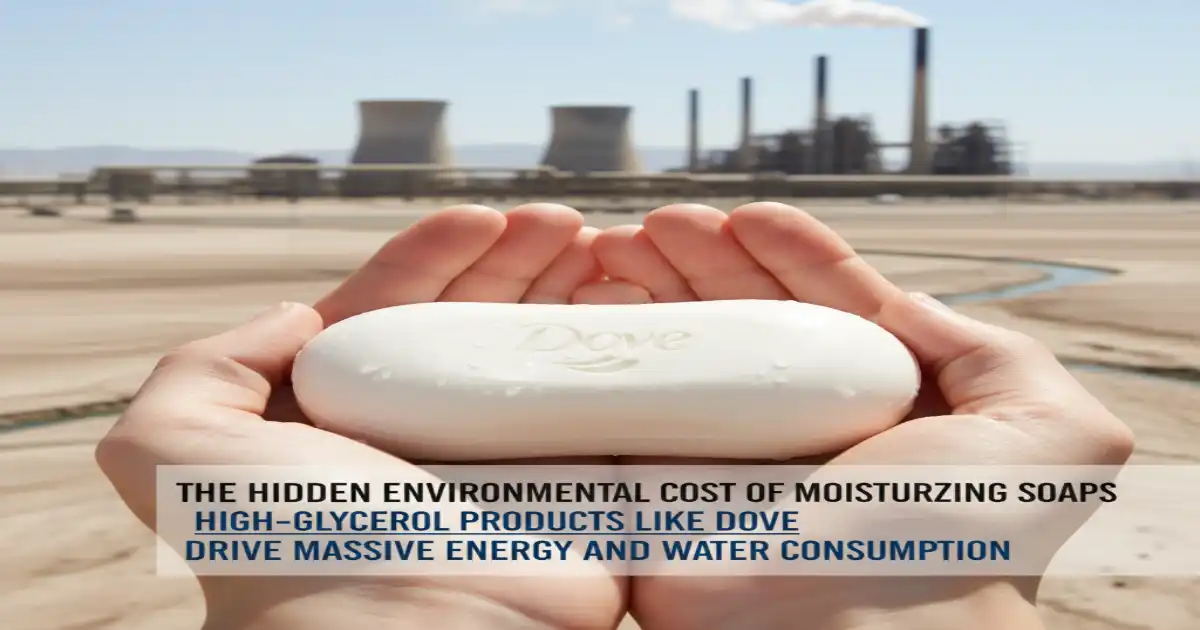
The Hidden Environmental Cost of Moisturizing Soaps: How High-Glycerol Products Like Dove Drive Massive Energy and Water Consumption

The Evolution of the Modern Shower: From Basic Hygiene to Sensory Indulgence
In the fast-paced world of 2026, the daily shower has transcended its original purpose of basic hygiene. It has become a sacred sanctuary, a moment of profound sensory indulgence and psychological reset. Modern consumers no longer seek merely to cleanse dirt and sweat from their bodies; they seek a transformative skincare experience.
This paradigm shift has given rise to highly sophisticated personal care formulations, transforming the humble bar of soap into a complex matrix of moisturizers, emollients, and active botanical ingredients. Brands like Dove pioneered this revolution decades ago by introducing the concept of the ‘beauty bar’—a product containing one-quarter moisturizing cream.
Unlike traditional saponified soaps that strip the skin of its natural lipid barrier, these modern synthetic detergents (often called syndets) are designed to deposit nourishing agents directly onto the skin. The result is an undeniable feeling of luxury. The skin emerges from the shower feeling soft, supple, and deeply hydrated, eliminating the tight, dry sensation often associated with older, harsher cleansing methods.
However, this evolution in personal care has brought with it an invisible, yet monumental, environmental cost. As body washes, shampoos, and beauty bars have become richer and more densely packed with hydrating agents like glycerol (glycerin), stearic acid, and natural oils, their physical behavior under running water has fundamentally changed.
These products are specifically engineered to cling to the skin. They are designed to resist being completely washed away, leaving a microscopic layer of moisture behind to protect the dermal barrier throughout the day.
While this may be intensely enjoyable and joyful to the user, providing a spa-like feeling of pampering and self-care, it triggers a behavioral chain reaction with devastating ecological consequences. Consumers, conditioned by decades of using traditional soaps, equate the feeling of being ‘clean’ with a tactile ‘squeaky’ sensation.
When they encounter the slick, hydrating film left by high-glycerol products, their immediate instinct is to continue rinsing. This simple misunderstanding of modern soap chemistry has led to a startling statistical anomaly: a massive, exponential increase in domestic water consumption.
The Chemistry of Glycerol: Why Moisturizing Soaps Cling to the Skin
To truly understand why products like Dove shampoo and soap are categorized as some of the most water-consuming personal care items on the market, one must delve into the molecular chemistry of their formulations. The star ingredient in many of these ultra-hydrating products is glycerol, commonly known as glycerin.
Glycerol is a highly effective humectant, meaning it has a unique molecular ability to attract and bind water molecules from the surrounding environment. When you apply a glycerol-rich soap or body wash, you are not merely applying a surfactant to break down oils; you are applying a concentrated moisture-binding agent. According to experts studying the chemical properties of glycerin and humectants, these compounds form strong hydrogen bonds with both the water and the keratin in the outer layer of your skin.
This intentional chemical adhesion is exactly what makes the product so beneficial for dermatological health, especially for those suffering from dry skin, eczema, or compromised skin barriers. Traditional soap is made through saponification—reacting fats with an alkali like lye. This creates a highly effective, but often aggressive, cleanser that breaks surface tension, grabs dirt and oils, and is rapidly swept away by water.
The skin is left completely bare. In contrast, modern moisturizing bars and shampoos use milder surfactants combined with heavy doses of glycerol, fatty acids, and plant-derived oils. These ingredients are entirely water-soluble, but their high viscosity and strong affinity for skin proteins mean they require a significantly higher volume of mechanical force (running water) to dislodge completely.
This creates a paradoxical scenario in the shower. The surfactant component of the body wash successfully removes the dirt within seconds. However, the moisturizing component deliberately stays behind. Because glycerol is inherently slippery to the touch, the user’s brain interprets this slickness as ‘leftover soap.’
The user perceives that they are not yet clean, prompting them to stand under the showerhead, scrubbing and rinsing, desperately trying to wash off the very lotion they paid a premium to apply.
The Squeaky Clean Illusion: A 3-to-5-Fold Increase in Water Usage
The collision between advanced cosmetic chemistry and ingrained consumer habits results in a staggering waste of resources. Observational studies in domestic water usage in 2026 have revealed an alarming metric: individuals using high-moisture, glycerol-rich body washes and shampoos consume 3 to 5 times more water during the rinsing phase compared to those using traditional bar soaps or low-residue gels.
Consider the math of a typical shower. A standard low-flow showerhead dispenses approximately 2.0 gallons (7.5 liters) of water per minute. If a user spends an extra 3 to 4 minutes simply trying to scrub away the slippery feeling of a Dove beauty bar or a moisturizing conditioner, they are expending an additional 6 to 8 gallons of water per shower. Multiplied by hundreds of millions of daily users globally, this seemingly innocuous pursuit of a ‘squeaky clean’ feeling translates into billions of gallons of excess water consumption every single day.

This 3-5 times multiplier is not an exaggeration; it is a meticulously tracked data point captured by the proliferation of smart home water meters and IoT-enabled shower monitoring devices. These devices, increasingly mandated in water-stressed regions, clearly show severe spikes in water flow duration precisely during the rinsing phase of personal care routines. The data unequivocally proves that the richer and creamier the lather, the longer the user lingers under the water trying to remove it.
Furthermore, the thick, luxurious lather associated with premium shampoos and soaps exacerbates the problem. High-foaming products create a visual cue that reinforces the need to rinse. As long as the user sees bubbles or feels a slick residue, they will not turn off the tap. This psychological barrier is incredibly difficult to overcome, as the tactile sensation of the humectant film is nearly indistinguishable from the tactile sensation of actual soap residue, leading to a relentless cycle of over-rinsing.
The Energy-Water Nexus: The Hidden Carbon Footprint of Your Shower
If the issue were merely the volume of water being consumed, it would already represent a massive ecological challenge. However, the true severity of this problem lies within the Energy-Water Nexus. Water used in a shower is not just water; it is heated water. Heating water is one of the most energy-intensive processes in any residential household, typically accounting for 15% to 20% of a home’s total energy consumption.
When a consumer extends their shower by 5 minutes to rinse off a high-glycerol soap, they are not just wasting 10 gallons of water; they are demanding a massive surge of thermal energy. Whether that energy comes from a natural gas water heater, an electric resistance boiler, or even a localized heat pump, the aggregate demand on the energy grid is astronomical. Heating those extra 10 gallons requires approximately 1.5 to 2.0 kilowatt-hours (kWh) of energy.
When you scale this 3-to-5-fold increase in rinse water across the global population, the carbon footprint associated with luxurious, moisturizing personal care products becomes a major driver of greenhouse gas emissions. The joy and comfort experienced by the individual user in their warm, steamy sanctuary directly correlate to burning fossil fuels, depleting natural gas reserves, and straining renewable energy infrastructure. The ‘clean’ feeling comes at a dirty price for the atmosphere.
This intersection of water and energy is why environmental scientists in 2026 are increasingly targeting domestic hot water usage as a critical frontier in the fight against climate change. It is no longer sufficient to ask consumers to turn off the lights or drive electric vehicles; we must also scrutinize the microscopic formulations of the products that dictate how long we stand under the hot water tap. The longer the glycerol clings, the longer the boiler burns.
Governmental and Global Crises: Straining Municipal Infrastructure
The cascading effects of high-moisture soaps do not stop at the household energy bill; they create a massive, systemic burden for local and national governments. From a municipal perspective, every extra gallon of water used to rinse off a stubborn body wash must be sourced, treated, pumped, and eventually processed as wastewater. This entire lifecycle is profoundly energy-intensive and heavily subsidized by taxpayer funds.
In 2026, many major metropolitan areas are facing unprecedented water scarcity due to prolonged droughts and shifting climate patterns. Governments are investing billions in desalination plants, deep aquifer tapping, and advanced water recycling facilities. When a significant percentage of the population artificially inflates their daily water usage by 300% to 500% simply to wash off a layer of cosmetic glycerol, it places an untenable strain on these fragile municipal systems.

Water treatment facilities are particularly impacted. The wastewater generated from these extended showers is not just high in volume; it is loaded with the very synthetic surfactants, emulsifiers, and oils that the user was trying to wash away. Treating this complex ‘gray water’ requires intensive aeration, chemical dosing, and biological filtration.
The higher the volume of gray water rushing into the sewers during peak morning and evening shower hours, the more energy the municipal pumps and treatment centrifuges must consume. For governments trying to meet aggressive carbon reduction targets under updated global climate accords, this hidden source of energy consumption is a nightmare.
Policymakers are realizing that they cannot optimize the energy grid without addressing consumer behaviors rooted in cosmetic chemistry. The luxurious nature of these products, while profitable for corporations and beloved by consumers, is actively undermining state-sponsored sustainability initiatives and accelerating the depletion of critical reservoirs.
The Hard Water Complication: Exacerbating the Rinse Time
The challenge of rinsing off glycerol-rich soaps is severely magnified by the mineral composition of the local water supply. A significant portion of the global population lives in areas with ‘hard water,’ which contains high levels of dissolved calcium and magnesium ions. When the fatty acids and synthetic surfactants in moisturizing body washes interact with these minerals, a distinct chemical reaction occurs.
As noted in recent USGS insights on water hardness and soap rinsing, the calcium and magnesium in hard water bind aggressively to soap molecules. Instead of dissolving cleanly, they form an insoluble precipitate commonly known as ‘soap scum.’ When you combine the inherently clinging nature of a glycerol humectant with the sticky, waxy texture of hard-water soap scum, the result is a stubborn film that is incredibly resistant to rinsing.
Users in hard water regions find themselves trapped in an endless rinsing loop. The more hot water they run over their skin to wash away the slick feeling, the more calcium and magnesium they introduce to the remaining soap, generating even more precipitate. The 3-to-5-fold increase in water consumption can easily skyrocket to a 7-to-10-fold increase in extreme hard water areas, drawing out shower times to 20 minutes or more as the user furiously scrubs their skin.
Conversely, individuals who install domestic water softeners face a different psychological hurdle. Soft water, having been stripped of calcium and replaced with sodium ions, prevents the formation of soap scum entirely. However, because soft water does not ‘cut’ through the glycerol film with the friction of mineral deposits, the skin feels exceptionally slippery and silky for an extended period.
Unaccustomed users often mistake this permanent silkiness for soap that won’t wash off, leading them to waste massive amounts of hot water trying to achieve a ‘squeaky’ feeling that soft water physically cannot produce.
Corporate Accountability: Can the Industry Adapt?
Recognizing the severe implications of the energy-water nexus, major conglomerates in the personal care sector are facing mounting pressure from environmental watchdog groups and regulatory bodies. Companies are being forced to reconcile the immense profitability of their ultra-moisturizing product lines with the devastating downstream environmental impacts of their use.
The spotlight is firmly on the formulation scientists who must find a way to deliver skin hydration without triggering massive water waste. Efforts are already underway to address this crisis. For instance, Unilever’s Sustainable Living initiatives have historically highlighted the concept of ‘One Rinse’ technology, initially developed for laundry detergents in water-scarce regions.
The goal is to apply similar fast-rinse polymer technologies to personal body care. By restructuring the molecular weight of the humectants or utilizing novel surfactants that shear away quickly under water pressure, chemists hope to create a body wash that deposits moisture instantly but feels ‘clean’ to the touch within seconds.
Furthermore, there is a push to alter the foaming profile of shampoos and soaps. Dense, billowing lather is purely a cosmetic addition; it does not actually improve the cleansing efficacy of the product. However, because consumers associate foam with cleanliness, they wait until every last bubble has swirled down the drain before turning off the tap.
By formulating low-foam or non-foaming cleansing milks and oils, companies can visually signal to the user that the product has been successfully rinsed away, drastically cutting down on shower duration. Despite these innovations, the transition is slow. The tactile expectation of a thick, creamy lather followed by a squeaky-clean finish is deeply culturally ingrained.
Corporations must walk a tightrope, attempting to reformulate their flagship products to be ecologically responsible without alienating a consumer base that prioritizes immediate sensory gratification over abstract environmental concerns.
Consumer Education and the Rise of Smart Bathroom Technology
Ultimately, solving the crisis of water-consuming personal care products requires a fundamental shift in consumer behavior and expectations. We must unlearn the necessity of the ‘squeaky clean’ feeling. Dermatologists in 2026 are highly vocal about the fact that if your skin feels tight and squeaky after a shower, you have effectively damaged your acid mantle and stripped away vital protective lipids.
Embracing the slick, moisturized feeling of a high-glycerol wash is actually the healthiest choice for the skin—provided the user learns to step out of the shower as soon as the active cleansing phase is complete. To bridge the gap between human psychology and environmental necessity, smart home technology has stepped into the modern bathroom.
Devices like the Shower Canary and other IoT-connected water flow sensors provide real-time audio and visual feedback to the user. By displaying the exact volume of water used, the energy consumed to heat it, and the associated financial cost in real-time, these devices break the hypnotic trance of the hot shower. They provide a vital reality check when a user lingers too long trying to rinse off a stubbornly moisturizing body wash.
Some progressive municipalities have even begun subsidizing these smart showerheads, linking them to gamified utility apps that reward households for keeping their shower durations under a strict threshold. When users can visibly see their carbon footprint rising alongside the steam in their bathroom, they are far more likely to accept the residual moisturizing film on their skin and turn off the tap.
In conclusion, the seemingly innocuous choice of a Dove shampoo or a moisturizing soap bar sits at the center of a massive global environmental challenge. The 3-to-5-fold increase in water consumption observed during the use of these products represents a critical failure in the intersection of cosmetic chemistry and consumer behavior.
While the rich glycerol formulas provide undeniable joy and dermatological benefits to the user, the corresponding surge in hot water demand poses an existential threat to municipal infrastructure and global energy targets. As we navigate the complex ecological realities of 2026, it is imperative that both the personal care industry and the everyday consumer adapt.
We must redefine what it means to be clean, embracing advanced fast-rinse formulations and smart water technologies to ensure that our pursuit of personal beauty does not come at the ultimate expense of the planet.