
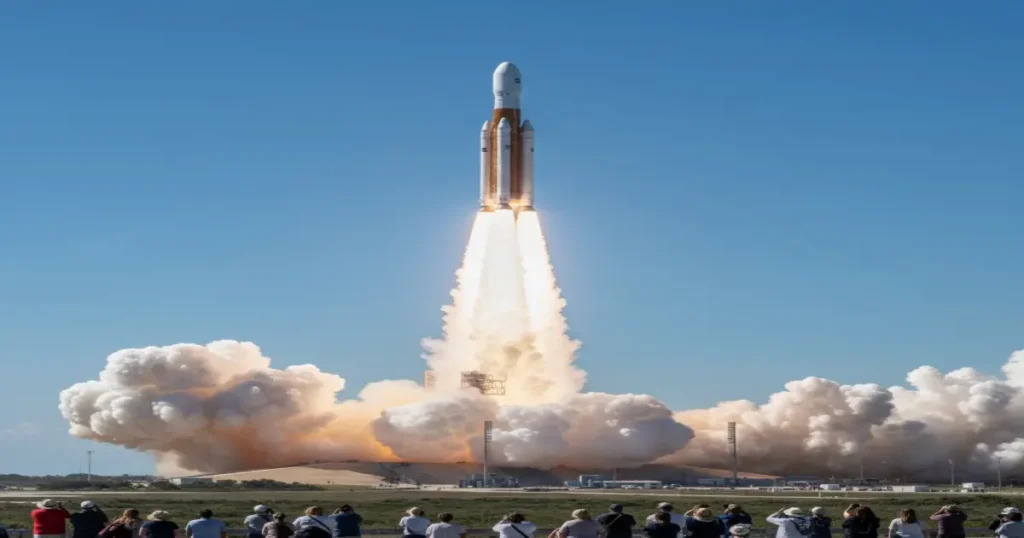
The year 2026 marks a turning point in top space and science. From NASA’s Artemis II mission preparing to return humans to lunar orbit for the first time in over five decades, to revolutionary deep-space observations by the James Webb Space Telescope, humanity is entering a bold new era of exploration, discovery, and scientific ambition.
Simultaneously, rapid breakthroughs in artificial intelligence, quantum computing, and biotechnology are transforming life on Earth. quantum computing, and biotechnology are transforming life on Earth. At the same time, the global health and wellness ecosystem is undergoing an unprecedented transformation driven by AI-assisted medicine, precision longevity science, and next-generation neurowellness technologies.
From predictive healthcare systems capable of identifying disease risks years in advance to cutting-edge research in epigenetics, regenerative biology, and cognitive performance optimization, modern science is redefining how humans approach aging, mental resilience, disease prevention, and long-term quality of life. In 2026, healthcare is no longer focused solely on treating illness—it is increasingly centered on extending healthy lifespan, enhancing brain performance, and enabling proactive, data-driven human wellness.
Artemis II Mission: Humanity Returns to the Moon
Decades of meticulous engineering and planning culminated on April 1, 2026, when NASA’s Artemis II mission officially launched. As the immense Space Launch System (SLS) rocket roared to life, it carried the Orion spacecraft—dubbed Integrity—and its four-person crew into the history books.
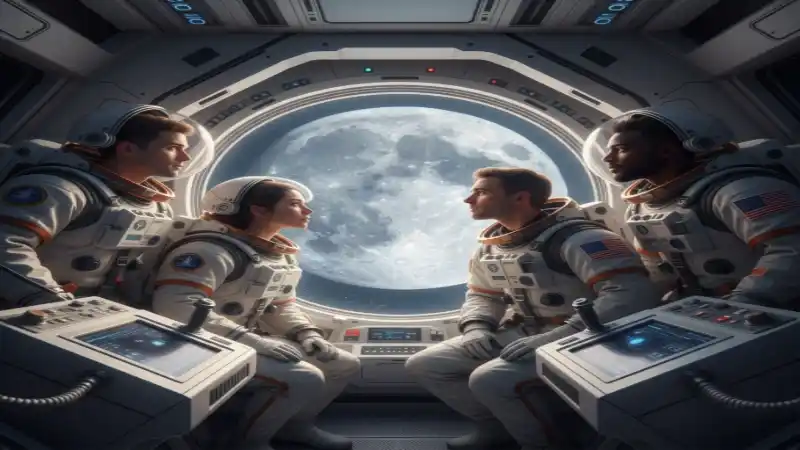
The crew, comprised of NASA astronauts Reid Wiseman, Victor Glover, Christina Koch, and Canadian Space Agency astronaut Jeremy Hansen, embarked on a nearly 10-day voyage that took them further from Earth than any human beings have traveled since Apollo 17 in 1972. This landmark flyby mission was designed not just to test the life support systems of the Orion capsule in deep space, but to reignite the global imagination.
On April 10, 2026, the mission reached its triumphant conclusion as the Orion spacecraft executed a flawless skip-reentry and splashed down in the Pacific Ocean off the coast of San Diego. Recovery teams aboard the USS John P. Murtha safely extracted the crew, validating the hardware and protocols that will support future lunar surface exploration.
The resounding success of Artemis II has provided vital data for the upcoming Artemis III mission, which NASA recently updated for 2027. Instead of an immediate lunar landing, Artemis III will now focus on complex lower Earth orbit rendezvous tests involving lunar landers and next-generation extravehicular activity (EVA) suits, ensuring maximum safety and operational efficiency before attempting a crewed lunar touchdown in 2028.

James Webb Space Telescope: New Discoverie
While human astronauts navigate our immediate celestial neighborhood, the James Webb Space Telescope (JWST) continues to unravel the deepest mysteries of the universe, systematically overturning decades of established astronomical theory. In late January 2026, a team of researchers using JWST data announced the discovery of a massive, tightly packed collision involving at least five distinct galaxies just 800 million years after the Big Bang.
Prior to this revelation, astronomers believed that such complex galaxy mergers and widespread chemical enrichments—involving oxygen and other products of stellar fusion—would not become common until well over a billion years into the universe’s lifespan. This finding proves that the early cosmos was a vastly more turbulent and rapidly evolving environment than theoretical models previously suggested.
JWST’s extraordinary capabilities are not limited to the early universe; it is also redefining the field of exoplanetary science. In mid-2025, astronomers achieved a monumental breakthrough by utilizing the telescope’s coronagraphy instruments to directly image TWA 7 b, a Saturn-sized world. This represents the lightest extrasolar planet ever observed via direct imaging, a technique that previously only yielded images of super-Jupiters.
Additionally, JWST has confirmed the existence of actively growing supermassive black holes within infant galaxies—such as CANUCS-LRD-z8.6—just 570 million years after the Big Bang, challenging our fundamental understanding of how black holes and galaxies co-evolve.
Major Space Missions in 2026 (BepiColombo, Hera, Chang’e 7)
While crewed missions and grand telescopes dominate the headlines, a fleet of robotic explorers is silently traversing the solar system to execute daring science operations in 2026. Mercury, the most overlooked of the rocky planets, is set to receive highly anticipated visitors. On November 21, 2026, the joint ESA-JAXA BepiColombo mission will finally arrive at the innermost planet after an arduous eight-year journey.
Upon arrival, the spacecraft will split into two distinct orbiters to comprehensively map Mercury’s magnetic field, surface composition, and tenuous exosphere, shedding light on the formation of planets closest to their host stars.
Simultaneously, the European Space Agency’s Hera mission will arrive at the double asteroid system Didymos in November 2026 to conduct a detailed damage assessment of Dimorphos, the moonlet that NASA’s DART mission deliberately crashed into in 2022. Hera’s data is critical for validating planetary defense strategies against potential killer asteroids. Closer to home, the lunar south pole remains a hotspot for international exploration.
In August 2026, the China National Space Administration (CNSA) is slated to launch Chang’e 7, a highly sophisticated lander bound for the Moon’s permanently shadowed craters to search for pristine water ice. Japan’s Martian Moons eXploration (MMX) mission is also preparing for a late 2026 launch, aiming to land on the Martian moon Phobos and eventually return a sample to Earth.
AI in Medicine: Fighting Superbugs and Genetic Diseases
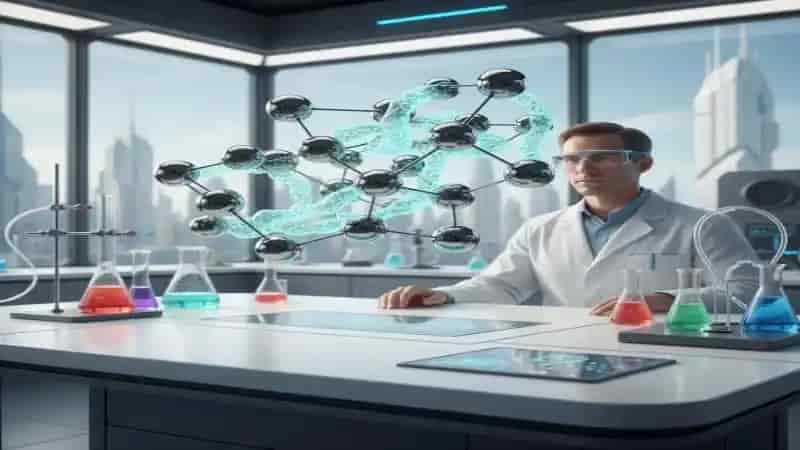
The breathtaking pace of space exploration is matched only by the revolutionary discoveries happening in laboratories back on Earth. The integration of Artificial Intelligence (AI) into the biological sciences has transitioned from theoretical modeling to life-saving application. In a stunning recent achievement, AI algorithms were deployed to combat the growing crisis of antibiotic-resistant bacteria.
By analyzing the DNA of a simple bacteriophage, the AI generated hundreds of entirely new viral blueprints. Scientists synthesized over 300 of these custom viruses in the lab, identifying 16 that were highly lethal to superbug strains of E. coli that natural viruses could not harm.
This represents the dawn of programmable microscopic assassins capable of treating infections that defy conventional antibiotics. Researchers at Columbia University also recently unveiled a powerful AI method capable of accurately predicting the activity of genes within any human cell.
By essentially mapping the intricate internal mechanisms of cellular life, this AI system promises to completely transform how geneticists approach complex conditions ranging from rare genetic disorders to aggressive forms of cancer. Innovations like these demonstrate that AI is not merely an analytical tool; it is a collaborative partner in the scientific process.
Quantum Computing Breakthroughs in 2026
The broader medical and chemical fields were celebrated during the prestigious 2025 Nobel Prize ceremonies, reflecting foundational shifts in modern science. The Nobel Prize in Physiology or Medicine was awarded to Mary E. Brunkow, Fred Ramsdell, and Shimon Sakaguchi for their groundbreaking discoveries surrounding regulatory T-cells.
Their unraveling of how these specific immune cells prevent the body from attacking its own tissues has already catalyzed novel therapies for autoimmune diseases, cancer treatments, and organ transplants.
In the realm of environmental chemistry, the 2025 Nobel Prize honored Susumu Kitagawa, Richard Robson, and Omar Yaghi for their pioneering development of Metal-Organic Frameworks (MOFs)—highly porous molecular ‘sponges’ that are now being deployed to capture atmospheric carbon dioxide and extract drinking water from desert air.
Meanwhile, the physics community is celebrating significant strides in quantum computing stability. A critical bottleneck in scaling quantum computers has been the spontaneous disappearance of atoms mid-calculation. In early 2026, researchers demonstrated a brilliant sci-fi solution: an atomic conveyor belt operating inside a high vacuum chamber.
By using optical tweezers to instantly replace lost rubidium atoms from a backup array, scientists have dramatically extended the lifespan of stable quantum circuits, bringing large-scale quantum supremacy closer to commercial reality.
Future of Space and Science Beyond 2026
As we navigate the middle of 2026, it is profoundly clear that the isolated scientific disciplines of the 20th century have fused into an interconnected web of discovery. Furthermore, AI is revolutionizing our understanding of gravitational waves—the elusive ripples in space-time caused by catastrophic cosmic events.
Machine learning algorithms have been trained to sift through petabytes of background noise, catching subtle signals of cosmic phenomena faster than human teams. The AI that models protein folding now helps process data from colliding black holes, while the advanced materials designed for the Artemis lunar missions inspire new interventions on Earth.
The achievements of Artemis II, the unrelenting gaze of the James Webb Space Telescope, and the synthesis of AI-driven medical treatments prove that our capacity for innovation is boundless.
Whether the frontier is the dark, icy craters of the lunar south pole, the atomic lattice of a quantum computer, or the ancient light of a merging galaxy 13 billion light-years away, the scientific community of 2026 has proven that human curiosity remains our most powerful evolutionary advantage. The stars, once distant and unreachable, are steadily becoming a familiar neighborhood.