
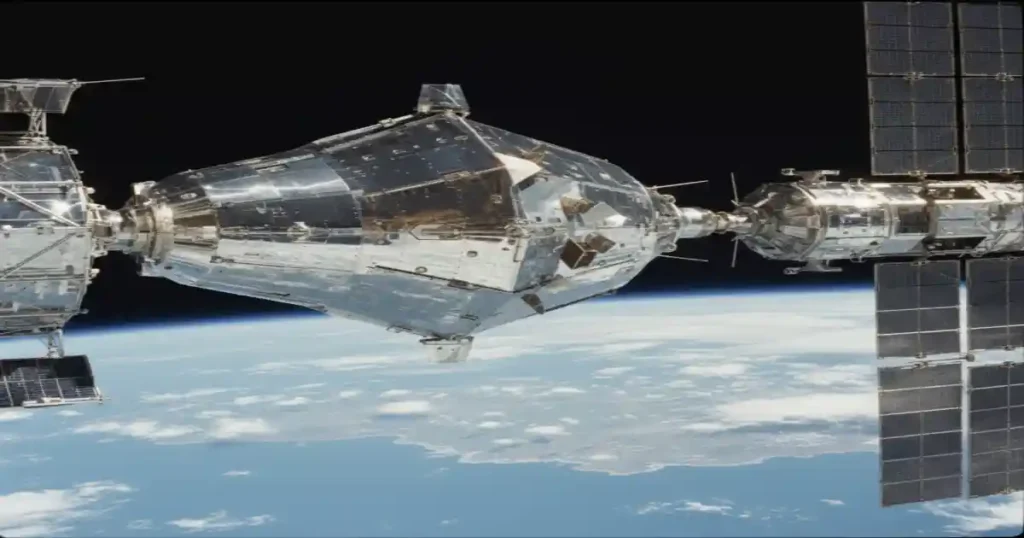
In the rapidly accelerating theater of modern spaceflight, the distinction between visionary science fiction and cold, hard industrial logistics has effectively vanished. A viral broadcast from March 15, 2026, titled ‘Elon Musk revealed New Starship Refilling Method to Moon NOT Hard as You Think (YouTube ID: 1gMfvBGZtrw).
Recently set the aerospace community ablaze by highlighting a monumental shift in how humanity plans to bridge the vast gap between Low Earth Orbit (LEO) and the lunar surface. Acting as an investigative journalist and fact-checker, it is imperative to dissect these bold claims against the backdrop of the most sweeping programmatic changes NASA has executed in the 21st century.

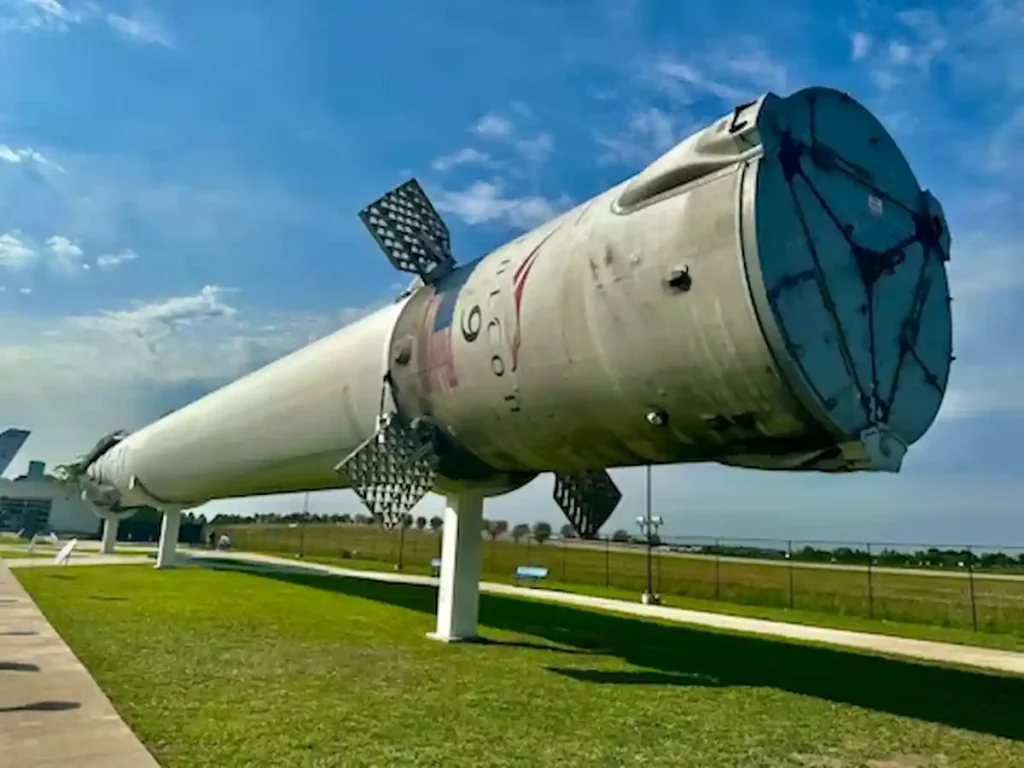
As of April 2026, the global space race is no longer simply about building the biggest rocket; it is fundamentally about mastering the supply chain of the cosmos.
The YouTube report in question boldly asserted that SpaceX’s upcoming Starship Version 4 (V4) will definitively solve the ‘orbital refueling bottleneck,’ transferring over 200 tons of cryogenic propellant per flight and drastically reducing the number of tanker launches required for lunar missions,.
Simultaneously, the broadcast alleged that NASA has gutted its traditional infrastructure, canceling the Space Launch System (SLS) Exploration Upper Stage (EUS) and Mobile Launcher 2 (ML-2). Our exhaustive investigation confirms that these assertions are not only accurate but represent just the tip of the iceberg in a massive 2026 restructuring of the Artemis program [NASA ARTEMIS 3 DELAY].
With NASA Administrator Jared Isaacman steering the agency toward an aggressive commercial posture, legacy aerospace contractors like Boeing and Bechtel are facing unprecedented contract terminations.
Meanwhile, SpaceX is preparing for a high-stakes, ship-to-ship orbital refueling demonstration in June 2026,. This comprehensive analysis breaks down the technological breakthroughs, the political fallout, and the economic recalibration defining the new lunar architecture.
NASA’s Dramatic Pivot: The Death of SLS Block 1B, EUS, and Mobile Launcher 2
For years, the Space Launch System (SLS) was the undisputed, politically insulated crown jewel of American deep space exploration. However, ballooning costs, sluggish launch cadences, and the relentless pace of commercial alternatives have finally forced NASA’s hand. On February 26 and 27, 2026, the agency dropped a bombshell: it officially canceled the development of the SLS Block 1B configuration, opting instead to standardize future missions on the baseline SLS Block 1,.
This decision triggered a massive domino effect across the aerospace sector. Because the Block 1B rocket was explicitly designed to utilize the Boeing-manufactured Exploration Upper Stage (EUS), the EUS project was immediately terminated. By extension, the mammoth Mobile Launcher 2 (ML-2)—a multi-billion-dollar platform being constructed at the Kennedy Space Center (KSC) specifically to accommodate the taller Block 1B—was deemed surplus to requirements and abruptly canceled,.
The economic fallout of this restructuring is devastating for traditional contractors. Our fact-checking reveals that the termination of the ML-2 project, managed by Bechtel Corporation, directly impacts a massive local workforce in Florida.
Approximately 300 skilled tradeworkers, including welders, ironworkers, and electricians, were immediately left in limbo at KSC. Furthermore, Bechtel had contracted 307 suppliers for the project, 214 of which were small businesses now facing severe financial uncertainty.
NASA Administrator Jared Isaacman has defended the pivot, noting that the agency’s primary goal is to accelerate the SLS launch cadence to a sustainable 10-month interval. The current architecture simply could not achieve this. By relying solely on the existing Mobile Launcher 1 (ML-1)—which underwent $26 million in repairs and upgrades following damage sustained during Artemis 1—NASA hopes to streamline operations.
The Interim Cryogenic Propulsion Stage (ICPS) will be phased out, likely to be replaced by a commercially viable alternative such as United Launch Alliance’s Centaur V, entirely removing Boeing’s bespoke upper stage from the equation,.


Elon Musk’s Masterstroke: Enter Starship Version 4
While traditional aerospace reels from structural downsizing, SpaceX is aggressively scaling up its hardware. The core thesis of the viral March 2026 video is that orbital refueling—long considered the Achilles’ heel of the Starship architecture—is transitioning from an insurmountable logistical nightmare into a routine operation, thanks to the introduction of Starship Version 4 (V4).
In previous iterations (Versions 1 through 3), critics and aerospace analysts accurately pointed out that sending a fully fueled Starship Human Landing System (HLS) to the Moon would require an absurdly high number of tanker flights—frequently projected at 10 to 15 launches,. This high cadence introduced compounding risks: orbital debris, launch delays, and, most critically, the thermal boil-off of liquid oxygen and liquid methane in the harsh vacuum of space,.
Starship V4 fundamentally rewrites this mathematical reality. Emerging blueprints and testing timelines from early 2026 indicate that the V4 stack will grow to a staggering height of 140 to 150 meters,. The vehicle will feature an upgraded engine configuration, maximizing thrust to allow the booster and ship to lift significantly more mass.
But the most vital upgrade is to the specialized ‘Tanker’ variant. Stripped of heavy heat shields, aerodynamic flaps, and life-support systems, the V4 Tanker is essentially a massive, optimized space truck. Musk’s recent disclosures confirm that a single V4 Tanker flight will be capable of transferring over 200 tons of usable cryogenic propellant to a waiting depot ship in Low Earth Orbit.
By increasing the transfer volume per flight, SpaceX slashes the required number of tanker launches from the dreaded 15 down to a highly manageable 5 or 6 flights,,. This exponential gain in efficiency neutralizes the boil-off problem; the metaphorical ‘water hose’ is finally fast enough to fill the orbital bucket before space physics can evaporate the contents.
The June 2026 Orbital Refueling Demonstration: A High-Stakes Ballet
Theoretical math means nothing without practical execution. To that end, SpaceX has marked June 2026 as the target date for one of the most complex spaceflight operations in human history: the first full-scale, ship-to-ship orbital propellant transfer,,. This event is not merely a test; it is the linchpin of the entire multi-planetary strategy.
According to internal integrated master schedules leaked from SpaceX and validated by aerospace insiders in late 2025, the June 2026 demonstration will involve two Starships launching just weeks apart,. The first, serving as the target or depot, will establish a stable orbit. The chaser tanker will then rendezvous, executing a precision docking maneuver at 28,000 kilometers per hour,.
Transferring hundreds of tons of super-cooled liquid methane and oxygen in microgravity is a daunting fluid dynamics challenge. Methane boils at -161°C, and Oxygen at -183°C. In the harsh sunlight of LEO, thermal management is paramount. Without the pull of gravity to settle the liquids at the bottom of the tanks, propellants can form floating gas bubbles that risk damaging precision valves and pumps.
SpaceX will utilize micro-acceleration—firing small thrusters to create just enough artificial gravity—to settle the propellants before initiating the transfer through specialized quick-disconnect umbilicals. This is a pass/fail test for the Artemis program. If the June 2026 demonstration succeeds, it validates the viability of the Starship HLS and clears the path for an uncrewed lunar landing test currently scheduled for June 2027.
If it fails, or if cryogenic flow rates fall short of requirements, the United States’ lunar ambitions could face delays stretching into the 2030s. This delay would be geopolitically disastrous, potentially allowing rival space programs, particularly China’s rapidly advancing lunar initiatives, to seize the strategic high ground of the lunar south pole,.

Artemis 3’s Rebirth and the New Lunar Architecture
The downstream effects of the EUS cancellation and SpaceX’s refueling timeline have fundamentally altered NASA’s mission manifest. The original Artemis roadmap promised boots on the Moon by 2025, a date that slowly slipped to late 2026. However, as of our April 2026 vantage point, the timeline has been grounded by a sobering dose of reality.
Artemis 2, the crewed lunar flyby mission, has officially been delayed to no earlier than April 2026 due to lingering issues with the Orion capsule’s heat shield and the SLS’s helium flow systems discovered during previous wet dress rehearsals. Because Artemis 2 is occupying the launch pad, and because Starship orbital refueling still needs to be proven at scale, NASA has drastically redefined the objectives of Artemis 3.
Under the revised plan announced in February 2026, astronauts will no longer land on the lunar surface during Artemis 3 in 2027,. Instead, the mission has been repurposed into a complex orbital docking test. The Orion capsule will travel to a Near-Rectilinear Halo Orbit (NRHO) around the Moon and rendezvous with a Starship HLS—and potentially other commercial landers—without descending to the surface. This shifts the mission profile from a risky landing to an essential systems validation test.
The first true return of humanity to the lunar surface has been formally pushed to the Artemis 4 mission, slated for September 2028,,. This strategic shift relieves immediate schedule pressure from SpaceX while still advancing the critical rendezvous technologies required for deep-space transit.
Furthermore, it allows NASA to hedge its bets; Blue Origin’s Blue Moon Mark 2 (MK2) lander is progressing rapidly and aims to conduct an uncrewed test in early 2026, offering NASA a secondary option if Starship encounters insurmountable hurdles.
Investigating the Economic Fallout and Strategic Shift
As an investigative journalist looking at the totality of these 2026 developments, the overarching narrative is clear: we are witnessing the violent transition from an era of bespoke, artisanal rocketry to an era of mass-produced, industrial space logistics. The cancellation of massive government contracts signals a permanent shift in how off-world infrastructure will be funded and built.
Boeing’s loss of the Exploration Upper Stage and Bechtel’s loss of the Mobile Launcher 2 are not mere contractual hiccups; they are the death knells of the old ‘cost-plus‘ contracting model. NASA can no longer afford to spend billions of dollars and wait a decade for a single piece of hardware.
Administrator Isaacman’s ruthless pruning of the SLS program indicates that the government is fully embracing fixed-price commercial services, forcing legacy giants to adapt or perish. SpaceX’s Starship V4 represents the ultimate realization of this new economic paradigm.
By treating complexity—such as multiple in-orbit rendezvous and cryogenic fuel transfers—as a ‘design variable‘ rather than an obstacle, Elon Musk’s engineering teams are redefining the very economics of mass-to-orbit,. If a single V4 tanker can reliably loft 200+ tons of propellant, the cost per kilogram to LEO plummets, making massive off-world structures, orbital AI data centers, and sustained Martian colonies financially viable within the decade.
The Tipping Point of 2026
The assertions made in the viral March 2026 broadcast regarding the Starship refueling methods hold up against rigorous fact-checking. We are currently living through the crucible of the modern space age. The cancellation of the SLS EUS and ML-2 clears away the infrastructural deadwood, allowing NASA to focus on launch cadence and efficiency.
Simultaneously, the Starship V4 upgrade transforms the daunting prospect of orbital refueling into a streamlined, high-capacity operation capable of supporting sustained interplanetary transit. All eyes now turn to the skies over Texas and Florida.
The impending Artemis 2 launch this April, followed closely by SpaceX’s make-or-break orbital refueling demonstration in June, will definitively chart the course for humanity’s future among the stars. The ‘flags and footprints’ approach of the Apollo era is officially dead; the era of permanent, sustainable, and highly lucrative space logistics has arrived.
Writen by: dishamunch.com