

The pace of innovation across artificial intelligence, quantum computing, and climate technology is no longer linear; it is exponential and deeply interconnected. Analysts at Morgan Stanley have boldly communicated to the world’s leading institutional allocators and board members that a ‘massive AI breakthrough’ is set to define the first half of 2026. This is not merely a forecast but a baseline assumption for capital allocation, driven by an unprecedented concentration of computational power at leading American laboratories..
As of March 2026, the technological landscape is fundamentally rewiring the global economy, demanding that enterprise leaders move swiftly from curiosity to comprehensive capability. The economic implications of this technological convergence are staggering. Predictions indicate that trillions of dollars will flow into AI-linked infrastructure investments by 2028, fundamentally altering workforce dynamics and introducing massive deflationary pressures across major industries.
At the heart of this transformation is the realization that AI is no longer just a software layer; it is a macro variable on par with oil prices, interest rates, and demographic shifts. Leading foundational models, such as OpenAI’s GPT-5.4, are reportedly scoring around 83% on rigorous professional benchmarks, matching or exceeding human performance across 44 distinct occupations within the top nine GDP-contributing industries.
This level of synthetic intelligence is forcing a radical reimagining of corporate strategy, where the distinction between human expertise and machine capability is increasingly blurred. Simultaneously, the foundational infrastructure supporting these advancements is undergoing a radical evolution. The traditional centralized cloud model is being heavily augmented by localized, enterprise-grade AI solutions.
Organizations are recognizing that sending highly sensitive, proprietary data to public cloud environments poses unacceptable security and regulatory risks. Consequently, 2026 has witnessed a massive surge in local AI execution, driven by partnerships between infrastructure giants like Dell Technologies and specialized integrators like HIPER Global.
These on-premise AI factories empower organizations to train, refine, and deploy massive models with the requisite operational reliability and zero-latency performance. This shift towards tech sovereignty ensures that companies can harness tectonic shifts in productivity while maintaining absolute control over their intellectual property.
The Ascendance of Agentic AI and Silicon Efficiency
A defining theme of 2026 is the rapid transition from passive generative AI to fully autonomous ‘Agentic AI’. Intelligent systems are no longer merely ‘copilots’ that require constant human prompting; they are highly autonomous digital collaborators capable of making complex decisions and carrying out multi-step workflows independently.
Industry reports emphasize that these autonomous agents are permeating critical enterprise functions, from finance and human resources automation to intelligent supply-chain orchestration and proactive customer support. For instance, Fujitsu has globally released an AI-powered platform utilizing ‘Digital Twin‘ technology and reinforcement learning to simulate millions of disruption scenarios, automatically rerouting global supply chains to mitigate geopolitical or climate-driven delays while minimizing carbon emissions.
The integration of these autonomous systems is already yielding unprecedented breakthroughs in highly specialized domains. In the biomedical sector, a recent study published in Cell Reports Medicine by researchers at the University of California San Francisco demonstrated that generative AI can now match or even outperform human expert teams in analyzing complex medical datasets.
Specifically, the AI successfully built predictive models using vaginal microbiome data to assess preterm birth risks in a fraction of the time it took human experts. This capability suggests that AI is poised to dramatically accelerate the pace of scientific and medical research by autonomously handling the massive data analysis pipelines that have historically served as significant bottlenecks.
However, the exponential scaling of AI capabilities has historically been constrained by massive memory requirements and immense energy consumption. In late March 2026, Google unveiled a monumental breakthrough named ‘TurboQuant,’ a proprietary compression algorithm that effectively ends the global AI memory shortage. TurboQuant allows large language models to shrink their key-value cache memory requirements by at least 6x, while simultaneously delivering up to an 8x speedup.
Crucially, Google Research asserts that this massive gain in efficiency comes with zero loss in computational accuracy. By enabling large vector indices to be built and queried with near-zero preprocessing time, TurboQuant is redefining AI efficiency at scale and making semantic search significantly faster and less resource-intensive.
Complementing software-side compression breakthroughs like TurboQuant are radical advancements in hardware architecture. Neuromorphic computers—processors modeled structurally after the human brain—have recently achieved a major milestone by solving complex physics equations that were once the exclusive domain of energy-hungry supercomputers.
This breakthrough points toward a near-future dominated by highly powerful, low-energy AI computing hardware. By dramatically reducing the environmental footprint of large-scale scientific computation, neuromorphic systems are unlocking new potentials in climate modeling, advanced materials science, and pharmaceutical drug discovery without exacerbating the global energy crisis.


Quantum Computing’s Accelerated Horizon and the Security Imperative
While AI dominates the immediate commercial landscape, quantum computing has aggressively accelerated its timeline from theoretical physics to practical enterprise application. The industry has firmly shifted its focus toward ‘useful quantum computing,’ building hybrid workflows where quantum processors handle immensely difficult optimization and simulation tasks while classical supercomputers manage routine workloads.
In March 2026, IBM revolutionized this space by unveiling the industry’s first published quantum-centric supercomputing reference architecture. This groundbreaking blueprint outlines a practical, scalable path for seamlessly integrating quantum processing units (QPUs) alongside traditional GPUs and CPUs within modern supercomputing environments.
Utilizing this architecture, scientists at the Cleveland Clinic have already simulated a 303-atom tryptophan-cage mini-protein, representing one of the largest and most complex molecular models ever executed on a quantum-centric system. The relentless march of quantum progress, however, has triggered severe cybersecurity alarms.
The ‘quantum apocalypse‘—the theoretical moment when quantum computers become powerful enough to shatter the traditional asymmetric encryption securing the global internet, financial transactions, and critical infrastructure—is approaching much faster than previously anticipated. Historically aligned with the National Institute of Standards and Technology (NIST) timeline of 2030,
Google radically revised its threat model in March 2026, advancing the absolute deadline for migrating to post-quantum cryptography (PQC) to 2029. Google specifically urged engineering teams globally to prioritize PQC migration for all authentication services immediately to prevent catastrophic vulnerabilities.
The urgency of this transition is compounded by the ‘harvest now, decrypt later’ threat model, wherein adversarial state actors are actively intercepting and storing encrypted enterprise data today, with the explicit intention of decrypting it once quantum capabilities mature. Despite finalized PQC standards from NIST, widespread preparedness remains alarmingly low.
Recent industry assessments from the Trusted Computing Group reveal that a staggering 91% of businesses still do not have a formal roadmap in place for quantum-safe migration. Security leaders who fail to act on this accelerating timeline risk demonstrating a profound failure in enterprise risk management, as regulatory bodies increasingly mandate credible long-term data protection strategies.
Amidst these computational leaps and security challenges, physicists may have uncovered the ‘holy grail’ of quantum computing hardware. Researchers at the Norwegian University of Science and Technology recently identified signs of a rare ‘triplet superconductor‘ in the metal alloy NbRe. Unlike conventional superconductors, a triplet superconductor has the theoretical ability to transmit both electricity and electron spin with zero resistance and zero energy loss.
If fully verified, this material could dramatically stabilize delicate quantum states while slashing the colossal energy requirements of quantum processors, laying the physical cornerstone for the most energy-efficient computing technologies ever developed.
The Energy Backbone: Climate Tech and AI’s Insatiable Power Demands
The staggering computational demands of Agentic AI and quantum simulations have inadvertently created a massive power paradox, placing unprecedented strain on global electrical grids. Fortunately, 2026 is also a landmark year for climate technology and renewable energy infrastructure.
According to the International Energy Agency (IEA), 2026 is the year renewable energy officially overtakes coal to become the world’s dominant source of electricity, comprising 36% of global power supplies compared to coal’s declining 32%. This historic milestone is primarily driven by record-breaking deployments of solar and wind infrastructure, with China alone contributing nearly 56% of new global solar capacity and 60% of new wind installations.
In the solar sector, rapid technological advancements have moved well beyond traditional silicon. The widespread commercial adoption of bifacial panels—which capture sunlight on both sides—coupled with the maturation of perovskite solar cells, is transforming the energy landscape. Perovskite technologies are now promising conversion efficiencies exceeding 30% at significantly lower production costs than legacy panels.
These breakthroughs are enabling versatile installations on diverse surfaces, including floating platforms and building-integrated materials, dramatically improving total energy yields and making localized grid parity a reality in nearly all developed markets. However, the intermittent nature of wind and solar power remains a critical challenge for providing the 24/7 baseload electricity required by hyperscale data centers.
To bridge this gap, the AI boom has triggered a massive awakening in the energy storage and battery sector. To avoid the multi-year delays associated with traditional grid upgrades, data center developers are aggressively funding grid-scale battery systems. The year 2026 is witnessing the rapid scaling of long-duration energy storage (LDES) solutions that move beyond lithium-ion limitations.

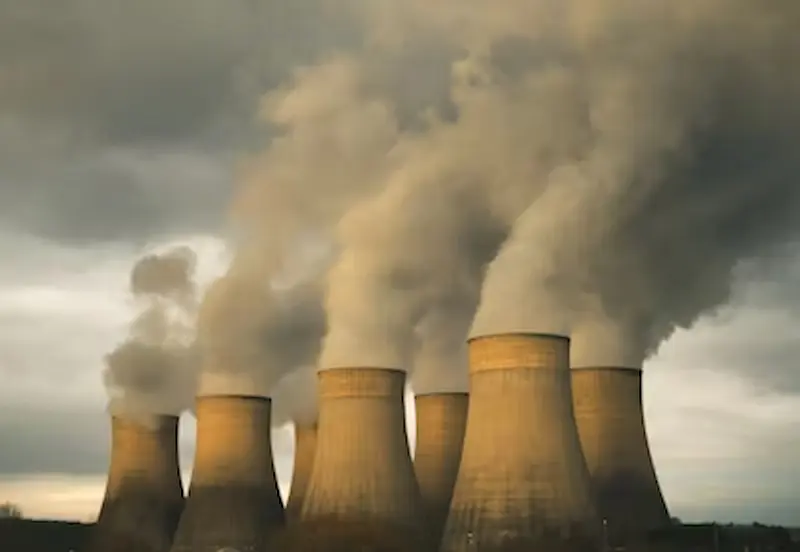
Innovations in flow batteries, sodium-based chemistries, and thermal storage are now capable of offering 12 hours or more of deep grid flexibility, seamlessly smoothing out supply during windless nights. Perhaps the most exciting baseload breakthrough of 2026 is the realization of next-generation geothermal power. After years of heavy venture capital funding, startups are finally delivering carbon-free electricity to the grid using advanced fracking techniques historically reserved for the oil and gas industry.
Fervo Energy is a prime example, successfully flipping the switch on Phase I of its Cape Station facility in Utah, generating an initial 100 MW of enhanced geothermal power from deep within impermeable rock, with plans to scale to 400 MW by 2028. Bill Gates and other prominent climate investors point to enhanced geothermal as a pivotal technology that could eventually supply up to 20% of the world’s electricity, providing the reliable, round-the-clock clean energy necessary to sustain the AI revolution.

Sustainable Enterprise Hardware and the Circular Economy
As organizations modernize their digital infrastructure, the hardware itself is undergoing a sustainability revolution. The definition of ‘sustainable technology’ in 2026 extends far beyond mere energy efficiency during operation; it encompasses the entire product lifecycle, from ethical mineral extraction to end-of-life recycling.
Tech companies are now mandated by stricter environmental regulations and intense consumer pressure to adopt circular economy principles, explicitly designing devices for reusability and recyclability rather than planned obsolescence. This shift is highly visible in the consumer electronics sector, where the latest eco-friendly smartphones are predominantly constructed using recycled aluminum, recovered glass, and advanced bioplastics, thereby drastically reducing the industry’s reliance on environmentally destructive rare earth mining.
Battery chemistry is also evolving rapidly to eliminate ecological bottlenecks. While lithium-ion has driven the mobile revolution for decades, 2026 sees the commercial emergence of solid-state batteries. By replacing volatile liquid electrolytes with solid counterparts, these batteries offer significantly greater energy density, faster charging times, and heavily improved thermal safety profiles. Furthermore, sodium-ion batteries are gaining immense traction for stationary energy storage.
By utilizing highly abundant and cheap sodium instead of scarce lithium, these batteries provide an affordable and scalable option for backing up smart grids and residential virtual power plants without triggering critical supply chain constraints. Graphene-based batteries are another commercial reality in 2026, boasting ultra-rapid charging cycles and dramatically extended operational lifespans. To further advance the circular economy, second-life battery programs have become mainstream.
Degraded battery packs extracted from electric vehicles—which may no longer possess the burst power required for automotive acceleration but still retain substantial storage capacity—are being actively repurposed by utility companies to power smaller home energy systems and stabilize local microgrids. This ingenuity ensures long-term functionality without compromising the planet’s finite resources.
Looking Forward: Strategic Alignment for the Next Decade
The narrative of 2026 is one of structural rebuilding. As highlighted by top global consultancies, technology leadership is no longer about isolated experimentation; it is about constructing durable, resilient foundations upon which future innovations will depend. Agentic AI will continue to eat traditional software development, moving from manual coding to intent-driven autonomous maintenance.
Quantum computing will exit the laboratory and enter the datacenter, forcing a massive, urgent overhaul of global cryptographic security protocols to meet Google’s 2029 deadline. And the explosive compute demands of these technologies will fundamentally rely on the successful scaling of enhanced geothermal systems, highly efficient perovskite solar arrays, and non-lithium long-duration energy storage.
For enterprise leaders, CIOs, and policymakers, the mandate is incredibly clear. Organizations must move aggressively to adopt enterprise-wide AI strategies with strictly defined value targets, robust data governance models, and proactive tech sovereignty infrastructure. They must simultaneously map their cryptographic vulnerabilities and begin immediate migration to quantum-safe algorithms before adversarial data harvesting renders their intellectual property completely obsolete.
The technological advancements of 2026 have proven that the future is already here, heavily capitalized, and moving at an unprecedented velocity. Those who recognize these shifts not as mere weather reports, but as foundational blueprints for the next era of human industry, will be the architects of tomorrow’s global economy.