
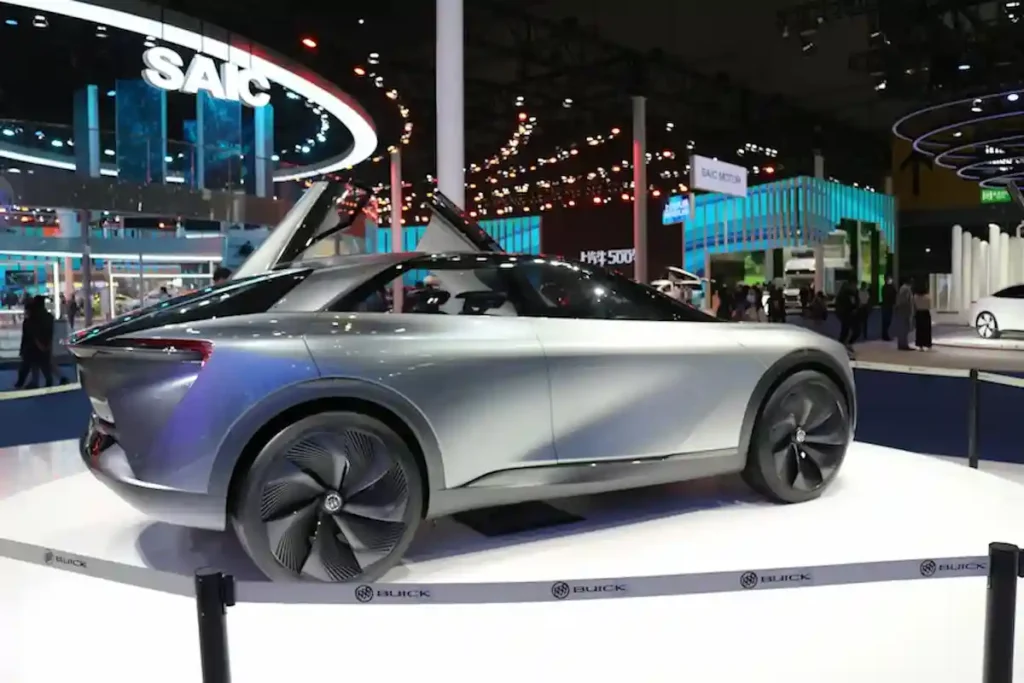


The 2026 Automotive Metamorphosis
The automobile industry in early 2026 is undergoing a metamorphosis that extends far beyond mere evolution; it is transforming at a revolutionary pace unseen in previous decades. What was once fundamentally a mechanical discipline—dominated by discussions of thermodynamics, internal combustion engine displacement, gear ratios, and hydraulic fluid dynamics—has permanently crossed the threshold into the realm of advanced consumer electronics and high-performance computing.
Cars are no longer just mechanical machines defined by their engines and wheels, but rather, they have metamorphosed into software-powered, connected, and highly intelligent mobility devices. Today’s vehicles are best described as sophisticated, hyper-connected supercomputers on wheels, capable of processing terabytes of data per hour to ensure maximum safety, operational efficiency, and unparalleled passenger comfort.
The mechanical components, while still utterly essential, have become inextricably linked to and heavily reliant upon the overarching digital software architectures that govern their every movement and real-time reaction. This profound technological shift is unfolding against a backdrop of intense geopolitical complexity and unprecedented macroeconomic restructuring. Industry leaders are no longer just fighting for market share through traditional horsepower wars or aerodynamic styling; they are battling for dominance in semiconductor supply chains, software engineering talent, and critical raw materials.
The 2026 landscape requires original equipment manufacturers (OEMs) to act simultaneously as technology conglomerates, energy providers, and data management firms. Those unable to successfully pivot toward this multifaceted operational model are finding themselves rapidly outpaced by more agile, tech-forward competitors who inherently understand that the modern automobile is simply the physical vessel for a digital ecosystem.
Geopolitics, Tariffs, and the Restructuring of Global Trade
In the geopolitical arena, early 2026 has introduced a new chapter of complexities, hurdles, and distinct opportunities for the global automobile sector. A primary catalyst for this massive industry pivot has been President Donald J. Trump’s recent implementation of a policy raising the United States’ global import tariff from 10 percent to 15 percent, an immediate action taken in the wake of significant judicial rulings.
This aggressive tariff gambit has instigated a profound new chapter in global trade turbulence, effectively forcing multinational automakers to rapidly restructure their sprawling cross-border supply chains. OEMs are aggressively localizing manufacturing footprints to circumvent the devastating financial impact of these tariffs, a move that is reshaping the industrial maps of North America, Europe, and Asia.
Concurrently, shifting power dynamics are resulting in novel economic alliances that have direct ramifications for automotive production and international export strategies. For instance, the sweeping India-Europe Deal, which was highly publicized and formalized in early 2026, is actively redefining global trade and economic power. This strategic partnership has provided a lucrative new corridor for the exchange of critical automotive components, intellectual property, and cutting-edge technology.
By establishing a robust framework that bypasses traditional trade bottlenecks and heavily tariffed zones, this agreement is allowing European automotive giants to tap into India’s rapidly scaling manufacturing prowess while simultaneously giving Indian automakers unprecedented access to strict, highly regulated European markets. These overarching macroeconomic pressures are directly influencing how and where future vehicles are designed, sourced, and assembled.
The era of the globally homogenized car—built with parts sourced equally from fifty different nations and assembled in a single mega-factory for worldwide export—is rapidly coming to a close. Instead, the automobile industry is shifting toward a model of regionalized production hubs. These hubs are designed to be entirely self-sufficient, localized ecosystems capable of sourcing critical battery minerals, fabricating semiconductors, and assembling the final vehicle within a tightly controlled, geopolitically secure perimeter. This insulates automakers from the volatility of international trade disputes but requires massive upfront capital expenditure.
Market Dynamics: Astounding Sales Resilience in Emerging Markets
While western automobile markets navigate the considerable friction of localized economic slowdowns, shifting consumer sentiment, and aggressive trade policies, emerging markets are exhibiting astounding resilience and record-breaking automotive adoption rates. A premier example of this phenomenon in 2026 is the Indian market, which has firmly cemented its position as an unstoppable global powerhouse for both automotive production and domestic consumption.
According to official data released by the Society of Indian Automobile Manufacturers (SIAM), the Indian automobile industry initiated the 2026 calendar year on an exceptionally strong note, shattering previous historical benchmarks. Delving deeper into the granular data provided by SIAM, the total production volume across passenger vehicles, three-wheelers, two-wheelers, and quadricycles reached a staggering 2,927,394 units in the month of January 2026 alone.
Within this massive figure, passenger vehicle sales witnessed a highly robust 12.6 percent year-on-year surge, climbing to 449,616 units in January 2026 compared with 399,386 units during the same month in the previous year. The growth trajectory was even more pronounced in other critical mobility segments; commercial three-wheeler sales expanded by an astonishing 30.2 percent to hit 75,725 units, while the incredibly crucial two-wheeler market, which serves as the backbone of Indian mobility, grew by an impressive 26.2 percent to 1,925,603 units.
Rajesh Menon, the Director-General of SIAM, officially noted that passenger vehicles, two-wheelers, and three-wheelers definitively recorded their highest-ever January sales in 2026. He attributed this monumental, record-breaking performance directly to sustained, resilient consumer demand that was heavily catalyzed by strategic GST rate reductions previously enacted by the government. The potent momentum firmly established in the previous quarter seamlessly extended into the new calendar year, showcasing a consumer base with rising disposable incomes and an unyielding appetite for personal mobility solutions.
Furthermore, the highly anticipated initiatives formally announced in the Union Budget 2026 are meticulously tailored to further strengthen India’s indigenous manufacturing base. When coupled with existing policy tailwinds—such as production-linked incentive schemes aimed at boosting domestic manufacturing and improving overall affordability—these strategic legislative measures are widely expected to deliver substantial long-term dividends for the entire automobile sector.
Market analysts confidently project that these policies will firmly support upward growth and ensure robust sustainability in the medium to long term, cementing the region’s status as a critical engine for global automotive expansion.
The Triumph of the Software-Defined Vehicle (SDV)
As macroeconomic factors redefine where automobiles are built, a technological revolution is radically redefining how they function. The complete transition to the Software-Defined Vehicle (SDV) framework is arguably the most significant architectural paradigm shift in the history of automotive engineering. Rather than operating as a disjointed collection of mechanical parts independently managed by dozens of decentralized, single-function Electronic Control Units (ECUs), the 2026 automobile is anchored by a massive, highly centralized computational core.
This core acts as the vehicle’s central nervous system, managing everything from advanced powertrain thermal dynamics to hyper-personalized cabin acoustics. This transition to centralized computing architectures enables automakers to deploy comprehensive Over-The-Air (OTA) updates that dramatically alter the vehicle’s performance characteristics long after it has left the dealership lot.
In 2026, it is entirely commonplace for a consumer to wake up and discover that their vehicle has downloaded a software patch overnight that improves its 0-60 mph acceleration time, extends its maximum electric range by optimizing battery cell discharging algorithms, or entirely revamps the user interface of the infotainment system. The vehicle is no longer a depreciating, static asset; it is a dynamic, constantly evolving platform that genuinely improves with age through continuous software iteration.


Inside the cabin, the integration of generative artificial intelligence has fundamentally altered the relationship between driver and machine. As noted in analyses of the 2026 tech landscape, ‘Generation AI’—the younger demographic that grew up natively with advanced machine learning tools—has actively turned artificial intelligence into power, profit, and purpose.
By the time legacy corporations fully grasped the revolutionary nature of AI, young, agile engineering teams had already moved on to building the foundational operating systems that now run inside these modern vehicles. Consequently, voice assistants in 2026 are not merely responding to rigid, pre-programmed commands; they are functioning as hyper-intelligent conversational partners capable of understanding deep contextual nuances, scheduling complex itineraries, and dynamically adjusting the vehicle’s driving mode based on the driver’s analyzed emotional state.
Electrification 2.0: The Solid-State Battery Breakthrough
While software serves as the brain of the modern automobile, the battery remains its beating heart. At the absolute epicenter of the 2026 electric vehicle revolution is the long-awaited, deeply transformative maturation of solid-state battery technology. For over a decade, the industry has aggressively chased this technological holy grail, desperately seeking to overcome the inherent physical and chemical limitations of traditional lithium-ion cells.
In early 2026, heavily capitalized companies like QuantumScape have successfully reached critical inflection points, fundamentally transitioning from theoretical laboratory promises to the generation of highly anticipated, tangible vehicle testing data. The core scientific innovation propelling this breakthrough lies in fundamentally altering the battery’s internal chemical architecture. Specifically, engineers are replacing the sloshy, highly flammable liquid electrolyte found in conventional cells with a profoundly thin, entirely non-combustible solid piece of ceramic separator.
The successful implementation of this solid ceramic layer is an engineering marvel that resolves several chronic issues simultaneously. It drastically suppresses the formation of lithium dendrites—microscopic, needle-like structures that historically caused short circuits and catastrophic battery fires—thereby elevating the fundamental safety profile of electric vehicles to unprecedented heights. The operational implications of successfully manufacturing this ceramic separator at an industrial scale are nothing short of staggering for the broader automobile ecosystem.
By successfully pulling off this monumental feat, companies are unlocking radically higher energy densities. This translates directly to substantially longer driving ranges for electric cars within the same physical footprint, effectively neutralizing the lingering psychological barrier of range anxiety that has long deterred mainstream consumers. Even more remarkably, this leap in advanced materials science facilitates ultra-fast charging capabilities, empowering a modern EV to power up from 10 percent to an 80 percent state of charge in less than 15 minutes.
Throughout 2026, the global industry’s attention is intensely fixated on QuantumScape’s so-called ‘Cobra’ production milestone. This pivotal step officially signifies the technical capability to manufacture these highly complex solid-state cells consistently, economically, and at massive commercial volumes.
While financial analysts and the stock market routinely treat the solid-state sector as a highly volatile ‘binary bet’—an all-or-nothing scenario where a company could either completely revolutionize global energy infrastructure or catastrophically fail to ever leave the lab—the impending arrival of hard vehicle testing data is actively separating hyper-inflated stock hype from cold, empirical reality.
Advanced Manufacturing: AI, Gigacasting, and Industry 5.0
The vehicles of 2026 are not merely different in their technological composition; the fundamental methodologies utilized to manufacture them have been entirely overhauled. The traditional automotive assembly line, pioneered over a century ago, has been radically superseded by the principles of Industry 5.0. At the forefront of this manufacturing renaissance is the widespread global adoption of gigacasting.
This disruptive process, initially popularized by EV pioneers and now standard across legacy automakers, utilizes massively pressurized casting machines to forge entire sections of a vehicle’s underbody as a single, contiguous piece of aluminum. This eliminates the need to meticulously weld or rivet hundreds of smaller, individual stamped metal components together.

Gigacasting severely reduces factory floor space requirements, significantly lowers capital expenditure on expensive robotic welding armatures, and dramatically accelerates overall production throughput. More importantly, it results in a final vehicle chassis that is tangibly lighter and infinitely more rigid, traits that inherently improve both the structural crash safety and the maximum aerodynamic range of the electric vehicle.
In 2026, automotive manufacturing plants resemble ultra-clean, clinical silicon fabrication laboratories rather than the grimy, spark-filled factories of the twentieth century. Furthermore, artificial intelligence is now deeply embedded at every stage of the physical manufacturing process. Predictive machine learning algorithms relentlessly monitor the microscopic health and acoustic vibrations of every robotic arm on the assembly line, identifying infinitesimal mechanical anomalies and proactively scheduling preventative maintenance long before a catastrophic mechanical failure can cause costly production downtime.
Additionally, AI-driven computer vision systems inspect paint finishes and panel gaps with a level of sub-millimeter precision that vastly exceeds human capability, ensuring flawless quality control even at maximum production velocity. Supply chain logistics within these gigafactories are similarly governed by advanced neural networks.
By analyzing vast oceans of global data—ranging from real-time maritime shipping weather patterns to localized fluctuations in rare-earth mineral mining outputs—these AI systems dynamically reroute component deliveries and adjust factory output targets on the fly. In an era still reeling from the cascading logistical shocks of global tariffs and port congestions, this AI-driven supply chain elasticity is the primary differentiator between automotive companies that successfully thrive and those that inevitably face financial insolvency.
Autonomous Driving: Navigating the Regulatory Labyrinth
The trajectory of autonomous driving technology in 2026 represents a fascinating intersection of breathtaking algorithmic breakthroughs and stringent, highly cautious government regulation. The industry has firmly moved past the era of overpromising Level 5 total autonomy, settling instead into the highly practical, commercially viable deployment of advanced Level 3 and localized Level 4 autonomous systems.
Level 3 systems, which allow the driver to fully disengage from the physical act of driving under specific highway conditions, have now been legally approved in numerous major global jurisdictions, provided the vehicle can securely hand back control when environmental parameters deteriorate. This operational reality is largely due to massive advancements in sensor fusion technology. The 2026 autonomous vehicle relies on an incredibly robust, multi-modal sensor suite that seamlessly integrates high-definition solid-state LiDAR, ultra-long-range
Doppler radar, and high-dynamic-range stereoscopic cameras. This redundant hardware architecture ensures that if one sensor modality is blinded by harsh sunlight or obscured by dense fog, the other systems instantaneously compensate to maintain a flawless, 360-degree three-dimensional map of the vehicle’s dynamic surroundings. However, the true breakthrough in 2026 autonomous driving lies in the underlying software.
The rigid, rules-based programming algorithms of the past have been completely replaced by highly sophisticated, end-to-end deep learning neural networks. These models have been rigorously trained on billions of miles of simulated and real-world driving data, allowing them to accurately predict the highly stochastic, often irrational behavior of human pedestrians and erratic human drivers.
The vehicle’s onboard edge computing processors analyze these complex probability matrices in real-time, enabling the car to make split-second ethical and navigational decisions that consistently prioritize passenger safety. Despite these massive technological strides, the regulatory landscape remains deeply fragmented. Automakers are forced to navigate a dizzying patchwork of local, state, and international legislations.
While some progressive municipalities actively court autonomous robotaxi fleets to alleviate urban congestion and reduce traffic fatalities, other regions have enacted outright bans, citing unresolved concerns regarding algorithmic liability and cybersecurity vulnerabilities. Consequently, the legal departments of major automobile manufacturers have become just as critically important as their advanced engineering divisions, tirelessly lobbying for standardized legislative frameworks that can safely accommodate the autonomous future.
Sustainability and the Circular Automobile Economy
As the overarching automotive narrative correctly focuses heavily on zero-tailpipe-emission electric vehicles, the industry’s definition of true sustainability has dramatically expanded in 2026. The conceptual focus has shifted entirely away from merely reducing local exhaust emissions to meticulously scrutinizing the comprehensive, cradle-to-grave lifecycle carbon footprint of the entire vehicle.
A modern EV charged by a coal-powered energy grid and manufactured using heavily polluting extraction methods is no longer considered a genuine environmental triumph by increasingly discerning regulators and eco-conscious consumers. To aggressively combat these hidden emissions, the 2026 automobile industry has fully embraced the principles of the circular economy. The concept of the vehicle as a disposable asset is dead. Instead, cars are intelligently designed from the initial blueprint stage to be almost completely recyclable.
Closed-loop battery recycling facilities have achieved remarkable efficiency rates, capable of extracting and purifying up to 98 percent of the incredibly valuable lithium, cobalt, nickel, and copper from end-of-life battery packs. These reclaimed, battery-grade materials are then seamlessly reintroduced directly back into the battery manufacturing supply chain, massively reducing the industry’s precarious reliance on ecologically devastating, politically unstable open-pit mining operations.
This rigorous commitment to deep sustainability extends beautifully into the vehicle’s interior cabin design. The traditional luxury paradigm—once defined exclusively by heavily tanned animal leathers and rare, deeply lacquered exotic wood veneers—has been entirely redefined. The most prestigious luxury automobiles of 2026 prominently feature advanced, highly durable vegan leathers synthesized from agricultural byproducts like mushroom mycelium and cactus fibers.
The Dealership of the Future: Omnichannel Retail
The radical transformation of the 2026 automobile fundamentally demands a complete reinvention of the traditional retail and ownership experience. The archaic, highly adversarial dealership model—characterized by stressful price haggling, high-pressure sales tactics, and opaque financing structures—is rapidly collapsing. In its place, the industry is widely adopting the agency model and direct-to-consumer sales frameworks.
Under the agency model, the OEM retains full legal ownership of the vehicle inventory and sets a transparent, non-negotiable national price, while the physical dealership legally transitions into a specialized delivery, test-drive, and dedicated service center. This seamless, omnichannel retail approach empowers the modern consumer to complete the entire vehicle purchasing journey—from immersive virtual configuration and digital financing approval to remote trade-in valuation—entirely from the comfort of their smartphone.
If a customer chooses to visit a physical showroom in 2026, they are greeted not by aggressive salespeople, but by highly trained ‘product experts’ utilizing high-fidelity augmented reality (AR) headsets. These AR tools allow buyers to visually peel back the metallic skin of the display vehicle, interactively exploring the hidden solid-state battery architecture or virtually changing the paint color in real-time beneath dynamic studio lighting.
The Road Ahead
The automobile industry in 2026 stands as a monumental testament to the sheer, unyielding force of human engineering and rapid technological adaptation. We are currently witnessing the incredible culmination of intersecting megatrends: the final victory of the software-defined architecture, the breathtaking reality of solid-state battery commercialization, the pragmatic deployment of advanced autonomous AI, and a deep, systemic commitment to true circular sustainability.
These vehicles represent the most complex, highly integrated consumer devices ever manufactured in the history of industrial civilization. As we confidently drive forward into the next decade, the companies that will ultimately survive and dominate this hyper-competitive landscape are those that refuse to be anchored by the mechanical legacies of the past.
The 2026 automobile is a dynamic, living digital ecosystem, heavily shaped by sweeping global trade policies, record-breaking demand in booming emerging markets like India, and the relentless ingenuity of a younger generation that views AI not as a novelty, but as a foundational necessity. The road ahead is undoubtedly fraught with complex regulatory hurdles and geopolitical turbulence, but the ultimate destination—a safer, vastly cleaner, and infinitely more intelligent era of global mobility—has never been more clearly in focus.