Exploring AI in Manufacturing: The 2026 Landscape – From Predictive Tools to Autonomous Operations
Exploring AI in Manufacturing: The 2026 Landscape – From Predictive Tools to Autonomous Operations
Mandate: From Predictive Tools to Autonomous Operations
As of March 2026, artificial intelligence is no longer a futuristic add-on in manufacturing—it has cemented itself as the core engine driving efficiency, resilience, and unprecedented innovation. While historical data from the early 2020s showed that 98% of manufacturers were exploring AI, only about 20% were fully prepared for scaled deployment. Today, the industry stands at a transformative pivot point.
In advanced manufacturing hubs, ranging from global mega-factories to specialized regional centers like Ranchi’s industrial ecosystem in India (home to extensive foundries, casting plants, and precision engineering), AI is actively transforming traditional, labor-intensive processes into highly adaptive, data-driven systems. Heat treatment, molding, and defect detection are no longer reactive; they are dynamically controlled by self-correcting neural networks.
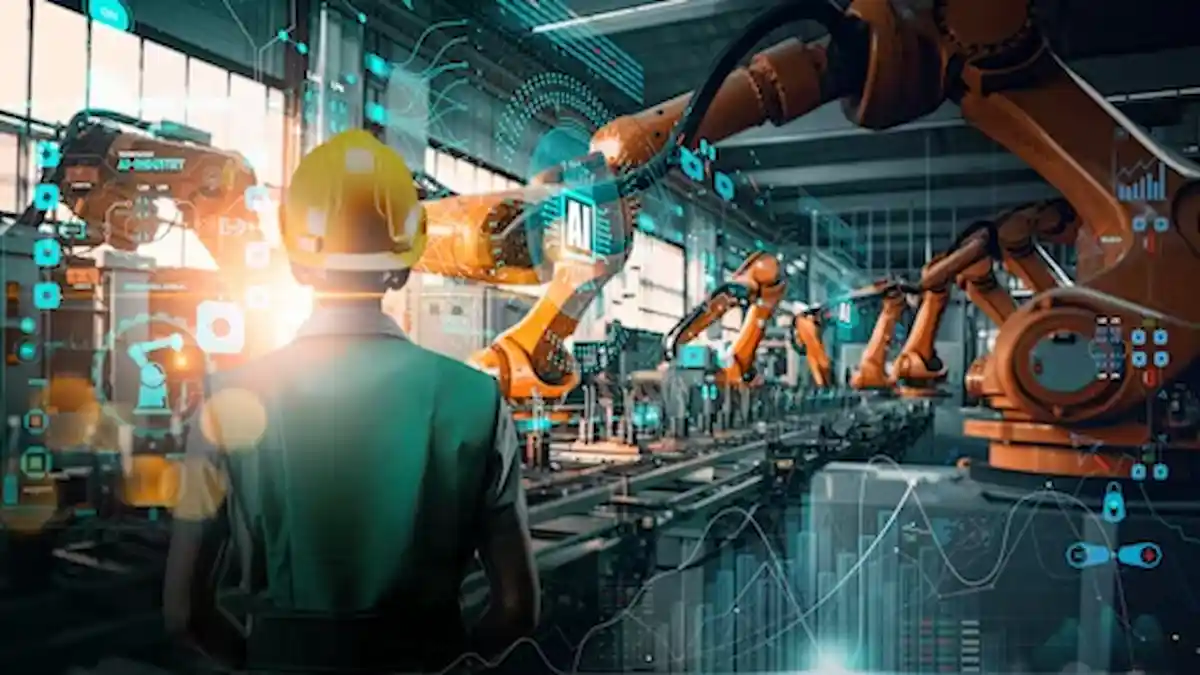
The defining trend for 2026 is the decisive and accelerated move toward autonomous, smart operations. Unlike the smart factories of the past decade that relied heavily on passive dashboards and manual intervention to correct flagged anomalies, today’s facilities are designed to sense, respond, and optimize with minimal human oversight. This shift is not merely technological but a strict business mandate.
Experts predict that companies failing to integrate deeply embedded AI within the next five years risk catastrophic losses in competitiveness. In practice, this means AI-powered production lines that can autonomously adjust supply schedules, reroute raw materials around sudden bottlenecks, or tweak thermodynamic parameters in real time without waiting for a human supervisor’s approval.
This operational evolution is being accelerated by macroeconomic pressures. A volatile global trade landscape, often characterized by rapid tariff fluctuations and supply chain friction, demands real-time agility that human teams simply cannot manage manually. As noted in recent industry reports, the factory’s “nervous system” is fundamentally changing.
To explore more about how traditional businesses are adapting to these sweeping changes, readers can dive into our comprehensive smart manufacturing insights. What we are witnessing is a paradigm shift where the goal is no longer just tracking issues, but executing instantaneous corrections across a fully connected, agile operating system.
Agentic AI and Cognitive Automation: The Digital Assembly Line
If generative AI was the buzzword of 2024, Agentic AI is the undisputed champion of 2026. Agentic AI systems are designed not just to predict or generate text, but to understand complex goals, create multi-step execution plans, and act autonomously across various software and hardware environments. According to recent forecasts, there will be a massive fourfold increase in agentic AI adoption in manufacturing by the end of this year, jumping from 6% to 24%.
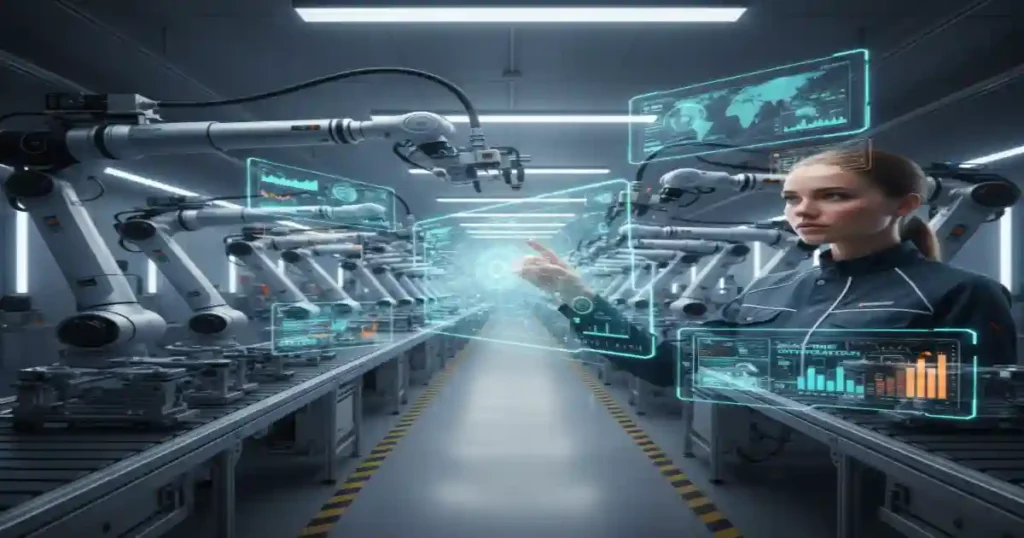
These “AI agents” act as digital co-workers that operate 24/7, reasoning through production problems and coordinating end-to-end workflows. They handle proactive process control, dynamic bottleneck resolution, complex schedule adherence, and autonomous fleet management in shipping yards. The measurable impact of Agentic AI is staggering. Early adopters in the industrial sector are reporting dramatic operational improvements.
For example, recent data indicates an 80% automation rate for transactional order processing decisions and up to a 95% reduction in query time for complex materials data. In high-volume manufacturing environments, simply layering agentic-driven scheduling and production orchestration on top of existing hardware has yielded a 9% improvement in Overall Equipment Effectiveness (OEE) within just six months.
These systems evaluate thousands of potential routing options, plan precise sequences, and execute decisions in a closed-loop control format. This evolution is especially critical in highly complex, multi-variable environments like foundries. In a casting plant, variables such as ambient temperature, sand quality, and delicate alloy compositions demand rapid, precise adjustments. A static, rule-based algorithm cannot adapt if a new batch of raw scrap metal possesses slightly different thermal properties.
Agentic AI, however, dynamically shifts inspection criteria and furnace parameters on the fly. This introduces the concept of the “Digital Assembly Line,” where the orchestration of multiple specialized AI agents forms the absolute foundation of the factory, fundamentally altering how value is generated.
Super AI Factories and the Gigawatt Infrastructure
The sophisticated AI capabilities deployed on the factory floor in 2026 are powered by a massive, unseen infrastructure. We have entered the era of “Super AI Factories“—gigawatt-scale data centers built exclusively to train and run frontier AI models at planetary scale. Tech giants and industrial conglomerates are expected to spend upwards of $600 billion in capital expenditures this year alone on hyperscale AI infrastructure.
These facilities no longer look like traditional IT centers; they resemble massive power plants, utilizing direct-to-chip liquid cooling and drawing incredible amounts of electricity—some equivalent to the consumption of small nations—to power clusters of over a million GPUs. This infrastructural boom is facilitating the rise of the “Strategic Orchestrator.”
Much like semiconductor foundries revolutionized electronics, AI foundries provide the raw computational infrastructure and platform expertise necessary for manufacturers to build bespoke, highly specialized neural models. Platforms such as Microsoft’s Foundry and NVIDIA’s industrial AI ecosystems are allowing global manufacturers to deploy sophisticated intelligence locally.
Furthermore, the geopolitical landscape has spurred the creation of “Sovereign AI” clouds—nationalized, localized data centers ensuring that sensitive manufacturing data and proprietary agentic workflows remain secure and fully compliant with regional regulations.
While centralized supercomputing handles massive model training, 2026 is also defined by the rapid expansion of Edge AI. Computation is moving directly to the factory floor. By utilizing advanced embedded systems and on-device AI inference, machines can make split-second decisions without the latency of cloud communication.
This edge-to-cloud synergy ensures that autonomous robots, computer vision cameras, and predictive maintenance sensors operate flawlessly even if external network connections are temporarily disrupted.
Generative AI for Design, Digital Twins, and World Models
Generative AI (GenAI) has matured significantly from its origins as a conversational tool. In the 2026 manufacturing landscape, GenAI is the primary engine for accelerating product development, generating vital synthetic training data, and simulating extreme physical scenarios. Traditional digital twins—virtual replicas of physical assets—have evolved from static 3D visualizations into highly intelligent, physics-informed “World Models.”
These world models do not just reflect current states; they possess a deep, predictive understanding of physical laws, allowing them to simulate entire production lines and optimize for resilience on the fly. Through integrations with platforms like NVIDIA’s Omniverse, engineers can run thousands of iterative design scenarios in minutes. For example, when optimizing a tool path for a CNC machine or simulating the fluid dynamics of a complex metal casting, GenAI can instantly generate plausible failure states.
This drastically reduces the traditional trial-and-error approach, saving millions in wasted materials and lost time. Predictive maintenance has also benefited heavily; instead of merely alerting a technician that a vibration is out of spec, the GenAI system provides a complete root-cause analysis, a generated schematic of the failing part, and a step-by-step repair protocol, bridging the critical knowledge gap for frontline workers.

Quality Control, Defect Detection, and the Shift to Physical AI
AI-based computer vision systems are now the undisputed standard for quality assurance. Capable of inspecting products at superhuman speeds and microscopic precision, these edge-deployed systems spot defects in real time with an accuracy that far surpasses human capability. In the context of heavy industries like foundries, machine vision instantaneously detects structural compromises such as gas porosity, hairline cracks, or slag inclusions in castings as they move down the line.
Because these systems are increasingly tied to Agentic AI, a detected defect doesn’t just trigger an alarm; it triggers an autonomous root-cause investigation that adjusts the upstream machine parameters to prevent the defect from recurring. However, the most visually striking revolution of 2026 is the explosive mainstream deployment of Physical AI and humanoid robotics.
The robotics industry has reached a massive inflection point where advanced foundation models are successfully grafted onto highly mature, reliable hardware. We have moved beyond isolated lab demonstrations into widespread enterprise deployment. General-purpose humanoid robots are now actively assisting in manufacturing, material handling, and hazardous environments, profoundly altering the labor dynamics of the factory floor.
Major industry players have rolled out highly capable models this year. Tesla’s Optimus Gen 2 features sophisticated AI integration, improved joint articulation, and is built to seamlessly handle repetitive manufacturing tasks while learning from real-world human demonstrations. Boston Dynamics’ fully Electric Atlas is currently being deployed at scale to automotive facilities, such as Hyundai’s Robotics Metaplant Application Center, marking a clear shift toward real-world industrial utility.
Simultaneously, robotics firms like Figure are actively deploying their Figure 03 humanoids onto production lines, powered by groundbreaking generalist world models like NVIDIA’s DreamDojo, which simulates millions of physics-based scenarios for rapid real-time learning. For a broader look at how these technologies are integrating into our lives, see our piece on technology trends shaping the next decade.

Relevance to Foundry Technology and Advanced Manufacturing Clusters
The implications of these AI advancements are particularly profound for foundational sectors like foundry technology, which encompasses the highly volatile processes of melting, molding, and casting. In these environments, the marriage of legacy heavy machinery and cutting-edge industrial AI is yielding spectacular results. One of the most critical applications is the enhancement of Computational Fluid Dynamics (CFD).
AI algorithms now dramatically accelerate the rendering of fluid flow and heat transfer models for sand casting and high-pressure die casting, turning simulations that used to take days into instantaneous, real-time feedback loops. Defect prediction in foundries has been completely revolutionized. Machine learning models continuously ingest massive streams of multivariate data—acoustic vibrations from the furnace, optical pyrometer temperature readings, and high-speed imagery of the molten pour.
By analyzing this data, the AI forecasts complex metallurgical issues like shrinkage cavities or gas porosity long before the metal solidifies. Furthermore, AI autonomously optimizes critical process parameters; it fine-tunes the pouring temperature, adjusts mold coating thickness, and modulates cooling rates dynamically to guarantee maximum yield. In the context of India’s booming industrial sectors, such as the historic foundry clusters in Jharkhand (home to institutions like NIAMT Ranchi), AI represents a vital modernization tool.
It provides a highly effective pathway to upgrade legacy setups without requiring total hardware replacement. By deploying edge sensors and intelligent digital twins of induction furnaces and fluidized beds, Indian manufacturers are drastically reducing scrap rates, heavily improving energy efficiency, and easily meeting stringent global aerospace and automotive standards. This leapfrog in technology is cementing regional hubs as vital, ultra-modern players in the global supply chain.
Scaling Enterprise AI: Integration, MLOps, and Governance
Despite the undeniable power of AI, reaching organizational scale remains a complex challenge. In the early 2020s, a staggering 95% of generative AI projects failed to move past the pilot phase, leaving many companies trapped in “pilot purgatory“. However, the leaders of 2026 have cracked the code by shifting their focus from isolated smart factory experiments to creating fully interconnected “Intelligent Enterprises“.
Scaling AI successfully requires standardizing how machine learning models are developed, deployed, and monitored across the entire organization. MLOps (Model Lifecycle Operations) is now a mandatory enterprise competency, ensuring that AI systems behave consistently whether they are running in a flagship facility in Germany or a localized foundry in Ranchi.
A crucial element of this scaling process is aggressively eliminating “data puddles“—fragmented, siloed data that becomes stale before it ever reaches a decision-maker. Today’s top-performing manufacturers are utilizing AI not just to analyze data, but to autonomously clean and govern that data in flight. AI outputs are now deeply integrated directly into ERP, MES, and supply chain management platforms.
When an AI vision system detects a recurring defect on the floor, the agentic AI immediately communicates with the enterprise ERP to halt raw material orders from the offending supplier, autonomously renegotiating terms or rerouting logistics without a human ever touching a keyboard. You can read more regarding systemic integration in our detailed feature on AI innovations in 2026.
Challenges, Workforce Evolution, and the Path Forward
While the technological leap is awe-inspiring, the 2026 landscape is not without its hurdles. Manufacturers continue to grapple with severe talent shortages, stringent new governance and compliance requirements, and the sheer operational risk of handing critical control over to autonomous systems. Yet, the cost of hesitation is far greater. The “wait-and-see” approach is now widely recognized as a fast track to obsolescence.
Companies that delay implementation face crippling downtime, supply chain lockouts, and insurmountable quality disparities. Interestingly, the narrative that AI will simply replace human workers has proven overly simplistic. Instead, we are witnessing a profound evolution in the manufacturing workforce. Recent surveys indicate that frontline confidence in AI is actually rising, with over 82% of manufacturing professionals reporting they feel prepared for advanced automation.
The role of the human operator is shifting from a manual data-gatherer or machine-minder to a “Strategic Orchestrator“. Human workers now define the ultimate intent, manage the digital assembly line, and verify the quality of the agents’ autonomous outputs. By alleviating the burden of mundane, repetitive tasks, teams are freed to focus on creative problem solving, process innovation, and high-level strategy.
For educators, researchers, and seasoned practitioners, 2026 offers unparalleled opportunities. There is a massive demand for professionals who can seamlessly integrate AI with complex thermo-fluid simulations, develop domain-specific foundational models for metallurgy, and ethically govern agentic AI ecosystems.
As we look toward the end of the decade, the trajectory is crystal clear: expect standard semi-autonomous operations, fully software-defined factories, and ubiquitous humanoid robotics. Manufacturing in 2026 isn’t just getting incrementally smarter—it has become fully self-aware, limitlessly adaptive, and exponentially more powerful. The future belongs to those who orchestrate it.