
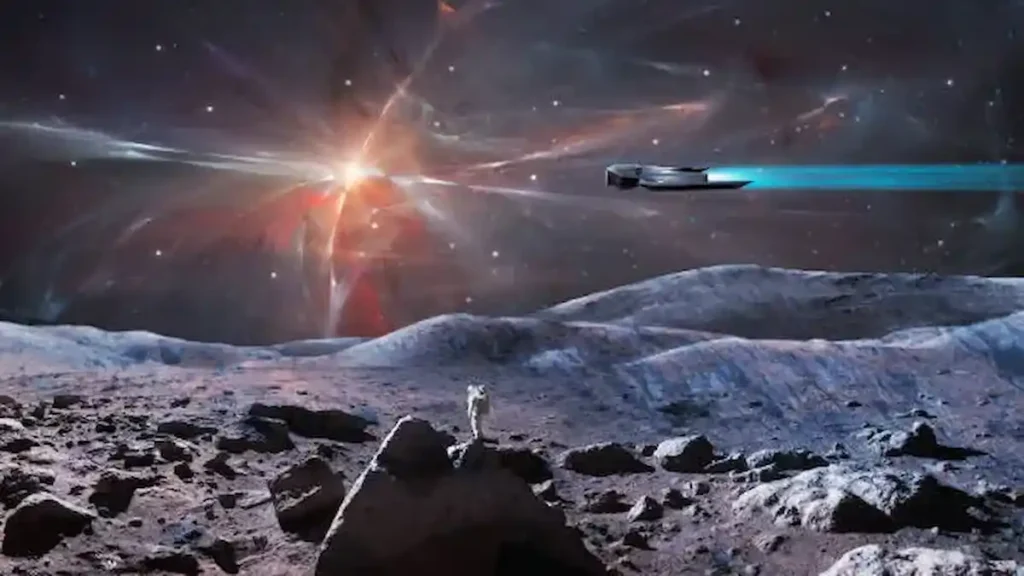
The Defining Era of Modern Space Exploration: As of late March 2026, humanity stands at a monumental inflection point in space exploration and cosmological science. The transition from aspirational planning to tangible execution has never been more evident. Decades of theoretical physics, rigorous engineering, and international policy have coalesced into a flurry of unprecedented activity beyond Earth’s atmosphere.
From the sweeping strategic overhauls of NASA’s Artemis program to the mind-bending discoveries beamed back by the James Webb Space Telescope (JWST), the narrative of space science has fundamentally shifted. We are no longer merely observing the cosmos from afar; we are actively mapping its invisible scaffolding and preparing the groundwork for a sustained, multi-planetary human presence.
This year is defined by a profound maturation of space technologies. Commercial aerospace giants are launching with a cadence that defies historical norms, while national space agencies are making bold, pragmatic decisions to ensure the long-term viability of deep-space habitats. Simultaneously, observational astrophysics is experiencing a golden age.
The boundaries of the observable universe are being pushed closer to the Big Bang than ever thought possible, challenging long-held models of galaxy formation and stellar evolution. In this comprehensive expert analysis, we delve into the most critical developments defining space and science in 2026, examining the technical triumphs, the strategic pivots, and the profound questions these breakthroughs raise about our place in the universe.
The Artemis Program Reimagined: Safety, Strategy, and a Lunar Base
Perhaps the most seismic shift in human spaceflight strategy occurred in late February 2026, when newly confirmed NASA Administrator Jared Isaacman announced a radical overhaul of the Artemis moon program. Acknowledging mounting technical glitches, developmental hurdles with commercial partners, and pointed critiques from the aerospace safety advisory panel, NASA has officially redefined the parameters of the Artemis III mission.
Originally slated to be the first crewed lunar landing since Apollo 17 in 1972, Artemis III will no longer aim for the lunar surface. Instead, the mission has been expedited to mid-2027 and repurposed as a critical low-Earth orbit (LEO) testbed.
Astronauts will rendezvous and dock with the massive commercial lunar landers currently under development—namely SpaceX’s Starship HLS and Blue Origin’s Blue Moon—to meticulously test navigation, communications, life support, and the new Axiom Extravehicular Mobility Unit (AxEMU) spacesuits.
This strategic pivot has been widely compared to the Apollo 9 mission, which remained in Earth orbit to prove the functionality of the Lunar Module before attempting a descent to the Moon’s surface. Isaacman emphasized that this evolutionary approach is essential to mitigate the extreme risks associated with sending humans to the lunar South Pole.
By thoroughly vetting the highly complex, unproven lander systems in the relative safety of LEO, NASA aims to secure the success of subsequent missions. Consequently, the highly anticipated crewed lunar landing has been formally pushed to the Artemis IV mission in 2028, with a potential follow-up landing on Artemis V later that same year.
Meanwhile, the immediate focus remains squarely on Artemis II, which is poised to make history. The mission is currently targeting a launch window opening on April 1, 2026. The crew—comprising NASA astronauts Reid Wiseman, Victor Glover, and Christina Koch, alongside Canadian Space Agency astronaut Jeremy Hansen—arrived in Florida in late March to finalize preparations.
This mission will mark the first time a woman, a person of color, and a non-U.S. citizen will travel beyond low Earth orbit, spending roughly ten days validating the Orion spacecraft’s life-support systems during a lunar flyby. In tandem with these mission adjustments, NASA has unveiled breathtaking long-term infrastructural plans.
In a bold move likely driven by geopolitical competition with China’s accelerating space program, the agency announced it is canceling its planned lunar orbit space station (the Lunar Gateway) to redirect parts and funding toward a $20 billion permanent surface base. This ambitious lunar settlement, targeted for completion by 2036, will utilize a fleet of autonomous drones and robotic landers to establish a localized nuclear power station.
A surface-based nuclear fission system is viewed as the only viable solution to survive the brutal 14-day lunar nights, providing continuous power for heating, resource extraction, and scientific operations. Additionally, NASA announced the development of a nuclear-powered spacecraft designed to significantly reduce transit times for future crewed missions to Mars.


The James Webb Space Telescope: Rewriting Cosmic History in Early 2026
While human spaceflight undergoes a pragmatic restructuring, robotic observatories are delivering data that fundamentally shatters existing astronomical paradigms. The James Webb Space Telescope (JWST) continues to be the crown jewel of deep-space observation. In January 2026, astronomers using JWST confirmed the existence of galaxy MoM-z14, a brilliantly luminous galaxy that existed a mere 280 million years after the Big Bang.
This galaxy has a staggering cosmological redshift of 14.44, meaning its light has been stretching across the expanding universe for about 13.5 billion years. The sheer brightness and structural maturity of MoM-z14 so early in cosmic history directly challenges the Lambda-CDM model, suggesting that stellar formation during the “cosmic dawn” occurred far more rapidly and efficiently than previously theorized.
Even more astonishing was the discovery announced by Texas A&M researchers in late January 2026: “JWST’s Quintet” (JQ). This rare, tightly packed system features an ongoing merger of at least five distinct galaxies occurring just 800 million years after the Big Bang. Prior to JWST, complex multi-galaxy mergers and the widespread distribution of heavy elements like oxygen were thought to be phenomena that only became common over a billion years into the universe’s lifespan.
The observation of the Quintet reveals a massive, extended halo of glowing, oxygen-rich gas linking the colliding galaxies. This proves that galactic environments were dynamically interacting, merging, and chemically enriching their surroundings much earlier than the hierarchical model of galaxy evolution had predicted.
Beyond the early universe, JWST has provided unprecedented clarity on the unseen forces shaping our cosmos. In collaboration with UC Riverside and NASA’s Jet Propulsion Laboratory, astronomers released the most detailed, high-resolution map of dark matter ever produced. B
y observing how the gravitational pull of dark matter warps the light of distant background galaxies—a phenomenon known as gravitational lensing—researchers mapped the invisible “cosmic web” with twice the sharpness of any previous Hubble map. Lead author Diana Scognamiglio noted that this map reveals the “invisible scaffolding” of the universe, explicitly demonstrating how dark matter filaments connect dense galaxy clusters across millions of light-years, dictating where ordinary, baryonic matter ultimately coalesces.
Exoplanet Extremes and Galactic Stunners
JWST’s instruments are also uniquely equipped to probe the atmospheres and surfaces of extreme exoplanets. In March 2026, researchers released fascinating data regarding TOI-561 b, a rocky exoplanet roughly twice as old as our Sun. Orbiting its host star in a blistering 10.56 hours, the planet is tidally locked, presenting a permanent day-side to the star.
JWST data strongly suggests that the surface temperature of 3,200 degrees Fahrenheit sustains a global magma ocean, enveloped by a thick, heavy atmosphere of vaporized rock. These observations are critical for understanding the atmospheric retention capabilities of super-Earths subjected to extreme stellar radiation. Closer to home, in the constellation Virgo approximately 65 million light-years away, JWST captured a spectacular portrait of the spiral galaxy NGC 5134.
Released as a “space photo of the day” in early March 2026, the image penetrates the obscuring dust lanes of the galaxy to reveal vibrant stellar nurseries. The glowing mid-infrared emissions map the intricate lifecycle of stars, from the dense molecular clouds birthing new protostars to the expansive supernova remnants expanding outward into the interstellar medium.
The Next Generation of Observatories: Roman, Rubin, and Xuntian
While JWST dominates the headlines, 2026 is acting as a launchpad for the next generation of astronomical instruments designed to survey the cosmos at unprecedented scales. NASA’s Nancy Grace Roman Space Telescope, having completed construction at the Goddard Space Flight Center, is slated for launch as early as fall 2026. Roman distinguishes itself with its staggering field of view.
Its 300-megapixel camera can capture swathes of the sky 100 times larger than Hubble’s instruments, while maintaining identical optical sharpness. Over its primary five-year mission, Roman is projected to discover over 100,000 distant exoplanets and map billions of galaxies to precisely measure the effects of dark energy—the mysterious force accelerating the expansion of the universe.
Furthermore, it carries an advanced coronagraph to directly photograph exoplanets by blocking the blinding light of their host stars. On the ground, the Vera C. Rubin Observatory in Chile is preparing to begin full science operations.
This facility will revolutionize time-domain astronomy. By conducting a rapid, high-cadence survey of the entire visible night sky every few nights, the Rubin Observatory will detect millions of transient phenomena, including distant supernovae, shifting near-Earth asteroids, and the subtle optical signatures of massive astrophysical collisions. This will essentially create a ten-year, high-definition time-lapse movie of the universe.
Simultaneously, the geopolitical space race extends to astrophysics. China is finalizing preparations for the late 2026 launch of the Xuntian space telescope, also known as the Chinese Space Station Telescope (CSST). Designed to co-orbit with the Tiangong space station to allow for easy maintenance and upgrades, Xuntian boasts a field of view 300 times larger than Hubble’s.
Like Roman, it will focus on wide-field cosmological surveys, probing the large-scale structure of the universe and directly competing with Western observatories in the quest to unravel the nature of dark matter and dark energy.

Astrobiology, Interstellar Visitors, and Biological Hurdles
In the realm of astrobiology and planetary science, the data gathered in early 2026 has been both exhilarating and sobering. The scientific momentum of the year was heavily influenced by the study of interstellar comet 3I/ATLAS, discovered in mid-2025. Because its hyperbolic trajectory confirmed an origin outside our solar system, scientists utilized spectrographic analysis to study its composition.
The findings revealed an exotic gas-to-dust ratio entirely distinct from indigenous Solar System comets, providing humanity with its first pristine chemical fingerprint of a foreign stellar nursery. Closer to home, anomalous geological activity on Mars has captivated planetary scientists. Recent data highlighted by Live Science in March 2026 revealed a massive anomaly deep within the Martian mantle.
This churning subterranean structure is not only theoretically capable of triggering massive volcanic eruptions on the seemingly dormant world, but the shifting mass is actively causing the entire planet to spin faster, subtly altering the length of a Martian day. This discovery shatters the notion that Mars is a geologically dead world.


However, as humanity sets its sights on colonizing these alien worlds, significant biological hurdles remain. A landmark study published in March 2026 illuminated severe complications regarding human reproduction in space. The research demonstrated that simulated microgravity catastrophically hampered sperm navigation, fertilization mechanics, and subsequent embryo development.
While adult humans have shown remarkable physiological adaptability to zero-gravity environments—mitigating bone loss and muscle atrophy through rigorous exercise—the fundamental biological processes required to propagate a multi-generational off-world colony appear exceptionally fragile. These findings underscore the absolute necessity of developing artificial gravity habitats for long-duration interstellar voyages and permanent deep-space settlements.
The Commercial Space Race Reaches Escape Velocity
Underpinning all of these scientific and exploratory endeavors is the booming commercial space economy, which has reached a staggering operational cadence in 2026. SpaceX continues to utterly dominate the launch market. By late March 2026, the company had already executed its 35th orbital mission of the year, relying heavily on its workhorse Falcon 9 fleet to rapidly deploy the Starlink low-Earth orbit satellite constellation.
This routine, almost industrialized approach to reusable rocketry has dramatically lowered the cost per kilogram to orbit, enabling smaller institutions and commercial entities to launch dedicated science payloads. Boeing, on the other hand, is battling to secure its footing in the commercial crew sector. Following the extended delays and thruster malfunctions that plagued the Starliner capsule in 2025, NASA has mandated another uncrewed flight test.
Scheduled for April 2026, this critical mission will see Starliner dock with the International Space Station to deliver cargo and conclusively prove its safety protocols before it is trusted to carry astronauts again. The pressure on Boeing is immense, as NASA relies on having redundant, competing commercial crew vehicles to ensure uninterrupted access to LEO.
Furthermore, the commercialization of cislunar space is accelerating. The mid-2026 schedule is packed with Commercial Lunar Payload Services (CLPS) missions, including Astrobotic Technology’s Griffin Mission One and Firefly Aerospace’s Blue Ghost Mission 2. These private robotic landers are tasked with delivering complex scientific instruments, rovers, and prospecting tools to the lunar surface.
By contracting private firms for delivery logistics, NASA can focus its budget and engineering prowess on the overarching architecture of the Artemis program and the future nuclear surface base.
A Coordinated Future Across the Cosmos
The events unfolding in the early months of 2026 illustrate a profound maturation in our approach to space. We are no longer defined by isolated, singular achievements—a flag planted or a single grainy photo taken. Instead, the current era is characterized by sustained, coordinated infrastructure.
The strategic pivot of the Artemis III mission demonstrates a hard-earned wisdom, prioritizing rigorous orbital testing of commercial landers over rushed political deadlines. The $20 billion commitment to a nuclear-powered lunar base signals a definitive shift from brief exploration to permanent colonization.
Simultaneously, the astonishing discoveries pouring in from the James Webb Space Telescope—from the ancient, chaotic galaxy mergers of the cosmic dawn to the intricate dark matter webs holding the universe together—remind us of the profound mysteries that remain.
With the upcoming launches of the Roman and XuntiZ768jhran telescopes, and the activation of the Rubin Observatory, our capacity to map, understand, and ultimately navigate the cosmos is expanding exponentially. As 2026 progresses, the synergy between human endurance, commercial innovation, and scientific curiosity promises to fundamentally redefine humanity’s place among the stars.