Result Rumors JEE Main 2026: The Wait for AIR 1 and a Critical Examination of the Process
Result Rumors JEE Main 2026: The Wait for AIR 1
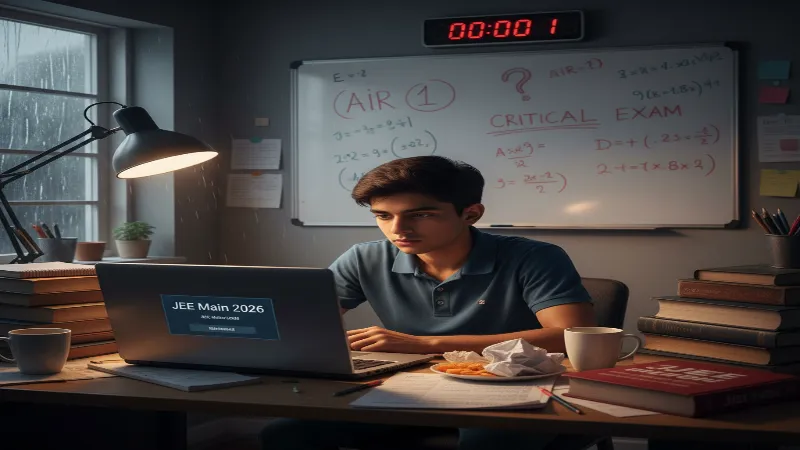
As February 12, 2026, approaches, the anticipation among over 13 lakh candidates who appeared for JEE Main Session 1 hangs thick in the air. The most sought-after piece of information—the identity, score, and story of the All India Rank (AIR) 1 topper—remains locked away, awaiting the official declaration by the National Testing Agency (NTA). This waiting period is more than just a pause; it is a critical phase that exposes both the robust mechanisms and the persistent fault lines within India’s premier engineering entrance examination.
Based on the latest available data, we can provide a clear snapshot of where the process currently stands:
-
Session 1 Exams: Held from January 21 to 29, 2026. Approximately 13 lakh candidates appeared across various shifts.
-
Post-Exam Process: The provisional answer key and response sheets were released. The objection window closed on February 6. A fee of ₹200 per question was required to raise a challenge.
-
Key Controversy: The Coaching Federation of India (CFI) flagged 17 potential errors in the provisional key and has demanded bonus marks for ambiguous questions, highlighting the high-stakes nature of the exam where a single mark can shift ranks by thousands.
-
Next Official Milestone: The final answer key and Session 1 results are scheduled for release on February 12, 2026. Only after this will the official AIR 1 topper be announced.
-
Looking Ahead: Registration for Session 2 is open and will close on February 25, 2026.
The “Right”: Acknowledging Systemic Strengths
First, it is essential to acknowledge what the NTA is doing correctly. The process, in its structure, demonstrates a commitment to transparency and order that is vital for an exam of this magnitude.
1. A Structured and Predictable Timeline
The NTA has maintained a clear, publicly communicated schedule. From exam dates to the answer key challenge window and the final result declaration, each step follows a known sequence. This predictability is crucial. It allows millions of students and their families to plan their anxious wait, reduces panic from uncertainty, and enables coaching institutes and mentors to guide their pupils through a known post-exam process. The provision for a challenge window itself is a formal recognition that the initial answer key is not infallible.
2. Technological Infrastructure for Scale
Handling the logistics for over a million candidates is a herculean task. The successful (and largely glitch-free) conduction of the computer-based test across hundreds of centers is a testament to improved technological infrastructure. The prompt release of individual response sheets alongside the answer key is a significant positive step.
It allows a candidate to perform a personal audit of their performance, moving beyond mere speculation to a data-driven assessment of their likely score before the final results. This is a powerful tool for student agency.
3. The Second Chance Mechanism
The existence of JEE Main Session 2 is arguably one of the most student-friendly aspects of the current system. It acknowledges that a single day’s performance can be affected by numerous variables—health, stress, or even a flawed question paper. By providing a second attempt and considering the best of the two scores, the system moves away from a punitive “one-shot” model towards one that seeks to capture a student’s more consistent potential.
The ongoing registration for Session 2, even before Session 1 results are out, is a clear and correct signal that the journey is not over for anyone after the first attempt.
The “Wrong”: Systemic Flaws and Areas for Urgent Improvement
However, the current process is far from perfect. The very steps designed to ensure fairness often become flashpoints for anxiety, litigation, and a loss of trust. The 2026 cycle already provides stark examples.
1. The Flawed and Onerous “Challenge” System
The provision to challenge the answer key is good in theory but problematic in practice. Charging candidates ₹200 per objection places a financial and psychological burden on students to correct the NTA’s (or its paper-setters’) potential errors. As the CFI’s complaint about 17 flagged errors indicates, these are not rare.
When a candidate’s future hinges on every mark, asking them to pay to rectify systemic mistakes is perceived as unjust. It creates a scenario where well-resourced candidates or coaching federations can advocate for changes, while others may suffer in silence. This process needs to transition to a fee-free, expert-driven review mechanism where a standing committee proactively verifies all challenged questions without financial disincentive.
2. The Recurring Specter of Paper Quality and Errors
The fact that a coaching federation can flag nearly 20 questionable items in a single session is alarming. It points to persistent issues in question paper setting, vetting, and proofreading. In an exam where the percentile system amplifies the impact of every mark, ambiguous language, typographical errors, or questions with multiple correct answers (as alleged) distort the level playing field.
It undermines the core premise of the exam: to test conceptual clarity and problem-solving skills. The NTA must invest in more rigorous, multi-layered peer review by academicians, not just exam administrators, and perhaps include a “pilot testing” phase for new question patterns.
3. The Black Box of Normalization and Percentile Calculation
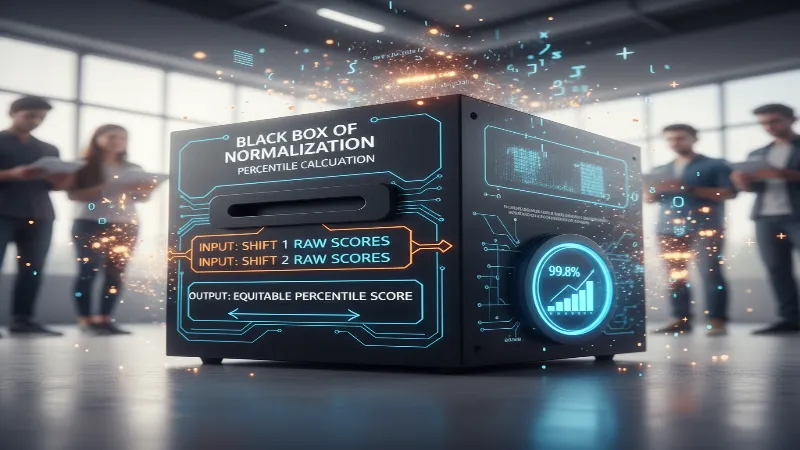
While the NTA explains the need for percentile scores to equitably compare performances across different shifts (as question difficulty can vary), the exact algorithm remains opaque. Students are left with trust-based acceptance of a complex statistical output.
In an era that demands algorithmic transparency, providing a more detailed technical note—without compromising question security—on how raw scores are transformed into percentiles would build immense trust. Furthermore, the policy on how to handle confirmed errors post-challenge window is unclear. Are bonus marks awarded to all, or is the question simply nullified? This decision significantly impacts ranks and needs a clear, pre-declared protocol.
4. The Premature Speculation and Mental Health Toll
The vacuum of information between the challenge window closing and the result declaration is filled with intense speculation. “Expected” cut-offs, “predicted” topper names from coaching centers, and rampant rumors on social media create a toxic environment of anxiety.
This period, which should be for rest and reflection, becomes one of heightened stress. The ecosystem, including media and coaching institutes, must exercise greater responsibility. The NTA could also help by possibly releasing the final answer key 24-48 hours before the results, allowing students to calculate their exact raw score and reducing one layer of uncertainty.
5. The Missing “Success Story” Narrative
The intense focus on the single AIR 1 topper, while inspirational for some, often paints a misleading and narrow picture of success. It perpetuates a myth of solitary genius and round-the-clock study. The real “success stories” are far more diverse: the student who overcomes financial hardship to secure a rank good enough for a reputable NIT; the one who improves dramatically in Session 2; the one who manages a balanced preparation alongside board exams.
The media and institutions must consciously amplify these pluralistic narratives of achievement to create a healthier, more inclusive definition of what it means to succeed in the JEE.
The Path Forward: Recommendations for a More Equitable System
Improving JEE Main is not about lowering its standards, but about raising the standards of its administration and support ecosystem.
-
Reform the Challenge Process: Make it free. Institute a transparent, time-bound review by an independent panel of academic experts whose findings are published.
-
Invest in Question Paper Integrity: Establish a permanent, renowned academic panel for paper setting and introduce more robust validation checks, possibly using pre-testing on sample groups.
-
Embrace Greater Transparency: Publish a detailed methodology of the normalization process. Clarify policies on mark adjustment versus question deletion.
-
Decentralize the “Topper” Hysteria: The NTA and media should highlight the top 100 or 1000 ranks, showcasing diversity in background, region, and strategy, rather than fixating on a single top rank.
-
Integrate Systemic Support: Provide official, calm guidance during the post-exam waiting period on the NTA website, including stress management resources and clear FAQs, to counter speculative noise.
Beyond the AIR 1 Headline
The story of JEE Main 2026 is still being written. The headline on February 12th will name the AIR 1 topper—a moment of well-deserved glory. But the more important, untold story is that of the 2.5 lakh students who will qualify for JEE Advanced, and the hundreds of thousands more who will secure seats in engineering colleges across India through this process.
The true measure of the exam’s success will not be the percentile score of its highest achiever, but the fairness, transparency, and integrity of the journey that every candidate undertakes. By addressing the “wrongs” with the same rigor it expects from its aspirants, the system can evolve from being merely a tough gatekeeper to becoming a truly credible and just architect of India’s technical future.
The wait for the topper’s name is almost over, but the work to improve the system for every name on that rank list must continue with urgency. I hope this detailed analysis provides the perspective you were looking for. Would you be interested in a similar analysis of the college counseling and seat allocation process (JoSAA) once it begins?
Disclaimer (Concise Version)
The report “JEE Main 2026: The Wait for AIR 1…” is an independent analysis and opinion piece.
-
Not Official: It is not affiliated with or endorsed by the National Testing Agency (NTA). Official results and data had not been released at the time of writing.
-
For Discussion: Observations on “right” and “wrong” practices are the author’s analytical perspectives, not statements of fact.
-
Verify Officially: For all final decisions, rely solely on official NTA communications at jeemain.nta.nic.in.
The author assumes no liability for any actions taken based on this analysis.