
Milan-Cortina 2026: The Ultimate Authority Guide to the XXV Winter Olympic Games
The Dual-City Revolution: A New Era for the Winter Games
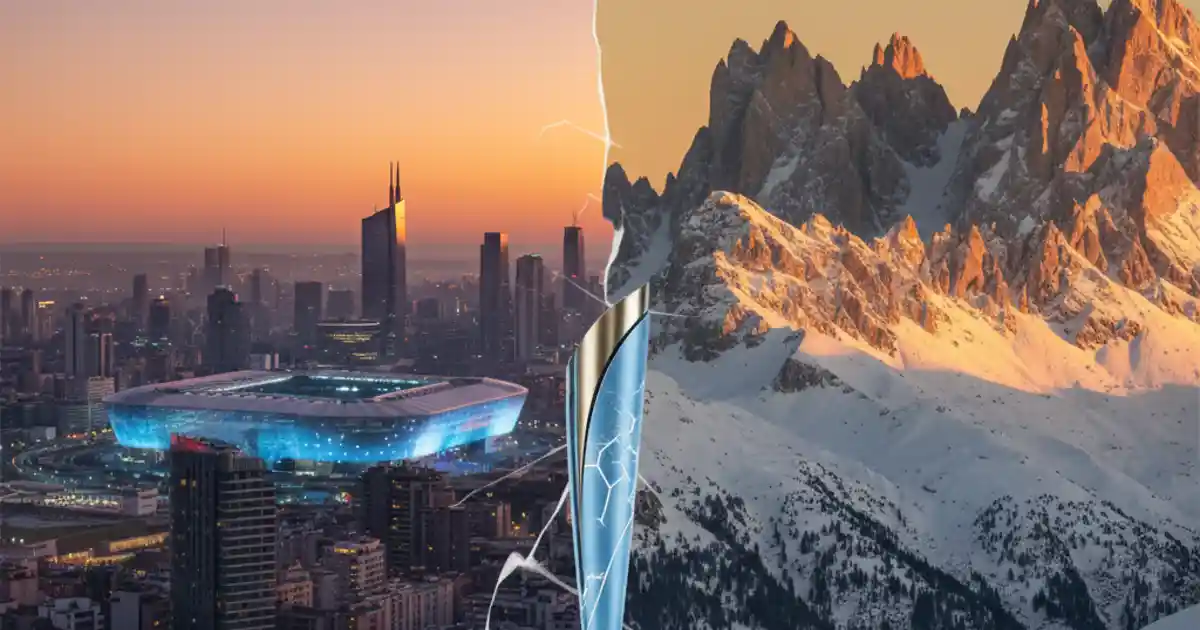
The 2026 Winter Olympics, officially known as Milano Cortina 2026, marks a paradigm shift in the history of the Olympic movement. For the first time, the Games are officially hosted by two distinct cities rather than a single metropolitan hub, spanning a vast geographical area that encompasses the urban sophistication of Milan and the rugged, alpine beauty of Cortina d’Ampezzo.
This decentralized master plan, covering over 22,000 square kilometers across the regions of Lombardy and Veneto, as well as the autonomous provinces of Trento and Bolzano, represents the International Olympic Committee’s (IOC) boldest step yet towards a more sustainable and flexible hosting model. By utilizing existing infrastructure spread across Northern Italy.
The organizers aim to reduce the white elephant syndrome that has plagued previous games, proving that the Olympics can adapt to the host region rather than forcing the region to radically reshape itself for a two-week event. With the Opening Ceremony scheduled for the iconic San Siro Stadium in Milan and the Closing Ceremony set for the historic Verona Arena, the 2026 Games are poised to be a celebration of Italian diversity, bridging the gap between metropolitan innovation and mountain tradition.
In contrast, Cortina d’Ampezzo, the ‘Queen of the Dolomites‘ and host of the 1956 Winter Olympics, returns to the global stage to host alpine skiing, curling, and sliding sports. This bifurcation allows spectators and athletes to experience two completely different vibes: the electric, fast-paced energy of a global city and the serene, awe-inspiring grandeur of a UNESCO World Heritage mountain range.
The Venues: From Ancient Amphitheaters to Futuristic Arenas
The venue master plan for Milano Cortina 2026 is a study in architectural diversity, blending historic landmarks with cutting-edge sustainable design. In Milan, the centerpiece is undoubtedly the Stadio Giuseppe Meazza, commonly known as San Siro. As one of the most famous football cathedrals in the world, it will host the Opening Ceremony, marking a rare occasion where the opening festivities are held in a different city than the closing ones.
The scale of San Siro, with its spiraling ramps and towering capacity, promises a spectacle of operatic proportions. Meanwhile, the ice hockey competitions will be split between two venues, including the newly built PalaItalia Santa Giulia. This arena is a critical addition to Milan’s sporting landscape, designed to fill a long-standing gap for a large multi-purpose indoor venue in the city.
Its design focuses on energy efficiency and acoustic perfection, ensuring that the roar of the hockey crowds translates into an electrifying broadcast experience.

Moving into the mountains, the Cortina cluster relies heavily on refurbishment and legacy. The Olimpia delle Tofane slope, a staple of the World Cup circuit, will host women’s alpine skiing, offering a backdrop of jagged dolomite rock that is visually unparalleled. However, the most discussed venue is the Eugenio Monti Sliding Centre.
After much debate regarding costs and environmental impact, the decision to rebuild the historic track—originally used in the 1956 Games—was finalized, symbolizing a commitment to preserving the heritage of sliding sports in Italy. This state-of-the-art facility will host bobsleigh, skeleton, and luge, featuring modern refrigeration technology to minimize its carbon footprint.
The juxtaposition of high-tech sleds hurtling down a track surrounded by ancient pine forests and limestone peaks captures the essence of these Games: a fusion of adrenaline and nature. Beyond the two main hubs, the Val di Fiemme and Valtellina clusters are equally significant. Predazzo and Tesero will host ski jumping and cross-country skiing, respectively, in venues that are widely considered the spiritual homes of Nordic skiing in Italy.
These facilities have been upgraded with improved lighting for evening events and enhanced spectator stands, but their core infrastructure remains rooted in the landscape. In Livigno, the snow parks for freestyle skiing and snowboarding will be carved into the Mottolino and Carosello 3000 slopes, areas already famous among the global snowboarding community. Finally, the Closing Ceremony at the Verona Arena offers a poetic conclusion.
New Frontiers: Ski Mountaineering and Sport Innovation
The headline addition to the 2026 program is the debut of Ski Mountaineering, affectionately known as ‘Skimo.’ This sport, deeply rooted in the military and alpine traditions of the host region, involves athletes racing over snow-covered terrain using both skiing and mountaineering skills. Competitors must ascend steep slopes wearing ‘skins’ on their skis for traction, traverse ridges on foot with their skis strapped to their backpacks, and then descend at breakneck speeds through technical terrain.
The IOC’s inclusion of Skimo is a strategic move to engage the growing community of backcountry enthusiasts and to highlight a sport that is sustainable by nature, requiring no mechanical lifts or manicured pistes. The events will include a sprint race, which is fast and broadcast-friendly, and a mixed gender relay, ensuring that the debut captures the high-intensity drama modern audiences crave.
Beyond Skimo, the 2026 Games will see the introduction of Dual Moguls as a standalone Olympic event. While mogul skiing has been a staple since the 90s, the dual format—where two skiers race side-by-side down parallel courses—adds a direct elimination element that is visually easy to follow and incredibly tense. Judges must make split-second decisions not just on the technical quality of the turns and aerials, but relative to the competitor in the next lane.
This head-to-head format mirrors the success of ski cross and snowboard cross, catering to a desire for objective, race-to-the-finish narratives rather than purely judged scores. Additionally, Women’s Large Hill Ski Jumping makes its long-awaited debut, finally equalizing the playing field in a sport that has historically restricted women to the Normal Hill, representing a significant victory for gender equity in winter sports.
The schedule itself has been crafted to maximize global viewership, with a heavy emphasis on ‘Golden Hours’ where events in different clusters overlap to provide continuous coverage. The integration of mixed-gender events continues to be a priority, with new mixed team formats in skeleton and alpine skiing. These events not only promote gender equality but also foster a sense of national team spirit that individual events sometimes lack.
The Italian Spirit of innovation is also evident in the broadcast technology that will accompany these new sports; expect drone usage to be revolutionized in the coverage of Skimo, providing angles of the Dolomites that were previously impossible to capture, immersing viewers directly into the lung-busting effort of the ascent.
Sustainability and ‘Now26’: The Greenest Games Ever?
Sustainability is no longer a buzzword for the Olympics; it is an existential requirement. Milano Cortina 2026 has launched the ‘Now26’ sustainability strategy, a comprehensive framework aimed at making these the most climate-conscious Winter Games in history. The cornerstone of this strategy is the radical reuse of existing venues. Over 90% of the competition sites are already standing.
This stands in stark contrast to the massive construction projects of Sochi or Beijing. For example, rather than building a new speed skating oval from scratch, the organizers have opted to use a temporary track within the existing Fiera Milano exhibition center, significantly reducing the carbon footprint associated with concrete and steel production. Furthermore, the event has committed to 100% renewable energy usage across all venues, tapping into Italy’s hydroelectric and solar capabilities.

The ‘Now26’ initiative also addresses the circular economy in unprecedented ways. A partnership with the Paris 2024 organizers has facilitated the transfer of furniture, sporting equipment, and logistical assets from the Summer Games to the Winter Games, extending the lifecycle of thousands of items.
This cross-Olympiad cooperation is a model that the IOC hopes to standardize for future hosts. Waste management protocols are equally stringent, with a zero-waste-to-landfill goal for the duration of the event. Food waste, a major issue at mega-events, is being tackled through real-time supply chain monitoring and partnerships with local charities to redistribute surplus food immediately to vulnerable communities in Milan and the surrounding regions.
However, the path to sustainability is not without its critics and challenges. The reliance on artificial snow remains a contentious issue, especially as winter temperatures in the Alps continue to rise. To mitigate this, the organizers have invested in next-generation snowmaking technology that is more water and energy-efficient, and they have implemented water recovery systems to recycle the meltwater.
The transportation plan also heavily favors rail over road, with incentives for spectators to use the high-speed train network connecting Milan to the mountain regions. While the ‘greenest games’ claim is a high bar to clear, the transparency of the ‘Now26’ reporting suggests a genuine attempt to align the massive machinery of the Olympics with the planetary boundaries we now face.
Meet Tina and Milo: Mascots with a Message
The faces of the 2026 Games are Tina and Milo, two adorable stoats (ermines) who have quickly captured the hearts of the Italian public. Their names are diminutive forms of the host cities—Tina for Cortina and Milo for Milano. Far from being mere plush toys, these characters were developed through a rigorous selection process involving students across Italy, and they embody a narrative of resilience and inclusivity.
Tina, the light-coated stoat representing the Olympic Games, is characterized as a creative dreamer who loves the city vibe and the arts, symbolizing the cultural depth of the event. She champions the beauty of diversity and the power of believing in one’s potential, acting as an ambassador for the ‘Dream Big’ ethos that permeates the athlete villages. Milo, the Paralympic mascot, is a brown-coated stoat born without one leg, who has learned to use his tail as a support to walk and run.
He is a practical joker, a musician, and a symbol of ingenuity. Milo represents the Paralympic spirit perfectly; his backstory isn’t about overcoming a ‘deficit’ but about adapting and finding new ways to excel. He doesn’t just survive; he thrives, turning obstacles into trampolines. The decision to make the disability a visible, integrated part of the character design rather than a hidden trait is a powerful statement on representation.
Together, the siblings traverse the journey from the mountains to the city, accompanied by six little snowdrop flowers called ‘The Flo,’ which represent the teamwork and friendship essential to winter sports. The branding surrounding Tina and Milo extends into the visual identity of the Games, which utilizes a vibrant color palette reflecting the ‘Italian Spirit.’
The Spectator Roadmap: Tickets, Transport, and Tips
Attending the Milano Cortina 2026 Games requires more planning than your average Olympics due to the geographic spread. The first step is securing tickets, which are being sold through a centralized digital platform. High-demand events like the Opening Ceremony, Men’s Ice Hockey Final, and Figure Skating Gala sell out instantly.
Transportation is the linchpin of the spectator experience. The ‘Olympic Train‘ service will run high-frequency connections between Milan and the mountain clusters, but travel times are still significant.
Accommodation prices in Cortina have skyrocketed, as expected, but the region offers a wealth of ‘Agriturismo’ (farm stays) and smaller B&Bs in the neighboring villages that provide a more authentic and affordable experience. For food, spectators should embrace the local specialties of each cluster.
In Milan, it’s saffron risotto and ossobuco; in the mountains, it’s polenta, game meat, and canederli (bread dumplings). The ‘Olympic Hospitality Houses’ run by various nations are also legendary spots for food and parties, often open to the public for a fee. Keep an eye out for ‘Casa Italia,’ which is renowned for having the best espresso and wine of any hospitality venue.
Technological Integration: 5G, AI, and the Fan Experience
While the Opening Ceremony promises to be ‘human-driven,’ the backbone of the Games is pure high-tech. Milan is one of Europe’s 5G capitals, and this infrastructure will be stretched to the limit to provide seamless connectivity. For the fan in the stadium, this means augmented reality (AR) overlays on their smartphones, showing real-time stats, athlete biometrics, and trajectory lines for ski jumps or curling stones.
The official app will likely function as a ‘digital twin‘ of the event, allowing users to navigate venues, order food to their seats, and watch replays from multiple camera angles instantly. This level of connectivity is crucial for engaging younger audiences who consume sports as a second-screen experience. Behind the scenes, Artificial Intelligence is playing a major role in judging and safety.
In figure skating and gymnastics, AI support systems are being trialed to assist judges in evaluating rotation angles and jump heights with mathematical precision, reducing the controversy that often plagues subjective sports. In alpine skiing, AI-driven safety systems monitor the course for changing weather patterns and snow conditions, predicting potential avalanche risks or icing issues before they become dangerous.
For the broadcasters, automated cameras and AI editing tools allow for the creation of personalized highlight reels for millions of users simultaneously, catering to the demand for short-form content on platforms like TikTok and Instagram. Cybersecurity is the invisible war being fought around the Games. With geopolitical tensions always a factor at the Olympics, the IT infrastructure is fortified against state-sponsored attacks and hacktivists.
Athletes to Watch: The Titans of 2026
The 2026 Games will likely serve as the swan song for several winter sports legends and the coronation of a new generation. In alpine skiing, the world will be watching to see if the current titans can maintain their dominance against a hungry field of younger competitors. The technical slopes of Cortina are unforgiving, favoring veterans with experience, but the physical toll of the sport means that youth often prevails.
In figure skating, the quad revolution shows no signs of slowing down, with teenage prodigies pushing the boundaries of human physics. The rivalry between the traditional powerhouses of Japan, the US, and emerging European talents will be fierce, especially in the men’s singles where the technical ceiling continues to rise. Snowboarding and freestyle skiing will spotlight athletes.
The inclusion of Skimo also introduces a new cast of heroes—mountain runners and alpinists who are superstars in their niche but unknown to the wider public. These athletes possess VO2 max levels that are off the charts, and their performances will likely redefine what we consider ‘peak fitness’. Local Italian heroes will carry the weight of the nation.
Cultural Impact: ‘It’s Your Vibe’
The motto ‘It’s Your Vibe’ might sound like marketing speak, but it touches on a deeper cultural truth about modern Italy. The country is not a monolith; it is a collection of distinct regional vibes. Milan is the vibe of the future—fast, industrial, chic. Cortina is the vibe of the eternal—slow, majestic, grounded.
Milan Fashion Week, occurring near the Games, will likely see a massive influx of ‘sport-core’ aesthetics, with major luxury houses collaborating with athletic brands. The intersection of sport and style has never been more relevant, and Milan is the perfect laboratory for this fusion.
The Games also offer a chance for Italy to rebrand itself. Often viewed through the lens of its past—Renaissance art, Roman ruins, and slow food—Italy wants to use 2026 to showcase its contemporary prowess in engineering, sustainability, and design. The ‘Look of the Games’ will steer away from cliché pizza-and-gondola imagery, favoring sleek lines, bold typography, and digital art.






Если вы изучаете аэропортами в разнообразных странах, таких как Филиппины, Дания, или даже Зимбабве, имеет смысл иметь в виду, что непересадочные рейсы из таких хабов как Стамбул или Прага серьезно делают проще туры по Европе и другим регионам. В частности, из Еревана есть прямые рейсы в Европу, а из Москвы нередко можно увидеть самые доступные билеты, с учетом акционные предложения. Для удобства организации путешествия рекомендуется глянуть детальный список аэропортов и рейсов на [url=https://lowcostpro2.ru]дешевые авиабилеты екатеринбург[/url] , где размещена информация по аэропортам США, Польши, ОАЭ и других известных направлений.
Особенно полезно для тех, кто выбирает маршруты из малопопулярных стандартных точек вылета, скажем, бюджетные авиабилеты из Минска, Вроцлава или даже Душанбе. Аэропорты в странах как Албания, Нидерланды или Швеция дают массу вариантов перелетов, в том числе лоукосты. Помимо этого, не пренебрегайте про такие уникальные направления, как аэропорты Гренландии, Доминиканы или Багам, которые могут быть превосходным вариантом для отпуска. Если хотите узнать, по каким маршрутам можно бюджетно улететь из Москвы или Стамбула, а также о прямых рейсах из Анталии в Европу, посмотрите на сайт и выберите подходящий для вас вариант.
Hi Friends,
Thank you for sharing your own experience with dishamunch.com ! I love hearing how different readers adapt recipes and ideas to their own kitchens. Your tip about response is fantastic.
Thanks for contributing your perspective – it adds so much to our community!
– Dr. Pavitra Singh at DISHA (Divyang/disabled Identity Safety Help Association) Munch”