
The Concern: What’s Happening with Cyclospora?
As of July 13, 2026, the Centers for Disease Control and Prevention (CDC) reported 1,645 domestically acquired cases of cyclosporiasis across 34 U.S. states, with thousands of additional suspected infections under investigation.
According to public health officials, Michigan has reported one of the largest clusters of suspected and confirmed Cyclospora infections during the current outbreak. This represents a significant increase compared with the same period last year, when only 249 cases had been reported nationally.


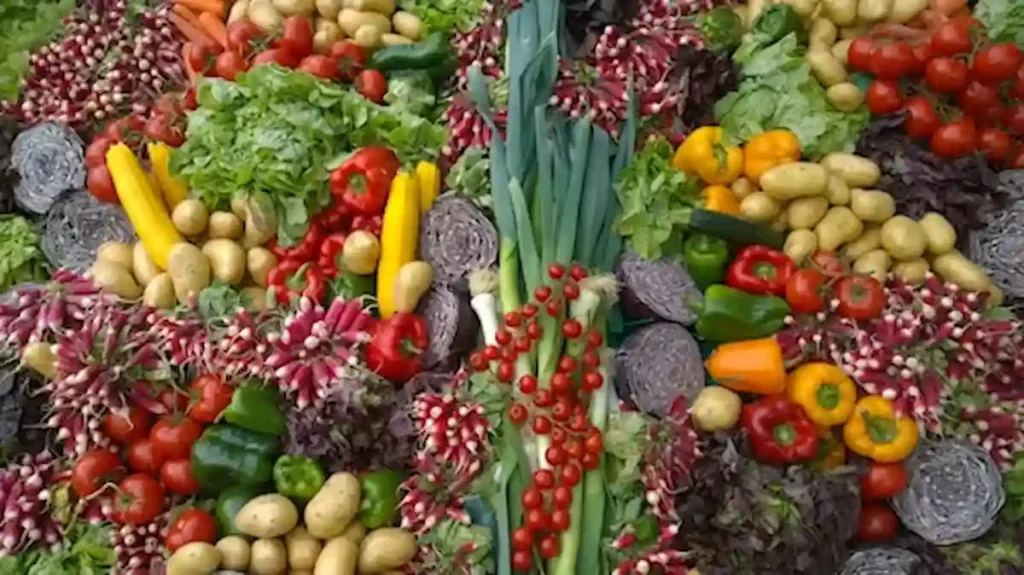
The outbreak appears to be concentrated in Michigan, Ohio, West Virginia, and Kentucky, where investigators believe the infections may be linked to a common food source, possibly leafy greens such as lettuce. However, the CDC has emphasized that investigations are ongoing and no specific food item has yet been confirmed.
What Is Cyclospora?
Cyclospora cayetanensis is a microscopic parasite that causes cyclosporiasis, an intestinal illness . Unlike many foodborne pathogens, it is not transmitted directly from person to person . Instead, people become infected after consuming food or water contaminated with the parasite .
According to the FDA, infected humans are the only known source of Cyclospora cayetanensis . The parasite must be shed by an infected person and remain in the environment for 1-2 weeks before becoming infective to others .

Common Symptoms
Symptoms typically develop about one week after exposure :
-
Prolonged, watery diarrhea
-
Abdominal cramping and bloating
-
Nausea and fatigue
-
Loss of appetite and weight loss
-
Low-grade fever
Without treatment, symptoms can persist for weeks or months, cycling in waves of sickness . Of the confirmed cases, 141 people have been hospitalized, though no deaths have been reported .
The Big Question: Is Local Produce Safer?
Dr. Amesh Adalja, a senior scholar at the Johns Hopkins Center for Health Security, offers a clear perspective: “It’s where it’s grown, not the point of sale.”
This distinction is crucial. The risk depends on whether the growing site used contaminated water sources, not where the produce is eventually sold. Produce from farmers markets may be safer because it is typically sourced from local growers who are less likely to be part of the large commercial supply chains implicated in previous outbreaks .
Dana Mordue, an associate professor at New York Medical College, notes that past U.S. outbreaks have stemmed from imported produce where contaminated irrigation water was used . However, she adds: “In this case though, given the size of the outbreak, it’s making me at least wonder whether or not something is happening within the United States.”
Why Local Matters
Joellen Russell, a climate and integrative science professor at the University of Arizona, points to shifting weather patterns—more heavy rainstorms can cause agricultural runoff and sewage overflows, tainting irrigation water used for fresh produce .
Local farms often use:
-
Controlled-environment agriculture that limits outside exposure
-
Drip irrigation rather than surface water that might be contaminated
-
Hydroponic growing methods that reduce contamination risks
James Klett, co-owner of Fairgrown Farm in Newark, explains: “This parasite is really coming into the greater New Jersey area through international produce. So, we’ll have a farm maybe in Mexico or another country where the water that was used to irrigate the crop could be contaminated.”
Cyclospora Outbreak
↓
Contaminated irrigation water
↓
Leafy vegetables
↓
Eat raw produce
↓
Symptoms
↓
Doctor
↓
Treatment
Will Washing Produce Help? Experts Say No.
The CDC recommends washing fruits and vegetables thoroughly under running water . But when it comes to Cyclospora, experts say rinsing alone is not enough.
Dr. Rabia de Latour, a gastroenterologist at NYU Langone, put it bluntly: “Washing does not get rid of this sticky little invisible parasite, so that’s the problem.”
Dana Mordue agrees: “It may get rid of some of the Cyclospora, but it doesn’t get rid of all of it. So there’s still a risk that remains.”
Why Is It So Stubborn?
Cyclospora adheres tightly to the rough surfaces of fresh produce, especially leafy greens and berries . Chlorine and other common antimicrobial treatments are not effective against the parasite . Unlike bacteria, Cyclospora is a parasite with a protective outer layer that resists standard washing.
What Actually Works?
-
Cooking fruits and vegetables is the only foolproof way to kill the parasite .
-
Freezing may reduce the viability of Cyclospora under certain conditions, but public health authorities emphasize that consumers should follow safe food handling practices and rely on guidance from health agencies rather than assuming freezing alone eliminates the risk. .
Morgan Anderson, a produce safety technician at Michigan State University, emphasizes: “Basic hand washing and then, of course, cleaning and washing of the produce itself. But also of your food contact surfaces in the kitchen—how you are washing your silverware, your knives, your cutting board especially.”
What Farmers Are Saying
Across the country, farmers are responding to customer concerns by reinforcing their safety protocols.
Ohio
Greg Yutzy, owner of Yutzy’s Farm Market in Ohio, said food safety has become a frequent topic of conversation: “As a consumer, you should be asking questions. I think the awareness is greater for people who want to shop local because we know where our food’s coming from. Every farm we are buying from, we’ve been there.”
He also shared a tip: “Go beyond just washing the produce. Make sure the countertops are clean; your hands are clean. In a melon, if that bacteria is on a melon and you take a knife and slice through it, that bacteria is now through your melon, so you need to wash the outside of the melon too even if you’re not going to eat that part.”
Tennessee
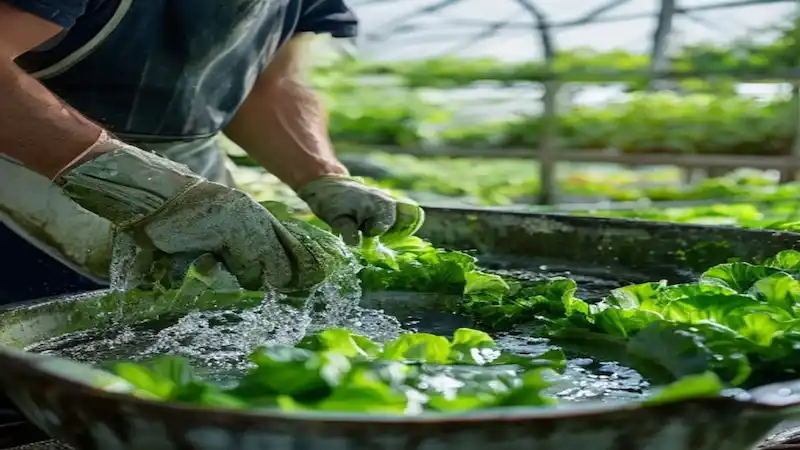
Willard Brown, a farmer at the Market Square Farmers Market in Knoxville, grows hydroponically inside greenhouses: “Most of this stuff is grown inside hydroponically. It’s clean. It’s not exposed to the outside elements.” He also advises: “We tell our customers—wash your stuff in a mild vinegar solution. I don’t care where you buy it. It’s just a simple, easy safety practice.”
Washington State
Washington’s agricultural sector serves as a natural shield during national food safety scares . Chaz Shamseldin, a manager at Frank’s Quality Produce in Seattle, said roughly 75% of their inventory is grown in Washington state: “I have no produce that’s going to get anybody sick here. Our produce here in Washington is just spectacular. Like, the corn right now is unbelievable. 10 out of 10.”
5 Image Prompts for Visual Storytelling
Image Prompt 1: A farmer’s market scene with colorful stalls displaying fresh produce. Shoppers are talking to farmers, asking questions about where the food comes from. Warm, inviting lighting. Contrast: Vibrant reds, oranges, and greens against the soft, natural wood tones of the stalls.
Image Prompt 2: A microscopic view of Cyclospora cayetanensis oocysts—round, translucent spheres with distinct internal structures. Dark field microscopy shows them glowing against a deep background. The image conveys the invisible nature of the threat.
Image Prompt 3: A farmer washing fresh lettuce in a large, clean basin at a farm. The water is running clear. The farmer wears a clean apron and gloves. Behind them, a greenhouse with rows of hydroponic greens. Natural daylight streaming in. Contrast: The bright green of the lettuce against the stainless steel basin.
Image Prompt 4: A kitchen scene—a person carefully washing a melon with a produce brush under running water. On the counter, clean cutting boards and knives. A bowl of already-washed berries sits nearby. The scene is orderly and diligent. Contrast: The cool blues of the running water against the warm yellows of the kitchen.
Image Prompt 5: A map of the United States with highlighted states—Michigan, Ohio, West Virginia, Kentucky in deep red to show the outbreak epicenter. Other states in lighter orange indicating reported cases. The map conveys the geographic spread of the outbreak.
Practical Recommendations
For Consumers
-
Wash all produce thoroughly under running water—even if you plan to peel it .
-
Scrub firm produce like melons and cucumbers with a clean produce brush .
-
Wash your hands with soap and water for at least 20 seconds before and after handling food .
-
Clean countertops, cutting boards, and utensils with soap and hot water between uses .
-
Cook produce when possible—cooking kills the parasite .
-
Freeze fruits and vegetables if you don’t plan to eat them immediately—freezing also kills Cyclospora .
-
Ask questions at farmers markets about growing and handling practices .
For Food Service Operators
-
Source produce from reputable suppliers and monitor for recalls .
-
Train staff on proper handwashing, cross-contamination prevention, and safe food storage .
-
Keep detailed records of where produce is purchased in case traceback investigations are needed .
When to Seek Medical Care
If you develop prolonged, watery diarrhea lasting more than a few days, contact your healthcare provider . Mention cyclosporiasis specifically, as routine stool tests don’t always screen for this parasite—you may need to specifically request testing for Cyclospora .
The Bottom Line
Are locally-grown fruits and vegetables safe from Cyclospora? The answer is nuanced:
-
Yes, produce from farmers markets may be safer because it avoids the large commercial supply chains that have been implicated in previous outbreaks .
-
But no produce is completely risk-free .
Dr. Corinne Tandy, division director of epidemiology for the Knox County Health Department, advises: “Please continue to eat your fruits and veggies. Just make sure you’re being extra diligent about washing them.”
Elijah Laine, a Tennessee farmer, emphasizes that protecting produce begins before seeds are even planted—his farm uses controlled-environment agriculture, drip irrigation, and careful processing to reduce contamination risks .
Fresh fruits and vegetables remain an important part of a healthy diet. While the current Cyclospora outbreak has raised concerns, consumers can reduce risk by purchasing produce from trusted suppliers, following good kitchen hygiene, staying informed about public health advisories, and seeking medical care if symptoms develop.

About the Author
Dr. Pavitra Singh is an Assistant Professor at the National Institute of Advanced Manufacturing Technology (NIAMT), Ranchi, India. His areas of interest include public health awareness, sustainable engineering, environmental health, renewable energy, and science communication. He writes evidence-based articles by reviewing information from recognized public health agencies, scientific organizations, and peer-reviewed research to help readers understand complex issues in a clear and practical way.
References
This article is based on information and guidance from the following organizations:
- Centers for Disease Control and Prevention (CDC)
- U.S. Food and Drug Administration (FDA)
- Michigan Department of Health and Human Services (MDHHS)
- Johns Hopkins Center for Health Security
Frequently Asked Questions (FAQs)
Can I get Cyclospora from another person?
No. According to the CDC, Cyclospora is not spread directly from person to person. The parasite must first mature in the environment—usually over 1–2 weeks—before it becomes infectious. People usually become infected by eating contaminated food or drinking contaminated water.
Does washing fruits and vegetables remove Cyclospora?
Washing fresh produce under running water is an important food safety practice, but washing alone may not completely remove Cyclospora. The parasite can adhere tightly to the surface of fresh produce, particularly leafy greens and berries. Consumers should always follow current CDC and FDA food safety recommendations.
Does vinegar kill Cyclospora?
There is no strong scientific evidence that rinsing produce with vinegar reliably eliminates Cyclospora. While some people use vinegar as an additional cleaning step, it should not be considered a guaranteed method for preventing infection.
Does freezing kill Cyclospora?
Current public health guidance does not recommend relying on freezing as a method to eliminate Cyclospora. Instead, consumers should purchase produce from trusted sources, maintain good kitchen hygiene, and follow official CDC and FDA recommendations during outbreaks.
Does cooking destroy Cyclospora?
Yes. Cooking food thoroughly is considered the most reliable way to inactivate Cyclospora. Fresh produce that is normally eaten raw cannot always be cooked, so purchasing from reputable suppliers and practicing safe food handling remain essential.
Should I stop eating salads and fresh vegetables?
No. Health experts continue to recommend eating fruits and vegetables because of their many health benefits. Instead of avoiding fresh produce, buy from trusted sources, wash produce under running water, maintain good kitchen hygiene, and stay informed about food recalls and public health advisories.
Who is most at risk of severe illness?
Most healthy people recover with appropriate treatment, but older adults, young children, people with weakened immune systems, and those with chronic illnesses may experience more severe or prolonged symptoms. Anyone with persistent watery diarrhea or signs of dehydration should seek medical attention promptly.
Disclaimer: This article is intended for educational and informational purposes only and should not be considered medical advice. If you experience symptoms or have concerns about your health, consult a qualified healthcare professional.
Editorial Note: DishaMunch.com is committed to publishing evidence-based articles by reviewing information from recognized public health agencies, government organizations, and peer-reviewed scientific research. Our goal is to present accurate, balanced, and easy-to-understand information for public awareness.