Technical Anatomy of YouTube Impersonation Botnets: 70,000+ Victims
Technical Anatomy of YouTube

The ‘Painless360’ Incident and the WhatsApp Mirage
On February 4, 2022, Lee, the host of the popular RC hobbyist channel ‘Painless360‘, uploaded a critical warning titled ‘Latest YouTube Scam Seen On This Channel – BEWARE’. To the casual viewer, the video was a simple PSA: do not trust comments claiming you have won a prize.
However, to cybersecurity analysts and platform architects, this video highlighted a pivotal moment in the evolution of social engineering attacks. It marked the transition from rudimentary ‘sub4sub‘ spam to sophisticated, automated impersonation attacks leveraging the very architecture of the YouTube platform against its users. The attack vector described is deceptively simple yet technically robust.
A user posts a legitimate comment on a video. Within minutes, a reply appears from the channel owner—or so it seems. The replier uses the creator’s exact profile picture and a nearly identical display name. The message is always a variation of a lure: ‘Thanks for watching! You have been selected as our monthly winner!
Message me on WhatsApp/Telegram at +1-555… to claim your prize.’ Under the hood, this is not a manual operation. It is the result of a coordinated botnet employing Python-based automation frameworks like Selenium or direct API abuse to scrape millions of comments in real-time.
These bots identify high-engagement videos, parse user comments, and deploy targeted replies that exploit the ‘authority bias’—the psychological tendency to trust perceived authority figures. This article will deconstruct the technical mechanisms of these attacks, the ‘Homograph‘ obfuscation techniques used to bypass spam filters, and the massive machine learning arms race Google has undertaken to combat them.
The Technical Anatomy of a Comment Botnet
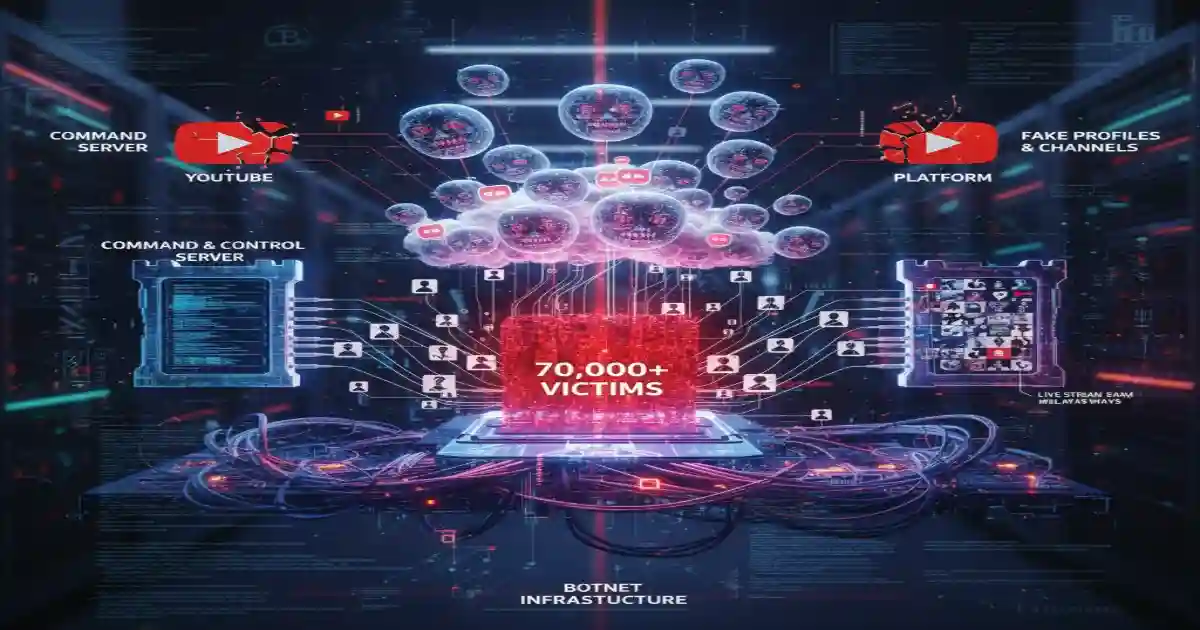
To understand how a channel like Painless360 gets targeted, one must understand the infrastructure of a YouTube spam bot. These are not isolated scripts but distributed systems designed for scale and evasion. The typical architecture involves three distinct phases: Target Acquisition, Account Masquerading, and Payload Delivery.

Phase 1: Target Acquisition via API abuse. The botnet master controls a ‘Command and Control‘ (C2) server. This server utilizes the YouTube Data API v3 to query for videos with high velocity—videos gaining views and comments rapidly.
The API’s `commentThreads.list` endpoint allows the bot to fetch the latest comments from these trending videos. By filtering for videos with specific keywords (e.g., ‘crypto‘, ‘finance’, ‘giveaway’, or even niche hobbies like ‘RC planes’), the bot identifies fertile ground for scams.
Phase 2: Automated Masquerading. Once a target video is identified, the bot initiates the masquerade. It scrapes the channel owner’s public profile data: the banner, the avatar (often a high-resolution image at `yt3.ggpht.com), and the display name.
The bot then accesses a pool of ‘sleeper’ Google accounts—accounts created months in advance to age and bypass ‘new account’ restrictions. Using automation libraries like Puppeteer or Selenium WebDriver, the bot updates the sleeper account’s profile to match the target creator. This includes uploading the stolen avatar and changing the display name.
Phase 3: Payload Delivery and Rate Limiting. The bot then replies to user comments. To avoid triggering YouTube’s rate-limiting algorithms (which flag accounts posting too frequently), the botnet rotates through hundreds of IP addresses using residential proxies.
It posts the scam message (‘Text me on WhatsApp‘) and then switches to a new account or IP. This ‘Round-Robin’ attack style makes it incredibly difficult for simple frequency-based firewalls to detect the anomaly until thousands of messages have already been deployed.
Homograph Attacks: The Unicode Evasion Technique
One of the most technically fascinating aspects of these scams is how they bypass YouTube’s rigorous spam filters. Google utilizes advanced Natural Language Processing (NLP) models, likely based on BERT (Bidirectional Encoder Representations from Transformers), to detect spam keywords.
A simple filter would block any comment containing ‘WhatsApp‘ or a phone number. So, how do scammers persist? The answer lies in *IDN Homograph Attacks* and *Unicode Obfuscation*. Computers process text as numerical code points. To a human eye, the Latin letter ‘a’ (U+0061) looks identical to the Cyrillic small letter ‘а’ (U+0430).
However, to a keyword filter searching for the string ‘WhatsApp’, the string WhаtsApp is a completely different, non-banned word. Scammers automate this by running their scam scripts through ‘confusables’ generators. They replace standard ASCII characters with visually similar Unicode glyphs from the Cyrillic, Greek, or Cherokee scripts.
They also utilize *Fullwidth Forms* (e.g., ‘WhatsApp‘) and *Mathematical Alphanumeric Symbols* (e.g., ‘𝐖𝐡𝐚𝐭𝐬𝐀𝐩𝐩’). Furthermore, the Painless360 video highlights the use of ‘special characters’ in channel names. Before late 2022, YouTube allowed a wide range of characters in display names. Scammers would create a name like ‘Painless360’ but replace the ‘l’ with a capital ‘I’ or add a checkmark emoji (✓) to the end of the name.
This emoji was a crude attempt to mimic the official ‘Verified’ badge. While a human might verify the badge by hovering over it, the quick glance of a mobile user often fails to distinguish the pixelated emoji from the platform’s official verification vector graphic.
Psychological Engineering: The ‘Authority Bias’ Vulnerability
The technical sophistication of the bot is useless without an effective social engineering payload. The scam relies heavily on *Authority Bias* and *Reciprocity*. When a viewer comments on a video, they are engaging in a parasocial interaction. They admire the creator. Receiving a personal reply triggers a dopamine response—a feeling of validation and connection.
The scam exploits this emotional spike. By posing as the creator and offering a ‘prize‘ or ‘exclusive investment opportunity’, the scammer bypasses the victim’s critical thinking faculties. The request to move to a secondary platform (WhatsApp or Telegram) is a classic ‘Platform Migration’ tactic. YouTube has strict moderation and safety warnings; WhatsApp is encrypted and private.
Once the victim is moved to WhatsApp, the scammer is free to execute the ‘Advance-fee scam‘ (419 scam) or a ‘Pig Butchering‘ crypto scheme without platform oversight. In the Painless360 case, the scam was a ‘Giveaway’ pretext.
This is particularly effective in hobbyist communities where creators often *do* host giveaways for expensive gear (drones, RC transmitters). The scammer’s narrative (‘You won!‘) is plausible within the context of the channel, making the deception significantly harder to spot than a random ‘hot singles in your area’ spam comment.
The Scale of the Problem: Billions of Requests
The scale of this issue is staggering. According to a research paper presented at the *NDSS Symposium* titled ‘Like, Comment, Get Scammed‘, researchers analyzed 8.8 million comments across just 20 channels and identified over 206,000 scam comments originating from 10,000 unique accounts. This implies a massive, dark economy of compromised or farm-created Google accounts.
Google’s own transparency reports reveal that in the first half of 2022 alone, they removed over *1.1 billion* comments for violating spam policies. The sheer volume indicates that this is an automated war. For every bot Google bans, the botnet operators spin up two more.
The cost of creating a new Gmail account is near zero for attackers using automated registration scripts and SMS-verification bypass services, while the cost of detection for Google—running expensive ML inference on every single comment—is astronomically higher.
Google’s Countermeasures: The 2022-2023 Security Overhaul
In response to the wave of scams highlighted by creators like Painless360, Linus Tech Tips, and Marques Brownlee, YouTube rolled out significant architectural changes in mid-to-late 2022.
1. The ‘Increase Strictness’ Beta: YouTube introduced a new sensitivity dial in YouTube Studio’s comment settings. The ‘Increase Strictness’ option lowers the confidence threshold required for the spam filter to hold a comment for review. Technically, this likely adjusts the precision/recall balance of their classifier, flagging more potential positives even at the risk of some false positives, to catch the more subtle Unicode obfuscations.
2. Removal of Hidden Subscriber Counts: Previously, channels could hide their subscriber count. Scammers used this to mask the fact that their impersonation channel had 0 subscribers. By forcing all channels to display counts (July 2022), YouTube utilized ‘Social Proof’ as a security feature. A reply from ‘Painless360’ with 0 subscribers is instantly recognizable as fake compared to the real channel with 100k+ subscribers.
3. Visual Authentication (The Highlighter): Perhaps the most effective UI change was the ‘Highlighter’. YouTube implemented a visual discriminator: comments from the actual channel owner are now rendered with a distinct gray background and a ‘check’ icon on their name.
This is a hard-coded UI element linked to the channel ID (`UC`), which a scammer cannot spoof regardless of their display name or avatar. This effectively killed the visual efficacy of the impersonation for users who know to look for the gray box.
User Defense: OSINT Techniques for Verification
While platform defenses have improved, the ‘human firewall’ remains the last line of defense. Users and creators must employ basic *Open Source Intelligence (OSINT)* techniques to verify identities.
Check the Channel URL (Handle): YouTube introduced ‘Handles’ (@username) to replace the messy legacy URL structure. A scammer might copy the display name ‘Painless360’, but they cannot claim the handle `@Painless360`. They will likely have a handle like `@Painless360-Official-Giveaway-xyz`. Clicking the profile picture to inspect the handle is the most reliable verification method.
Analyze Channel Age and Content: Clicking on the scammer’s profile often reveals a channel created days ago with zero uploaded videos. Legitimate creators have channels that are years old with extensive video libraries. This ‘Metadata Verification’ takes seconds but defeats 99% of impersonation attempts.
The ‘No-Contact’ Rule: Technical literacy involves understanding platform norms. Legitimate organizations (Google, Meta) and legitimate creators *never* conduct business or giveaway claims via unverified third-party messengers like WhatsApp or Telegram. Any request to move to an encrypted messaging app is a primary indicator of compromise (IOC).
AUTHORITY REFERENCE: NY Times: The Rise of Impersonation Fraud ↗
The AI Future of Spam
The Painless360 video serves as a historical artifact of the ‘WhatsApp Spam’ era. However, the threat landscape is evolving. With the rise of Large Language Models (LLMs) like GPT-4, the next generation of spam bots will not use static templates.
They will generate context-aware, grammatically perfect replies that reference specific details from the video, making them nearly indistinguishable from human interaction. We are moving toward a ‘Zero Trust’ environment in digital comments, where cryptographic verification (like the ‘Highlighter’ feature) will become the only reliable indicator of authenticity.
Until then, the combination of robust platform filtering and user education remains our best defense against the automated social engineering armies of the botnet operators.