10+ Future Automobile Trends in 2026 – Expert Technical Guide
10+ Future Automobile Trends
Executive Summary: The Automotive Landscape in 2026
The automobile industry is currently navigating one of its most tumultuous yet transformative periods in history. As we approach 2026, the convergence of electrification, autonomous technologies, and software-defined architectures is no longer a distant forecast but an immediate operational reality. This guide provides an exhaustive technical analysis of the trends shaping the sector, moving beyond surface-level observations to explore the engineering and market dynamics driving change.
From the commercialization of solid-state batteries to the refinement of SAE Level 3 autonomous systems, 2026 marks a pivotal year where prototype technologies transition into mass-market adoption. We also examine the geopolitical and regulatory frameworks influencing these shifts, particularly in key markets like the United States, Europe, and India.
1. Advanced Battery Chemistries: Beyond Lithium-Ion
The heart of the modern automobile is undeniably its energy storage system. While traditional Lithium-Ion (Li-ion) batteries with Nickel-Manganese-Cobalt (NMC) cathodes have dominated the last decade, 2026 sees a diversification of battery chemistries designed to address cost, range, and safety.
Solid-State Batteries (SSB): The Commercial Breakthrough
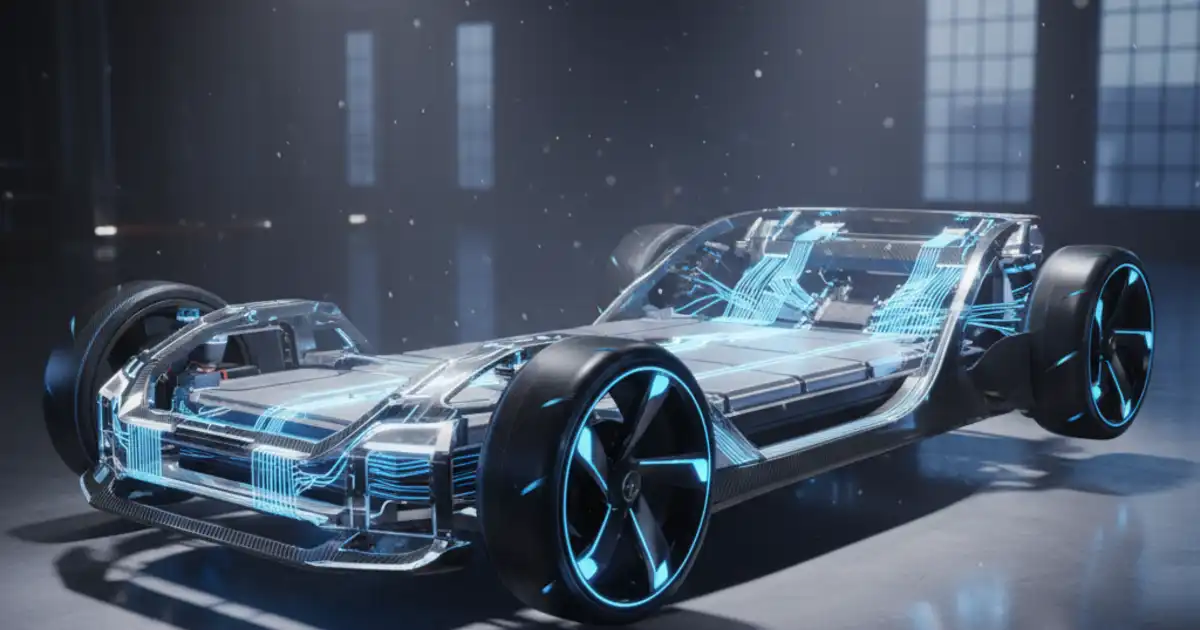
Solid-state batteries have long been considered the ‘holy grail’ of EV technology. Unlike conventional batteries that use a liquid or gel electrolyte, SSBs utilize a solid electrolyte made of ceramic, glass, or solid polymer. This fundamental shift allows for higher energy density (potentially exceeding 500 Wh/kg), faster charging times, and significantly improved safety profiles due to the elimination of flammable liquid electrolytes.
In 2026, we are witnessing the first wave of limited-production vehicles featuring semi-solid and fully solid-state packs. Major OEMs are piloting these technologies in premium segments, offering ranges exceeding 1,000 kilometers on a single charge. However, technical challenges regarding interface stability and manufacturing scalability remain hurdles for widespread mass-market adoption.

Sodium-Ion: The Cost-Effective Alternative
While SSBs target the premium market, Sodium-Ion (Na-ion) technology is emerging as a robust solution for entry-level electric vehicles. Sodium is abundant and cheap compared to Lithium, making these batteries significantly less expensive to produce. Although they offer lower energy density than high-end Li-ion cells, their performance is sufficient for city commuting and short-range logistics. For a deeper understanding of battery longevity, refer to our
on maximizing the lifespan of these new chemistries.
2. Autonomous Driving: The Reality of SAE Level 3+
The narrative around autonomous driving has shifted from unbridled optimism to pragmatism. The focus in 2026 is on perfecting ‘eyes-off’ capabilities in specific operational design domains (ODDs), such as highway driving.
Decoding SAE J3016 Standards
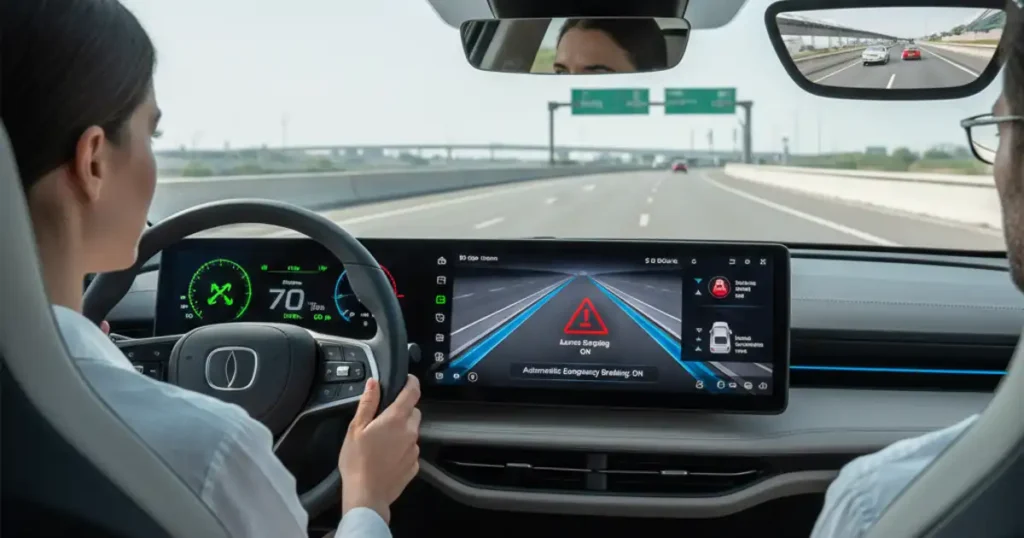
The Society of Automotive Engineers (SAE) defines six levels of driving automation, from Level 0 (no automation) to Level 5 (full automation). 2026 is the year of Level 3, where the vehicle can perform all aspects of the dynamic driving task under specific conditions, but the human driver must be ready to take over when requested.
This differs fundamentally from Level 2, where the driver must monitor the environment at all times. For a technical definition, the provides the foundational taxonomy used by engineers and regulators worldwide. Understanding these distinctions is critical for both consumer safety and insurance liability.

Sensor Fusion: LiDAR vs. Pure Vision
The industry remains divided on the optimal sensor stack. While some manufacturers double down on camera-only ‘Pure Vision’ approaches relying on advanced AI neural networks, the majority of the industry is adopting a fusion approach. This involves integrating LiDAR (Light Detection and Ranging), Radar, and high-resolution cameras to create a redundant perception layer. In 2026, the cost of solid-state LiDAR units has dropped significantly, making them viable for mid-range vehicles, not just luxury flagships.
3. Software-Defined Vehicles (SDVs)
The era of the ‘Software-Defined Vehicle’ is fully upon us. This paradigm shift means that a vehicle’s features and performance are largely defined by software rather than hardware. This allows for continuous improvement throughout the vehicle’s lifecycle via Over-the-Air (OTA) updates.
Zonal Architecture Transformation
To support SDVs, automotive electrical and electronic (E/E) architectures are evolving from domain-centralized to zonal architectures. Instead of having separate Electronic Control Units (ECUs) for engine, body, and infotainment, zonal architecture consolidates computing power into a few high-performance computers (HPCs) connected by high-speed Ethernet backbones. This reduces wiring harness weight, complexity, and manufacturing costs.
4. Hydrogen Fuel Cell Electric Vehicles (FCEVs)
While battery electric vehicles (BEVs) dominate the passenger car conversation, Hydrogen FCEVs continue to advance, particularly in the commercial sector. For heavy-duty trucking and long-haul logistics, the energy density of hydrogen and rapid refueling times offer distinct advantages over heavy battery packs.
The Green Hydrogen Ecosystem
The viability of FCEVs in 2026 hinges on the availability of ‘Green Hydrogen’—produced via electrolysis using renewable energy. Investments in hydrogen infrastructure are scaling, aiming to create corridors that support commercial transport networks across major continents.
5. Market Spotlight: India’s Automotive Evolution
India is rapidly emerging as a global automotive powerhouse. With a burgeoning middle class and aggressive government targets for electrification, the Indian market offers a unique glimpse into the future of affordable mobility. You can track specific regional developments at
. Key domestic players like Tata Motors and Mahindra are expanding their EV portfolios, challenging international rivals with cost-effective, high-tech offerings tailored for local road conditions.
Infrastructure & Adoption
The challenge for India remains charging infrastructure. 2026 sees a massive push in public-private partnerships to densify the charging network in Tier-1 and Tier-2 cities, a critical step for mass adoption.
6. Manufacturing Innovations: Gigacasting
Inspired by early innovators, ‘Gigacasting’ has become an industry standard by 2026. This process involves casting large sections of a vehicle’s chassis as a single piece of aluminum, replacing hundreds of stamped steel parts welded together. This reduces vehicle weight, manufacturing time, and capital expenditure for robots, ultimately lowering the cost of EVs.
7. Sustainability & Circular Economy
Sustainability in 2026 goes beyond zero tailpipe emissions. Manufacturers are now held accountable for the entire lifecycle of the vehicle. This includes the ethical sourcing of raw materials like Cobalt and Lithium, and the implementation of battery recycling programs. ‘Battery Passports’—digital records of a battery’s composition and history—are becoming mandatory in regions like the EU.
8. Global Regulatory Impacts and Geopolitics
Regulatory pressure continues to be the primary driver of innovation. In the US and Europe, stringent emission standards (such as Euro 7 and EPA GHG limits) are effectively phasing out pure internal combustion engines. For the
, keeping abreast of these policy shifts is essential for understanding market trajectories. These regulations are forcing even niche performance manufacturers to hybridize or electrify their lineups.
9. Consumer Experience: The Digital Cockpit
The interior of the 2026 automobile is a fully immersive digital environment. Augmented Reality (AR) Heads-Up Displays (HUDs) project navigation and safety warnings directly onto the windshield, overlaying them on the real world. Voice assistants powered by Large Language Models (LLMs) provide natural, conversational interaction with vehicle systems.
10. Reliability and Brand Trust in the EV Era
As the market matures, reliability data is becoming a key differentiator. Early adopters tolerated software glitches, but the mass market demands flawless operation. A recent
highlights how legacy brands and newcomers alike are being ranked based on long-term battery health and software stability. This shift towards reliability over novelty is a defining characteristic of the 2026 consumer.
11. V2X: Vehicle-to-Everything Connectivity
Vehicle-to-Everything (V2X) communication allows cars to ‘talk’ to traffic lights, infrastructure, and other vehicles. In 2026, V2X is critical for optimizing traffic flow and enhancing safety. For example, a vehicle can receive a signal that a traffic light is about to turn red and automatically adjust its speed for a smooth stop, or warn the driver of an unseen emergency vehicle approaching an intersection.
12. The Resurgence of Hybrids
Contrary to the ‘all-electric’ hype, Plug-in Hybrid Electric Vehicles (PHEVs) are experiencing a resurgence in 2026. Offering electric-only ranges of 100km+ for daily commuting with the backup of a combustion engine for long trips, modern PHEVs serve as a pragmatic bridge technology for regions with developing charging infrastructure.
13. Cybersecurity in Connected Cars
With vehicles becoming connected devices, cybersecurity is paramount. 2026 automobiles feature military-grade encryption to protect against hacking, data theft, and remote hijacking. The automotive industry is adopting standards like ISO/SAE 21434 to manage cybersecurity risk throughout the vehicle lifecycle.
14. Urban Mobility and Micro-EVs
Urbanization is driving the demand for smaller, more efficient vehicles. The micro-EV segment—quadricycles and compact city cars—is exploding in dense metropolitan areas. These vehicles require less energy to manufacture and operate, offering a sustainable solution for last-mile mobility.
15. The Road Ahead
The automobile industry in 2026 is defined by diversity in propulsion, intelligence in operation, and sustainability in manufacturing. The trends outlined in this guide—from the molecular engineering of solid-state batteries to the zonal architecture of SDVs—represent a fundamental rethinking of what a car is. For enthusiasts and professionals alike, keeping pace with these developments is not optional; it is essential. For more details on the nuances of these technologies, be sure to check our